Will Flying Car Stocks Go Higher?

by Fred Fuld III

The concept of eVTOL aircraft—electric vehicles capable of vertical takeoff and landing—has long captured the imagination of futurists. Today, the industry is rapidly evolving, driven by advances in battery technology, regulatory acceptance, and partnerships with major automakers and airlines. Though often branded as “flying cars,” most eVTOL designs resemble compact air taxis more than vehicles that drive on roads. Still, the promise of speeding up congested city commutes via quiet, emissions‑free aerial vehicles has spurred billions in investment.

As of mid‑2025, several pure‑play eVTOL manufacturers are publicly traded, including Joby Aviation (NYSE: JOBY), Archer Aviation (NYSE: ACHR), Eve Air Mobility (NYSE: EVEX), Vertical Aerospace (NYSE: EVTL), Blade Air Mobility (NASDAQ: BLDE), and EHang (NASDAQ: EH). Below we explore Joby and its peer group from an investor perspective.

Joby Aviation (NYSE: JOBY) stands out as a front‑runner among eVTOL firms. Founded in 2009 and publicly listed via a SPAC in 2021, Joby has developed a five‑seat aircraft targeting FAA certification in 2025, with hopes to launch commercial air taxi service in late 2025 or 2026, starting perhaps in Dubai before U.S. approval arrives. Its key specs—200 mph top speed and about 150 mile range carrying one pilot and four passengers—make it competitive in urban air mobility.

From an investor’s standpoint, Joby has several distinct strengths. It has raised substantial capital—Toyota has committed over $500 million as part of a roughly $894 million investment and is partnering on manufacturing in Ohio; other investors include Baillie Gifford, Intel Capital, and Delta Air Lines. Joby also acquired Uber’s Elevate division in 2020 to integrate with Uber’s ride‑hailing platform. On the regulatory front, Joby became the first eVTOL company awarded a Part 135 Air Carrier Certificate, enabling it to begin limited commercial operations with conventional aircraft as a stepping stone.

However, Joby remains pre‑revenue and heavily cash‑consuming. Milestones like aircraft certification, scaling manufacturing, and commercial deployment must align closely or valuation risk increases sharply. Its recent equity offerings—40 million shares at $5.05 per share—raised about $193–$222 million, intended to help fund certification and production ramp‑up, though dilutive for shareholders. Toyota’s share issuance could further increase dilution while increasing financial runway. Joby currently has a $13.55 billion market capitalization.

Archer Aviation (NYSE: ACHR) is another pure‑play listed firm, co‑founded in 2018 and based in San Jose, California. Its two‑seat Maker eVTOL targets roughly 100 mile range and top speeds near 150 mph. Archer’s high profile partnership with United Airlines includes a $1 billion pre‑order for over 200 aircraft, and it’s targeting commercial operations during the 2028 Los Angeles Olympics. It has also joined forces with defense‑tech firm Anduril to develop hybrid VTOL platforms for Pentagon use, a divergence into potential military markets. Archer recently raised $850 million, boosting its cash posture significantly.

From a financial metrics standpoint, Archer is still pre‑revenue with net losses (about ‑$317 million in 2023), modest assets, and equity; its market cap hovers in the $6.7 billion range, compared to Joby’s larger valuation. Recent moves—such as joining Archer’s defense advisory board by Lt. Gen. Scott Howell (formerly at Joby)—signal investor concerns over Joby’s military momentum and confidence in Archer’s strategy in this domain.

Eve Air Mobility (NYSE: EVEX) is the eVTOL arm of Brazilian aerospace giant Embraer. Eve aims for commercial flights by 2026 and has signed letters of intent for up to 54 aircraft in markets including Brazil and the U.S. Embraer’s backing and engineering heritage offer an institutional advantage, though Eve remains early stage and revenue‑less in practice.

Vertical Aerospace (NYSE: EVTL) is a U.K.-based eVTOL start‑up now trading at a heavily distressed valuation (declined from about $2.2 billion to near $655 million) amid cash shortages and delays. Its planned VX4 aircraft has completed hover testing, but passengerflight certification is postponed to 2028 or later. It is currently negotiating urgent funding to survive.

EHang (NASDAQ: EH) of China is unique in being already profitable, and certified its EH216‑S model for commercial passenger and limited autonomous operations by China’s CAAC in early 2025. That gives it a non‑U.S. foothold in eVTOL operations, but its geopolitical and regulatory environment may introduce separate risks.

Blade Air Mobility (NASDAQ: BLDE) is not a pure eVTOL manufacturer—it operates an existing urban air transport platform, using helicopters and seaplanes—but is often lumped into eVTOL market ETFs due to its air mobility business model. Blade’s near‑term revenue is real, though its transition to eVTOL remains speculative.


For investors evaluating this emerging sector, Joby Aviation leads on certification progress, strategic partnerships, and product maturity. Yet its lack of operating revenue and the risk of dilution remain key vulnerabilities. Archer offers a credible alternative with solid airline and defense links, though it too is pre‑commercial. Firms like Eve and EHang bring institutional and regional advantages, but certification and scaling remain hurdles. Vertical Aerospace underlines how capital constraints and execution risks can result in steep de‑rating.

Overall, this high‑risk, high‑volatility group may fit early‑stage speculative portfolios. Diversifying across multiple players and maintaining discipline around entry valuations and milestones—particularly FAA certification timelines, manufacturing scaling, and initial revenue traction—are prudent steps for would‑be investors betting on the eVTOL revolution.

Disclosure: Author didn’t own any of the above at the time the article was written.
Are Drone Stocks High Fliers?

by Fred Fuld III

You may have recently read about the  defense-technology company specializing in drones called AIRO Group, which completed its IPO on June 13, 2025. Its shares soared on the first day of trading, more than doubling in price. So are drone stocks worth investing in?

Here is an in-depth look at the six largest drone-related companies by market capitalization as of mid-2025. Each of these firms operates in different niches within the drone and advanced air mobility (AAM) sector, from military-grade unmanned systems to futuristic electric vertical takeoff and landing (eVTOL) aircraft. This article explores the business focus, strengths, and drawbacks of each company.


AeroVironment (AVAV)

AeroVironment Inc., based in Virginia, is the largest pure-play drone company by market cap, valued at approximately $8.6 billion. The firm specializes in unmanned aircraft systems (UAS) primarily for defense and government agencies. Its flagship products include the Puma, Raven, and Switchblade drones, which are used extensively by the U.S. military and its allies. AeroVironment also provides sensor payloads, software analytics, and tactical missile systems.

The company’s key strength lies in its established position within the defense ecosystem and its long-term government contracts, which provide predictable revenue streams. Its reputation for reliability and battlefield-proven technology gives it a competitive edge. However, its reliance on government contracts makes it susceptible to budgetary shifts and political uncertainty. Additionally, its commercial drone ambitions have lagged behind competitors, limiting its diversification.

The stock trades at 161 times trailing earnings and 48 times forward earnings. Earnings per share growth next year is expected to increase by over 28%.


Joby Aviation (JOBY)

Joby Aviation, headquartered in Santa Cruz, California, is an eVTOL aircraft company developing electric air taxis aimed at transforming urban mobility. With a market cap around $7.1 billion, Joby is backed by major investors such as Toyota, Delta Air Lines, and Uber. The company is targeting FAA certification for its five-seat aircraft and hopes to launch commercial operations in the coming years.

Joby’s primary advantage is its first-mover position in the U.S. eVTOL space, supported by strong financial backing and a clear regulatory roadmap. Its vertical integration—building aircraft and planning to operate its own air taxi service—gives it control over the customer experience. The major challenge for Joby is execution: mass-producing aircraft, achieving certification, and scaling a profitable transport service remain unproven. As with many pre-revenue firms, it also faces pressure to justify its high valuation in a capital-intensive field.

The company has been generating negative earnings on a year-over-year drop in sales.


Kratos Defense & Security Solutions (KTOS)

Kratos, valued at approximately $6.4 billion, is a national security technology company with a significant footprint in the unmanned systems space. It manufactures high-performance tactical drones such as the XQ-58A Valkyrie, used for military training and as loyal wingman systems to supplement piloted fighter aircraft. Kratos operates in various segments, including satellite communications, microwave electronics, and missile defense.

Kratos benefits from its diverse product lines and integration with U.S. defense priorities, particularly unmanned combat systems. Its experimental drones align with the Department of Defense’s interest in cost-effective autonomous aircraft. However, unlike AeroVironment, Kratos is more diversified and less focused solely on drones, which may dilute investor exposure to the UAV sector. Moreover, delays in Pentagon procurement and the high R&D costs of next-gen aircraft can pose financial headwinds.

The stock has a nosebleed high trailing price to earnings ratio of 330 and a forward P/E of 60. Earnings per share growth next year is expected to increase by over 37%.


Archer Aviation (ACHR)

Archer Aviation, another eVTOL company, has a market cap of approximately $5.6 billion. Based in San Jose, California, Archer is building an electric air taxi called “Midnight” with a projected range of 100 miles and a capacity for four passengers and a pilot. United Airlines is among its major backers, and the company is aggressively targeting FAA certification in the next 1–2 years.

Archer stands out for its partnerships and high-profile collaborations, including a manufacturing deal with Stellantis and commercial support from United. Its aircraft design emphasizes redundancy and safety, appealing to regulators. However, like Joby, it remains a pre-revenue company facing intense capital demands and long development timelines. It also competes head-to-head with Joby, which has more flight hours logged and appears ahead in the certification process.

The company has been generating negative earnings.


EHang Holdings (EH)

EHang, based in Guangzhou, China, is a publicly traded autonomous aerial vehicle company with a market cap of roughly $1.2 billion. Its flagship product, the EH216, is a fully autonomous two-seater eVTOL aircraft targeting air taxi, cargo delivery, and emergency services applications. EHang has achieved conditional certification in China and is making inroads in several international markets.

The company’s strength lies in its aggressive rollout in Asian markets and its autonomous technology, which removes the need for onboard pilots. This could be a game-changer in urban air mobility if adopted at scale. However, regulatory approval outside of China remains a challenge, and investor confidence has occasionally wavered due to concerns over governance, financial transparency, and geopolitical tensions. Its technology, while advanced, remains relatively unproven in real-world conditions compared to Western peers.

The stock trades at 68.5 forward earnings, with a loss generated this year and a profit expected next year. Sales jumped 168% year over year.


Red Cat Holdings (RCAT)

Red Cat Holdings is a small but rapidly growing player, with a market cap estimated between $750 and $800 million. The Puerto Rico-based company focuses on drone hardware and software for military and industrial uses. Through its subsidiary Teal Drones, it produces the Golden Eagle drone, a U.S.-approved alternative to Chinese UAVs for national security use. It also provides AI-driven command-and-control software and secure data streaming tools.

Red Cat’s appeal lies in its focus on domestic, NDAA-compliant drones at a time when the U.S. is actively reducing reliance on Chinese UAVs. Its software-driven platform approach also positions it well in the growing battlefield intelligence space. However, it remains a micro-cap stock with limited revenue and unproven scalability. The company needs to expand its client base and execute on defense contracts to achieve sustainable growth.

The stock trades at 95.5 forward earnings, with a loss generated this year and a profit expected next year. Sales went up by 49.8% year over year.


Conclusion

From defense stalwarts to futuristic air taxis, these six drone-related companies represent a spectrum of business models and stages of maturity. AeroVironment and Kratos provide stable exposure to military UAV systems, while Joby and Archer are high-risk, high-reward bets on the future of urban air mobility. EHang offers a global angle with a fully autonomous platform, and Red Cat delivers a niche opportunity in U.S.-centric, secure drone technology. As the drone ecosystem continues to evolve, each of these companies offers a unique lens on the industry’s future.

Disclosure: Author didn’t own any of the above at the time the article was written.
Is It Possible to Invest in Flying Car Companies?

by Fred Fuld III

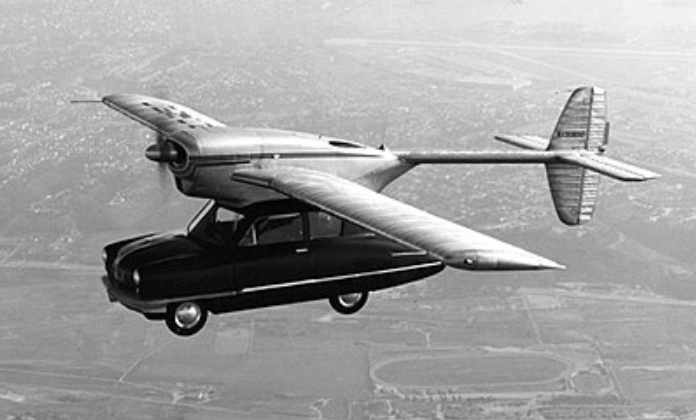
Many years ago, I bought stock in a Davis, California based flying car company called Moller International Inc. (MLER), which was the only publicly traded company that I knew of at that time that was in the flying car business.

I even went to one of their annual meetings back then, where they provided a free lunch, but sold copies of their “annual report“, pictures of their flying cars, and almond butter.

If you want to see one of them fly, you can check out the following video.

You will notice in the video that there is a crane with a tether attached to the M400X flying vehicle. It actually does fly; it’s not the tether that’s holding it up, and you look closely, you will see that the tether is slack, not tight.

Founded in 1983 by Dr. Paul Moller, a visionary engineer with a background in engines and Wankel technology, the company has been dedicating itself to this ambitious goal.

Early days and technological advancements:

  • Spin-off: Moller International emerged from Moller Corporation, continuing their work on VTOL aircraft.
  • Key technologies: The company focused on integrating crucial elements like electronic control systems, efficient ducted fan designs, thrust vectoring, and stable airframes.
  • Rotapower engine: A significant achievement was the Rotapower, a Wankel rotary engine that became a spin-off company, Freedom Motors.

Challenges and milestones:

  • Development time: Despite extensive testing and prototype advancements, the M400 Skycar, the flagship personal VTOL, faced a long development process fueled by fundraising and regulatory hurdles.
  • Publicity and controversy: Moller International attracted both attention and critiques, some skeptical of the Skycar’s feasibility and claims. In 2000, they settled a case with the SEC regarding promotional statements without admitting wrongdoing.
  • Progress and partnerships: Despite challenges, Moller International secured various contracts with government agencies and aerospace companies, demonstrating the potential of their technologies.

Unfortunately, the company hasn’t made any SEC filings since 2015, the stock symbol is no longer active on Yahoo!Finance or OTCMarkets, and several shareholders posted on Facebook that TD Ameritrade has removed the stock from their accounts with a notice that says: REMOVAL OF WORTHLESS SECURITIES (608689105).

Even the company website shows “Invalid symbol” for MLER.

So, you may be wondering, are there any other publicly traded flying car sites?

The term “flying car” can still be ambiguous, as many companies are developing different types of VTOL (vertical take-off and landing) vehicles with varying capabilities and target markets. However, several publicly traded companies are involved in this space, though most focus on air taxi services rather than personal flying cars.

Here are some notable examples:

Pure-play eVTOL companies:

  • Joby Aviation (JOBY): Developing an electric VTOL aircraft for air taxi services, with strong government and investor backing. $4.2 billion market cap.
  • Archer Aviation (ACHR): Aims to launch flying taxi services in Los Angeles and Miami, known for their innovative “Maker” design. $1.7 billion market cap.
  • EHang Holdings (EH): A Chinese leader in the eVTOL market, with passenger and cargo drones already in commercial use. $918 million market cap.
  • Eve Urban Air Mobility Solutions (EVEX): A subsidiary of Embraer (ERJ), focusing on the Brazilian air taxi market with its eVTOL model. $1.9 billion market cap.

Traditional automakers exploring eVTOL:

  • XPeng (XPEV): A Chinese electric car manufacturer, investing in flying car technology through its affiliate HT Aero. $12.7 billion market cap.
  • Geely Automobile Holdings (GELYY): Another major Chinese automaker, partnering with Terrafugia to develop eVTOL vehicles. $10.8 billion market cap.
  • Toyota Motor Corporation (TM): Collaborating with Joby Aviation on eVTOL development and infrastructure. $252 billion market cap.

Keep in mind:

  • Many of these companies are still in pre-revenue stages, focusing on development and certification.
  • Investing in them involves high risk and volatility, as the future of the eVTOL market remains uncertain.
  • Other private eVTOL companies, like Volocopter and Lilium, may also go public in the future.

It will be interesting to see if any of these stocks come high flyers.

Disclosure: Author owns MLER and TM. No recommendations are expressed or implied. Some of the mentioned stocks have low market caps, and should be considered speculative.

Top Drone Stocks

by Fred Fuld III

“Total global shipments to reach 2.4 million in 2023 – increasing at a 66.8% compound annual growth rate. The drone services market size is expected to grow to $63.6 billion by 2025.” ~ Source: Insider Intelligence, April 15, 2022

The drone industry has tremendous potential for growth in the coming years, and is expected to become an increasingly important part of various businesses and industries. Here are a few areas where the drone industry is likely to see significant growth in the future:

  1. Aerial Photography and Videography: Drones are being increasingly used for aerial photography and videography, especially in the real estate, advertising, and film industries. With advancements in technology, drones are becoming more capable of capturing high-quality footage and are becoming more affordable, making them accessible to a wider range of businesses and consumers.
  2. Agriculture: Drones are being used in the agricultural industry for a variety of purposes, including crop monitoring, yield analysis, and soil mapping. With the help of drones, farmers can better manage their crops and optimize their yields, which can lead to increased efficiency and profitability.
  3. Infrastructure Inspection: Drones can be used to inspect infrastructure such as bridges, power lines, and pipelines, which can be dangerous and difficult for humans to access. With the help of drones, inspections can be carried out more quickly, safely, and cost-effectively, which can lead to improved maintenance and safety.
  4. Delivery Services: Drones can be used for delivery services, especially in areas where ground transportation is difficult or expensive. With the development of autonomous drone technology, it may become possible to deliver packages and other items more quickly and efficiently than traditional delivery methods.
  5. Search and Rescue: Drones can be used in search and rescue operations to locate missing persons or to survey areas that are difficult to access. With the help of drones, rescue teams can more quickly and accurately locate and assess the situation, which can lead to more successful outcomes.

Overall, the drone industry has significant potential for growth in a variety of areas, and is likely to become an increasingly important part of many businesses and industries in the future.

If you are looking for pure plays or semi-pure plays in the drone industry, there are a few to choose from:

•AeroVironment (AVAV)

•Kratos Defense & Security Solutions (KTOS)

•EHang Holdings Ltd. (EH)

•Ambarella (AMBA)

•Joby Aviation Inc. (JOBY)

AeroVironment produces unmanned aircraft systems selling largely to the U.S. Government and international governments.

The company has had consistent and steady revenues, and sports a forward price to earnings ratio of 37. Long term annual estimated earnings growth for the next five years is 18.2%.

Kratos provides unmanned aerial systems, and unmanned ground and seaborne systems to the U.S. Department of Defense.

The stock trades at 26 time forward earnings and quarterly revenue growth year over year is 7.8%. Current earnings are negative.

Ambarella would be considered more of a semi-play as it makes video chips for high quality drones. The stock has a forward P/E ratio of 142. The company is debt free with $5.12 in cash per share.

Joby Aviation is developing an aerial ride sharing service. The market cap is $2.6 billion and earnings are negative.

EHang Holdings produces autonomous aerial vehicles in China. It is extremely low cap at $660 million.

Possibly one of these stocks will fly high with the drones.

Disclosure: Author didn’t own any of the above at the time the article was written.
Will Drone Stocks Get Higher?

Unmanned aerial vehicles, better known as drones, are everywhere.

by Fred Fuld III

Unmanned aerial vehicles, better known as drones, are everywhere.

They are used in all types of industries.

For example, drones are being used by the following types of businesses and organizations:
Construction
Agriculture
Insurance Claims
Offshore Oil & Gas
Police
Fire
Coast Guard
Journalism
Customs and Border Protection
Real Estate
Utilities
Pipelines
Mining
Clean Energy
Cinematography

According to InsiderIntelligence, “The drone services market size is expected to grow to $63.6 billion by 2025.”

A few large corporations are involved in drone development and production as a small part of their business, but there are a few pure plays.

Many of these stocks have taken a beating over the last year or so, so maybe there are some bargains waiting to take off.

AeroVironment (AVAV) is an Arlington, Virginia based company which creates and manufactures robotic systems with a large unmanned aircraft systems division. Their market is primarily governments so their cash flow is relatively steady.

The stock has a forward price to earnings ratio of 38 and has an earnings per share growth estimate of 63% for next year.

Kratos Defense & Security Solutions (KTOS), based in San Diego, California, provides unmanned aerial systems to the U. S. Government.

The stock has a forward P/E ratio of 24, and has an earnings per share growth estimate of 60% for next year.

Ambarella (AMBA) is a video semiconductor company which makes cameras for drones and for many other purposes. The stock has a nosebleed forward P/E of 131.

Although earnings per share for this year were up58%, earnings for next year are anticipated to be down 34%

EHang Holdings Ltd. (EH) is a China based company which produces autonomous aerial vehicles. Earnings were negative for the current year and are expected to be negative next year.

Joby Aviation Inc. (JOBY) is  building an electric vertical takeoff and landing aircraft optimized to deliver air transportation. It has had negative earnings for last year with the same expected for next year.

Maybe one of these stocks can help your portfolio rise.

Disclosure: Author didn’t own any of the above at the time the article was written.