
8 Ways to Invest in SpaceX Before it Goes Public (Even if you are not accredited)

by Fred Fuld III

SpaceX is expected to go public in less than two weeks. Investors are interested in following Elon Musk by investing in the companies he is involved with, other than Tesla (TSLA). With the success that Musk has been having with rockets and satellites, many investors see the growth potential in those areas.

Fortunately, there are eight ways to participate in the growth of SpaceX, even though it is not yet public.

Before I discuss these options, I want to tell you a story about my Apple (AAPL) experience.

Buying Apple Before It Went Public

Many, many years ago, before Apple went public, I was using an Apple II computer with the VisiCalc spreadsheet program to create financial planning worksheets. I couldn’t believe that calculations could be done so easily on a small machine and then printed out. I was working for an investment management firm at the time and wanted to invest in this little Apple Computer company. (That was the name of the company before it was changed to Apple Inc.) 

Unfortunately, it wasn’t publicly traded. But fortunately, I read in a Forbes article that a publicly traded venture capital company called the Nautilus Fund, which was a closed end fund, that had an ownership interest in Apple shares. The fund held shares of mostly public companies but also some shares of a few private companies. So to make a long story short, I bought some shares of the Nautilus Fund, Apple went public, and Apple shares were spun off to the Nautilus Fund shareholders. The rest is history.

Investing If Not Accredited

So you can see why investors, including myself, want to find some way to get access to SpaceX shares.

If you are an accredited investor, you are probably aware of the options available to you for buying shares in private companies, and where there might be a minimum investment of $25,000. These services include Hiive, Forge, Microventures, and even NASDAQ Private Market.

An individual accredited investor is someone who has a net worth over $1 million, excluding primary residence (individually or with spouse or partner) and/or has an income over $200,000 (individually) or $300,000 (with spouse or partner) in each of the prior two years, and reasonably expects the same for the current year. There is one other qualification that can allow you to meet the accredited requirement. If you are an investment professional with a Series 7, a Series 65, or a Series 82, then you may qualify. There are different rules for organization investors.

But if you are not an accredited investor, there are still eight ways for you to participate. 

First, let’s cover the history SpaceX.

SpaceX

Space Exploration Technologies Corp., commonly known as SpaceX, is a private aerospace manufacturer and space transportation company founded by entrepreneur Elon Musk in 2002. Musk established SpaceX with the ambitious goal of reducing space transportation costs to make space exploration and colonization more accessible, ultimately aspiring to enable human settlement on Mars. 

Headquartered in Hawthorne, California, the company quickly gained attention for its innovative approach to rocket design and its focus on reusability, a concept that has transformed the aerospace industry.

SpaceX made history in 2008 when its Falcon 1 rocket became the first privately developed liquid-fueled rocket to reach orbit. This success was followed by a series of groundbreaking achievements, including the development of the Falcon 9 rocket, which features reusable first-stage boosters, and the Dragon spacecraft, capable of carrying cargo and crew to the International Space Station (ISS). 

In 2012, Dragon became the first commercial spacecraft to dock with the ISS, marking a significant milestone in public-private partnerships in space exploration.

In 2020, SpaceX achieved another historic milestone with its Crew Dragon spacecraft, which carried NASA astronauts to the ISS as part of the Commercial Crew Program. This made SpaceX the first private company to launch humans into orbit. 

Beyond crewed missions, the company has developed the Starship rocket, intended for deep-space missions and capable of transporting cargo and passengers to the Moon, Mars, and beyond.

SpaceX has also revolutionized global communications with its Starlink project, a satellite internet network designed to provide high-speed internet access worldwide. By combining technological innovation with a vision for humanity’s future in space, SpaceX continues to play a pivotal role in advancing aerospace technology and shaping the future of space exploration.

Ways to Invest

  1. ARK Venture Fund

There is a closed-end fund called ARK Venture Fund (ARKVX), which reportedly has over 10% of it’s assets in SpaceX, in addition to ownership of shares in a couple more Musk companies, X and xAI. 

At the time this article was written, an individual investor would have to buy the stock through SoFi. As a matter of fact, for a limited time, SoFi is offering $25 worth of free stock including fractional shares if you sign up through THIS LINK. There are dozens of choices of free stock that you can choose from.

According to the fund prospectus:

“Unlike an investor in many closed-end funds, Shareholders should not expect to be able to sell their Shares regardless of how the Fund performs. An investment in the Fund is considered illiquid.”

It also says, “Unlike many closed-end funds, the Shares are not listed on any securities exchange. The Fund intends to provide liquidity through quarterly offers to repurchase a limited amount of the Fund’s Shares (expected to be 5% of the Fund’s Shares outstanding per quarter).”

The fund has a management fee of 2.75%. The price of the fund has gone up by 71.8% over the last twelve months.

2. Destiny Tech100

There is one other closed-end fund that owns SpaceX, called Destiny Tech100 Inc. (DXYZ),which trades on the New York Stock Exchange. It currently has over 20 companies in its portfolio with SpaceX making up the largest share at around 15%. Other stocks in the portfolio include Axiom Space, OpenAI, Instacart, Stripe, and Discord. The company has a management fee of 2.5%. In the last twelve months, the stock has gone up by 115.9%.

3. Baron Partners Fund (BPTRX)

The Baron Partners Fund (BPTRX) is a mutual fund that has approximately 33% of its portfolio invested in SpaceX.

4. Baron Asset Fund (BARAX)

The Baron Asset Fund (BARAX) is a mutual fund that has approximately 25% of its portfolio invested in SpaceX.

5. Baron Focused Growth Fund (BFGFX)

The Baron Growth Fund (BFGFX) is a mutual fund that has approximately 21% of its portfolio invested in SpaceX.

6. Baron Global Opportunity Fund (BGAIX)

The Baron Global Opportunity Fund (BGAIX) is a mutual fund that has approximately 20.5% of its portfolio invested in SpaceX.

7. Baron Opportunity Fund (BIOPX)

The Baron Opportunity Fund (BIOPX) is a mutual fund that has approximately 15% of its portfolio invested in SpaceX.

8. The Fundrise Innovation Fund (VCX)

This fund is focused on investing in potentially high-growth private technology businesses. SpaceX makes up roughly 5% of the fund.

If you are considering investing in SpaceX, even indirectly, you may think your investment will go to the moon or Mars. Just remember that there are extensive risks involved. 

Disclosure: Author owns AAPL, TSLA, BPTRX, and DXYZ. No investment recommendations are expressed or implied.


Top Pure Play Data Center Stocks

by Fred Fuld III

The digital landscape is undergoing a massive structural shift, driven by the exponential growth of cloud computing, big data, and the aggressive rollout of artificial intelligence (AI) workloads. At the heart of this technological revolution is the data center industry. No longer just simple warehouses for servers, modern data centers have evolved into highly sophisticated, power-intensive infrastructure hubs capable of supporting dense high-performance computing (HPC) environments. As enterprises increasingly outsource their IT infrastructure and AI models demand unprecedented levels of computing power, pure-play data center operators have become some of the most critical real estate and technology plays in the global economy.

To understand where this industry is heading, we look at three distinct pure-play giants leading the charge: Equinix, Inc., Digital Realty Trust, and IREN Limited.


1. Equinix, Inc. (NASDAQ: EQIX)

Profile

Equinix is the world’s digital infrastructure company, operating an unrivaled global footprint of over 260 International Business Exchange (IBX) data centers across more than 30 countries. The company distinguishes itself through its focus on retail colocation and interconnection, serving as a physical meeting place where major cloud providers, network service providers, and enterprises connect their networks directly to one another. Rather than just renting bulk space, Equinix monetizes these high-margin ecosystems via its specialized Fabric platform. In early 2026, the company continues to see immense momentum, with roughly 60% of its largest new bookings tied directly to supporting enterprise AI infrastructure deployments.

Latest Financials & Valuation

  • Market Capitalization: ~$106 billion
  • Trailing P/E Ratio: ~74.0
  • Forward P/E Ratio: ~66.9
  • Key Insight: For real estate investment trusts (REITs) like Equinix, net income-based P/E ratios can look artificially inflated due to massive non-cash depreciation charges. Analysts closely track Adjusted Funds From Operations (AFFO) instead. Equinix recently raised its full-year 2026 AFFO guidance to a staggering $42.31 to $43.11 per share, highlighting incredibly strong underlying cash generation.

2. Digital Realty Trust, Inc. (NYSE: DLR)

Profile

Digital Realty Trust takes a massive macro-scale approach to the industry, providing the full spectrum of data center solutions from high-density colocation to massive hyperscale cloud environments. With a global portfolio spanning six continents, Digital Realty is the foundational backbone for the world’s largest technology companies and cloud hyper-scalers. The company’s strategic focus relies heavily on delivering wholesale power capacity at scale. Driven by unprecedented AI and cloud demand, Digital Realty entered mid-2026 boasting a record-shattering $1.8 billion signed-but-not-commenced leasing backlog, reflecting a multi-year pipeline of revenue waiting to come online as facilities finish construction.

Latest Financials & Valuation

  • Market Capitalization: ~$66 billion
  • Trailing P/E Ratio: ~49.0
  • Forward P/E Ratio: ~64.7
  • Key Insight: Similar to Equinix, Digital Realty trades primarily on Core Funds From Operations (Core FFO). Following a dominant Q1 2026 earnings beat where revenue jumped 16% year-over-year to $1.64 billion, management pushed its full-year 2026 Core FFO guidance up to a robust $8.00 to $8.10 per share.

3. IREN Limited (NASDAQ: IREN)

Profile

Formerly known primarily as Iris Energy, IREN Limited represents the next generation of pure-play data center infrastructure designed specifically for energy-dense, high-performance computing (HPC) and next-generation AI workloads. Strategically securing massive quantities of low-cost, 100% renewable energy, IREN has rapidly expanded beyond its roots in Bitcoin mining to build out enterprise-grade AI cloud services. By utilizing specialized liquid-cooled data center designs and deploying fleets of high-end NVIDIA GPUs, IREN has carved out a distinct niche as an ultra-high-density power operator, providing the raw computational horsepower that modern LLMs (Large Language Models) require.

Latest Financials & Valuation

  • Market Capitalization: ~$20.3 billion
  • Trailing P/E Ratio: ~42.5
  • Forward P/E Ratio: ~62.5
  • Key Insight: Unlike traditional data center REITs, IREN is a high-growth technology infrastructure play with a much higher beta (~4.18) and high earnings volatility. It operates with zero dividend payout, opting instead to funnel 100% of its capital back into aggressive capacity expansion and hardware procurement to fuel its fast-growing AI cloud services business.

Summary Table

MetricEquinix, Inc. (EQIX)Digital Realty Trust (DLR)IREN Limited (IREN)
Primary FocusRetail Interconnection & ColocationWholesale Hyperscale & ScaleHigh-Density HPC & AI Cloud
Approx. Market Cap$106 Billion$66 Billion$20.3 Billion
Trailing P/E~74.0~49.0~42.5
Forward P/E~66.9~64.7~62.5
Core Cash Metric2026 Guidance: $42.31–$43.11 AFFO/sh2026 Guidance: $8.00–$8.10 Core FFO/shTTM Revenues: $757 Million

Ultimately, the data center industry has transformed from a quiet real estate niche into the absolute backbone of the modern global economy. Whether through Equinix’s interconnected ecosystems, Digital Realty’s massive wholesale capacity, or IREN’s specialized high-density AI power, these pure-play giants are capturing the multi-trillion-dollar tailwinds of cloud expansion and artificial intelligence. As power constraints and land scarcity become the next major bottlenecks for tech, the companies that control this critical infrastructure will remain the gatekeepers of the digital frontier.

Disclosure: Author didn’t own any of the above at the time the article was written. No investment recommendations are expressed or implied.

First Female NYSE Member

The first female member of the NYSE was Muriel Siebert, who became a member on December 28, 1967

Muriel Faye Siebert (September 12, 1928 – August 24, 2013) was an American businesswoman who was the first woman to own a seat on the New York Stock Exchange (NYSE), and the first woman to head one of the NYSE’s member firms. She joined the 1,365 male members of the exchange on December 28, 1967. Siebert is sometimes known as the “first woman of finance”.

Want more stock market trivia ?

https://amzn.to/4a06aIZ

Russian Professor Predicted Collapse of US in 2010

In December of 2008, Igor Panarin, a Russian professor and dean of the Russian Foreign Ministry’s academy for future diplomats, predicted the economic and moral collapse of the United States in the year 2010.

This former KGB agent says that by mid 2010, the US will be in a civil war causing the country to break into six parts.

He said that California will become the California Republic, and be under Chinese rule, and Texas will become part of Mexico.

PINES and QUIBS and PD’s Oh My! Minibonds Anyone?

by Fred Fuld III

Have you ever considered Minibonds(TM), which are also sometimes referred to as Microbonds, for an income portfolio or your retirement plan? These are bonds that are traded just like stocks on the New York Stock Exchange, American Stock Exchange, or NASDAQ for around $25 per share. They are almost like preferred stocks except that they pay interest instead of dividends and they usually have a specific maturity date. Sometimes they are referred to as PINES (Public Income Notes) or QUIBS (Quarterly Interest Bonds) or QUICS (Quarterly Income Capital Securities) or QUIDS (Quarterly Income Debt Securities). There are even a few that are issued as Perpetual Debt, which means that there is no maturity date.

The advantages of Minibonds to the issuers are that the interest is deductible to the corporation (unlike dividends which are not deductible).

The advantages to the investor are first, that the bonds are ‘safer’ than preferred stocks (in other words, if the corporation goes out of business, the bonds are generally paid off first before the preferred or common stock).

Second, the Minibonds (with the exception of the perpetual debt bonds) have some limited protection against inflation versus preferred stocks in that if interest rates go up after purchasing them, their value will drop, however the par value (usually $25) will be paid back at maturity. Whereas, preferreds have no maturity.

The third benefit is the small denomination, especially when looking at a $2,000 IRA investment.

A fourth benefit is that since they are traded like stocks, there is more liquidity than buying or selling a $5,000 bond.

However, these are still somewhat illiquid investments, with most have a very low daily volume and wide bid and asked spreads.

Some of the companies that issue these are lesser known, but some are major companies such as AT&T and Prudential.

Here are a few examples that are making distributions in January:

• Babcock & Wilcox Enterprises, Inc. 8.125% Senior Notes due 2026 (BWSN)
• Gladstone Investment Corporation 8.00% Notes due 2028 (GAINL)
• Hercules Capital, Inc. 6.25% Notes due 2033 (HCXY)
• Southern Company Series 2020C 4.20% Junior Subordinated Notes due October 15, 2060 (SOJE)
• Tellurian Inc. 8.25% Senior Notes due 2028 (TELZ)
• AT&T Inc. 5.350% Global Notes due 2066 (TBB)
• AT&T Inc. 5.625% Global Notes due 2067 (TBC)
• Southern Company Series 2020A 4.95% Junior Subordinated Notes due January 30, 2080 (SOJD)
• The Carlyle Group Inc. 4.625% Subordinated Notes due 2061 (CGABL)
• Prudential Financial, Inc. 5.625% Junior Subordinated Notes due 2058 (PRS)

Disclosure: Author didn’t own any of the above at the time the article was written.

Stocks Reporting Earnings Next Week

Are you concerned about your stocks tanking when they report earnings? Or may you re hoping for a spike in price.

It is going to be a busy week coming up due to company earnings announcements.

The following are a list of stocks that are reporting their earnings next week.

Please note: some may be reporting before the stock market opens and some may report after the market close.

CompanySymbolDate
Starbucks CorpSBUXTue, July 26
JetBlue Airways CorpJBLUTue, July 26
Coca-Cola CoKOTue, July 26
McDonald’s CorpMCDTue, July 26
3M CoMMMTue, July 26
General Electric CoGETue, July 26
Visa Inc Class AVTue, July 26
Microsoft CorpMSFTTue, July 26
Texas Instruments IncTXNTue, July 26
Alphabet Inc Class AGOOGLTue, July 26
Alphabet Inc Class CGOOGTue, July 26
CME Group Inc lass ACMEWed, July 27
Etsy IncETSYWed, July 27
Southern CoSOThur, July 28
Honeywell International IncHONThur, July 28
Altria Group IncMOThur, July 28
Tilray Brands IncTLRYThur, July 28
Apple IncAAPLThur, July 28
Amazon.com IncAMZNThur, July 28
Caterpillar IncCATFri, July 29
Exxon Mobil CorpXOMFri, July 29

7 Stocks Paying over 10% Yields

by Fred Fuld III

Many investors have been looking for ways to generate higher yields. Unfortunately, other than Series I Bonds, there aren’t many alternatives.

Interest rates are going up for mortgages and credit cards, but as for bank accounts, you are lucky to get over 1% on a certificate of deposit.

However, there are seven profit-making stocks that are currently offering yields of more that 10%.

All of these companies have market caps over $2 billion, have a trailing price to earnings ratio below 14, and a forward P/E ratio less than 15.

AllianceBernstein Holding L.P.(AB) is an asset management company with a market cap of $4.03 billion. The trailing P/E ratio is 10.44, the yield is 11.68%.


Arbor Realty Trust, Inc. (ABR) is a Mortgage Real Estate Investment Trust, also referred to as a mortgage REIT. This $2.32 billion market cap company has a P/E of 7.59, and a yield of 10.74%.


Another mortgage REIT is Chimera Investment Corporation (CIM), with a market cap of $2.15 billion. It trades at 13.19 times earnings and has a generous yield of 13.86%.


FS KKR Capital Corp. (FSK) is a $5.93 billion market cap asset manager with a very low P/E of 2.41. It pays a high yield of 13.26%.


Annaly Capital Management, Inc. (NLY) is yet another mortgage REIT, and has a $9.70 billion market cap. The P/E is a low 3.64, and the yield is a very high 14.26%.


Southern Copper Corporation (SCCO) has a market cap of $37.12 billion. This copper producer trades at 11.1 times earnings and yields 10.65%.


Last but not least, UWM Holdings Corporation (UWMC) is a mortgage finance company with a market cap of $5.50 billion. The P/E is 6.38, and the yield is 11.46%.

Beware of High Yield Issues

A few thing to be aware of regarding these high yields:

• The dividends are subject to change and elimination
• Putting limited partnerships (such as AllianceBernstein) in a qualified plan, such as an IRA, may have adverse tax consequences. (Talk to your account about this issue)
• Often there is a negative reason for stocks to trade at very high yields
• Many mortgage REITs use leverage to boost their yields, which creates added risk

Before making a rash decision about investing in any of these companies, do some research on them and be aware of the risks.

Disclosure: Author didn’t own any of the above at the time the article was written.

How US Gasoline Prices Compare to the Rest of the World

by Fred Fuld III

The number one financial topic that seems to be on everyone’s mind these days is inflation, and more specifically, the price of gas at the pump. Just in the last week, gasoline prices in the United States have increased by over 2.6%. That’s a lot for a one week increase!!!

The price is now around seven dollars gallon for high octane gas in California. As a matter of fact, the price oof gasoline in California is so bad, that the U.S. Energy Information Administration has two separate categories for the west coast: West Coast and West Coast Less California. I assume that the outrageously high price of California gasoline skews the west coast average.

Have you ever wondered how the US gas prices compare to other countries and how prices compare across the United States? The following is a selection of prices per gallon in US dollars from various American cities and countries around the world, based on recent averages.

Average Prices per Gallon of Regular Gasoline Around the World
Hong Kong $11.35
Italy $8.20
UK $8.66
Switzerland $8.57
Japan $4.74
India $5.06
US – West Coast $5.87
Canada $6.55
US – West Coast less California  $5.43
China $5.66
Australia $5.41
US – Midwest $4.97
Mexico $4.40
US – Rocky Mountain $4.92
US – AVERAGE $5.01
US – East Coast $4.85
US – Gulf Coast $4.63
Russia $3.53
Saudi Arabia $2.35
Iran $0.20
Venezuela $0.08


Sachin Khajuria: Founder of Achilles Management & Former Partner at Apollo: Exclusive Interview

by Fred Fuld III

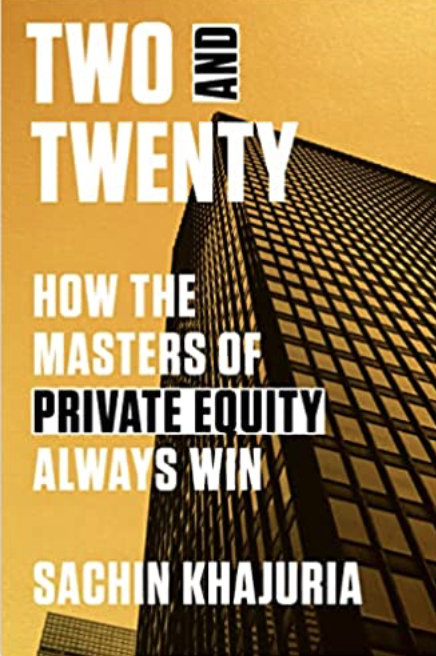
The following informative interview was provided by Sachin Khajuria, the founder of Achilles Management and a former Partner at Apollo, one of the world’s largest alternative asset management firms. He has twenty-five years of investment and finance experience and holds degrees in economics from the University of Cambridge. He is also the author of Two and Twenty: How the Masters of Private Equity Always Win, which was recently released.

This interview contains a lot of great information about the private equity fund industry and the economy. Some of the topics included are as follows:

  • What a private equity fund is and does
  • How private equity funds differ from hedge funds
  • The possibility of a recession
  • The current high inflation rate
  • Stagflation
  • The current state of the stock market
  • Advice for someone who wants to get into the private equity field
  • and much, much more!

The Sachin Khajuria Interview

Enjoy listening to the great insights and information that Sachin Khajuria provides.

To stream the interview, click:

HERE

It may take a few seconds to load. You can also download the interview as an mp3 file by right-clicking (or Control clicking) HERE and choosing “save as”.

The Two and Twenty Book

The book, Two and Twenty: How the Masters of Private Equity Always Win, is available through Amazon and other book stores.

More Information about Sachin Khajuria

Additional information can be found about Sachin Khajuria and his company at Achilleslp.com.

Enjoy the interview!

All opinions are those of Sachin Khajuria, and do not represent the opinions of this site or the interviewer. Neither this site, nor the interviewer, nor the interviewee are rendering tax, legal, or investment advice in this interview.


Affiliate links are on this page

Investing & Stock Trading Books for Gifts & Stocking Stuffers

by Fred Fuld III

Do you still have some Christmas shopping to do? Need some last minute gifts or stocking stuffers? Why not some books about investing and trading stocks.

Check the investment stock book list below.

STOCK TRADING

How to Day Trade for a Living: A Beginners Guide to Trading Tools and Tactics, Money Management
by Andrew Aziz
The fundamentals of day trading and day trading strategies. Over 8,200 five-star ratings.

Trade Like Warren Buffett
by James Altucher
Most people don’t realize that not only is Warren Buffett an investor, but he is also a trader, and a successful one at that.

High-Probability Trade Setups: A Chartists Guide to Real-Time Trading
by Timothy Knight
How to use technical approaches to find the best stock trade setups.

Beat The Crowd: How You Can Out-Invest The Herd By Thinking Differently
by Ken Fisher
This book shows how a true contrarian investor thinks and acts, and why it works more often than not.

Stock Traders Almanac 2022
by Jeffrey A. Hirsch
Every stock trader should have this book.

Day Trading Journal
Wall Street News Network
A journal with over 100 pages of specially designed fill-in-the-blank pages to track all your stock, ETF, and option trades, whether they are long or short trades. Fields include: Date, Symbol, Company, Transaction Recommended By, Why decision was made to do this transaction, Buy or Short, # of Shares, Price/share, Commission, Subtotal of opening transactions, Total opening transaction, and much more.

Stock Trading Journal
Wall Street News Network
A logbook for tracking your stock trades and investments, similar to the Day Trading Journal.

LONG TERM INVESTING & WARREN BUFFETT

Berkshire Hathaway Letters to Shareholders
by Warren Buffett
What Buffett has actually said to his shareholders.

Business Adventures Twelve Classic Tales from the World of Wall Street
This is a book that was recommended by Warren Buffett

The Intelligent Investor: The Definitive Book on Value Investing. A Book of Practical Counsel (Revised Edition)
This is a classic investment guide and would make a great gift for the new investor.

Berkshire Beyond Buffett: The Enduring Value of Values
A book about Warren Buffett that Warren Buffett recommends!

WALL STREET HISTORY

Reminiscences of a Stock Operator – first published in 1923
by Edwin Lefevre
This is the classic book on investing, trading, market timing, and crowd psychology, just as true today as it was almost a century ago. It is based on the life of top notorious trader, Jesse Livermore.

My Adventures with Your Money – first published in 1911
by George Graham Rice
About a conman who make money off the early gold mining stock boom.

The PLUNGERS and the PEACOCKS. 150 years of Wall Street – published in 1967
by Dana L. Thomas
Written during the bull market of the 1960s, it provides an entertaining history of the stock market.

Den of Thieves – published in 1991
by James B. Stewart
The “newest” of these old books, it covers the insider trading scandals involving Ivan Boesky, Michael Milken, and other Wall Street financiers  during the 1980s.

Storming The Magic Kingdom – published in 1987
by John Taylor
A must read book about the fight for control of one of America’s most famous companies.

Extraordinary Popular Delusions and the Madness of Crowds (1841) by Charles Mackay included as part of Stock Market Trivia Volume 2(2014)
The Extraordinary Popular Delusions book was written in the mid-1800s. It has many chapters, but most are unrelated to investing, such as alchemy, witches, haunted houses, etc. However, three of the chapters have extensive and entertaining information about three of the largest investment bubbles in history: the Mississippi Scheme, the South Sea Bubble, and the Tulip Mania. These three chapters are included as the last half of the  Stock Market  Trivia Volume 2 book. (In interest of full disclosure, I wrote the Stock Market Trivia 2 book.) In addition, the trivia book includes such things as the chocolate chip cookie/stock market correlation, celebrity stock indices, weird stock certificates, and more.

Investment Trivia
by Fred Fuld III
This book will give you interesting, amusing, and fascinating trivia about investments, money, stocks, bonds, and Wall Street.

INVESTMENT FRAUDS, SCAMS, AND SCANDALS

Wolf Books

The Wolf of Wall Street
by Jordan Belfort
This is the autobiographical story about the guy who made hundreds of millions of dollars by pumping and dumping low priced and penny stocks. The book is filled with sex and drugs and every other kind of decadence.  A Martin Scorsese movie starring Leonardo DiCaprio was made from this story. Be forewarned: the chapter that took place in the hospital gave me nightmares for a couple weeks.

Catching the Wolf of Wall Street: More Incredible True Stories of Fortunes, Schemes, Parties, and Prison
by Jordan Belfort
This is the followup to the previous book. What happens when Belfort is arrested, how a case was built against him, and what happens after prison.

Madoff Books

No One Would Listen: A True Financial Thriller
by Harry Markopolos
New York Times bestseller about how Markopolos uncovered Madoff’s scam.

The Wizard of Lies: Bernie Madoff and the Death of Trust
by Diana B. Henriques
All about how Madoff pulled off the biggest Ponzi scheme in history. Over 130 five star ratings on Amazon.

The End of Normal: A Wife’s Anguish, A Widow’s New Life
by Stephanie Madoff Mack
An inside look at the Madoff family written by the widow of Mark Madoff and the daughter-in-law of Bernard Madoff.Over 200 five star ratings.

Betrayal: The Life and Lies of Bernie Madoff
by Andrew Kirtzman
An in-depth look at Madoff and his victims.

Theranos Books

Bad Blood: Secrets and Lies in a Silicon Valley Startup
by John Carreyrou
Named one of the best books of the year by NPR, The New York Times Book ReviewTimeWall Street Journal, and the Washington Post. An in-depth look at Theranos and Elizabeth Holmes. Over 2,600 five star ratings.

Billion Dollar Facade: The Rise And Fall Of Theranos And Elizabeth Holmes
by Phil C. Senior
Short 140 page summary of the Theranos scandal.

Books about Scams

Scam Me If You Can: Simple Strategies to Outsmart Today’s Rip-off Artists
by Frank W. Abagnale
Abagnale was the guy who wrote the book on scamming, Catch Me If You Can, which was made into a major motion picture.

How to Smell a Rat: The Five Signs of Financial Fraud
by Ken Fisher
How investment fraudsters operate and how to avoid them. Written my billionaire money manager and former long time Forbes columnist Ken Fisher.

Billion Dollar Whale: The Man Who Fooled Wall Street, Hollywood, and the World
by Tom Wright & Bradley Hope
Named a Best Book of 2018 by the Financial Times and Fortune, it is about the man who swindles $5 billion with the help of Goldman Sachs.


Disclosure: Article contains affiliate links.