

Investment Outlook on Healthcare Plan Stocks Amid Market Turbulence

by Fred Fuld III

The healthcare sector, particularly managed‑care insurers, has been under pressure recently, driven by rising medical costs, regulatory scrutiny, earnings disappointments, and reputational challenges. Many of these companies’ stocks have significantly lagged the broader market, and investors are grappling with whether these sectors present contrarian value opportunities or structural pitfalls.

A high‑profile case is UnitedHealth (UNH): after a December 2024 incident—the murder of its insurance‑division CEO Brian Thompson—plus unexpected medical cost overruns and a DOJ investigation, the company endured a painful sell‑off. Its stock plunged by around half year‑to‑date earlier in 2025.

Yet, in a classic “buy the dip” moment, Warren Buffett’s Berkshire Hathaway added over 5 million UNH shares (worth approximately $1.6 billion) by end of June. This triggered a “Buffett Bounce,” with UNH shares rising substantially upon the announcement, Analysts now see UNH as undervalued, with forward P/E at or below historical norms, a decent dividend yield (~3%), and a consensus Buy rating with upside potential above 20%.

This recovery has pulled other managed‑care stocks—including Elevance Health (ELV)—into renewed investor focus, with many seeing longer‑term upside as the sector’s economic fundamentals reassert themselves.


Stock Profiles

UnitedHealth (UNH)

Once a Wall‑Street favorite for consistent profits and dominant scale, UNH now contends with broad operational headwinds. It slashed its 2025 earnings guidance to around $16 per share (vs. ~$20.64 expectation and prior guidance of $30+), due to soaring costs, Medicare reimbursement challenges, and regulatory and legal complications. The company faces intensive scrutiny, including criminal probes related to Medicare billing and claims practices.

However, for value investors, the valuation reset is significant. With Buffett’s entry and positive analyst sentiment, some see UNH as a turnaround play—not without risks, but potentially rewarding for those betting on operational reforms under returning CEO Stephen Hemsley and cost containment initiatives.

The stock, with a market cap of $275 billion, trades at 13 times trailing earnings and 17 times forward earnings. It carries a favorable Price to Sales Ratio of 0.65, and provides a yield of 2.8%.

Cigna (CI)

Two months ago, Cigna was trading near $297, with relatively muted volatility compared to peers. Cigna aligns with the broader managed‑care sector and likely shares similar cost and regulatory pressures. Its profile suggests steadiness and defensive appeal, though without the explosive risk/reward of UNH at current levels.

This $79 billion market cap stock has a trailing price to earnings ratio of 16 and a forward P/E of 9. The price to sales ratio is an excellent 0.30. The stock sports a yield of about 2.5%.

CVS Health (CVS)

CVS encompasses pharmacy chains, PBM services, and Aetna’s insurance plans. Although CVS’s integrated model offers resilience, its exposure to Medicare Advantage and cost pressures mirrors peers. Reports indicate investor focus on whether CVS can sustain momentum under its current management amid sector‑wide headwinds.

The stock has a market cap of $96 billion, a trailing P/E of 19, and a forward P/E of 9.6.The price sales ratio is a superior 0.23, with a fairly high yield of 3.9%.

Elevance Health (ELV)

Elevance Health was formerly Anthem. Analysts hold a bullish consensus “Buy” rating, with a 12‑month price target near $412—implying about 33% upside.

Elevance’s valuation appears attractive, with forward P/E near 10, following a 13 trailing P/E, and dividend yield around 2.2%. Though it has trended down from a 52‑week high over $567, the volatility is modest and relative fundamentals solid. Market forecasts place it as a stable performer in managed‑care. The market cap is $69.7 billion.


Conclusion

The current landscape offers a mix of risks and opportunities across healthcare plan stocks, the following which all have dividend yields above 2%:

  • UnitedHealth (UNH) represents high-risk, high-reward territory. The battered valuation, combined with Buffett’s backing and potential for operational recovery, may appeal to contrarian, value-minded investors—but only for those comfortable with regulatory and reputational risks.
  • Elevance Health (ELV) strikes a compelling balance between stability, valuation, and growth potential. With solid fundamentals and moderate upside, it’s positioned for cautious optimism.
  • Cigna (CI) and CVS Health (CVS) are less volatile and potentially more defensively oriented—though sector-wide headwinds remain a concern.

For investors evaluating this sector, the decision likely hinges on risk tolerance and time horizon: are you looking for a possible rebound champion (UNH), a strong core holding (ELV), or stable, less dramatic exposure (CI) and (CVS)? Investors attracted to contrarian, value-oriented plays may find the sector appealing right now. However, the path forward depends on successful cost management, legal clarity, and renewed growth momentum.

Disclosure: Author didn’t own any of the above at the time the article was written. No investments are expressed or implied.
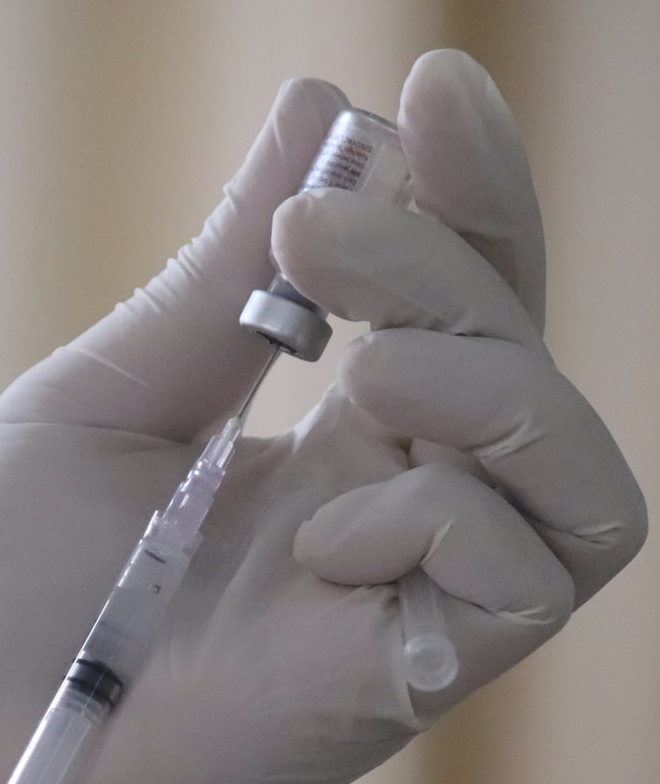

Stocks with High Sales Growth Selling at a 30% Discount

by Fred Fuld III

Every investor likes getting a bargain. So how about stocks that have had sales growth over the last five years greater than 25% yet trading is down 30% for the quarter?

Here is a list of those stocks, three of which are involved in the healthcare sector.

Emergent BioSolutions Inc. (EBS) is a life sciences company that produces products and solutions, including vaccines, that address accidental, deliberate, and naturally occurring public health threats. The stock, which has a market cap of almost $2 billion, trades at 8.83 times trailing earnings and 7.35 times forward earnings. The company just announced a stock repurchase program a couple days ago.

eHealth, Inc. (EHTH), based in Santa Clara, California, is a provider of private health insurance exchange services to individuals, families, and small businesses. The market cap is $739 million, and has a forward price to earnings ratio of 16.

PagSeguro Digital Ltd. (PAGS), based in Brazil, is a provider of financial technology solutions and services for consumers, individual entrepreneurs, micro-merchants, and small and medium-sized companies in Brazil and various other countries.  The company has a market cap of $11.6 billion, a trailing P/E ratio of 50.56, and a forward P/E of 24.63.

Timber Pharmaceuticals, Inc. (TMBR) is involved in the development and commercialization of treatments for orphan dermatologic diseases. This New Jersey based company has an extremely low market cap at $19 million.

Maybe one of these bargain basement stocks can benefit your portfolio, but keep in mind that sometimes there is a reason why a company has had a huge price drop.

Disclosure: Author didn’t own any of the above at the time the article was written.

Top Healthcare Short Squeeze Stocks

Healthcare is a fast growing sector, and will continue to grow as the baby boomers continue to get older. If healthcare stocks are heavily shorted, the potential gains can be significant. When stocks rise quickly, no matter what the reason, short sellers scramble to cover their positions by buying shares, and causing the price of the stock to move up even more.

So how can you make money on the long side from short squeezes? One technique that stock traders utilize is buying short squeeze stocks, companies have been heavily shorted. Here is a more extensive explanation of what a short squeeze is.

When you short a stock, it means that your goal is to make money from a drop in the price of a stock. Technically, what happens is that you borrow shares of a stock, sell those shares, then buy back those shares at a hopefully lower price so that those shares can be returned. This all happens electronically, so you don’t actually see all the borrowing and returning of shares; it just shows up on your screen as a negative number of shares.

Short sellers can be profitable, but sometimes when the stock moves against them, and begins to rise, the short sellers jump in right away to buy shares to cover their positions, creating what is called a short squeeze. When a short squeeze takes place, it can cause the share prices to increase fast and furiously. Any good news can trigger the short squeeze.

Some traders utilize this situation by looking for stocks to buy that may have a potential short squeeze. Here is what a short squeeze trader should take into consideration:

Short Percentage of Float ~ The float is the number of freely tradable shares and the short percentage is the number of shares held short divided by the float. Amounts over 10% to 20% are considered high and potential short squeeze plays.

Short Ratio / Days to Cover / Short Interest Ratio -This is probably the most important metric when looking for short squeeze trades, no matter what you call it. This is the number of days it would take the short sellers to cover their position based on the average daily volume of shares traded. This is a significant ratio as it shows how “stuck” the short sellers are when they want to buy in their shares without driving up the price too much. Unfortunately for the shortsellers, the longer the number of days to cover, the bigger and longer the squeeze.

Short Percentage Increase ~ This is the percentage increase in in the number of short sellers from the previous month.

Here is one example from the list below.  Petmed Express (PETS) is a stock that is heavily shorted. As a matter fo fact, 45% of the float is shorted. Plus, the short interest ratio is 10. That means it would take the short sellers ten days to cover their positions, based on the number of shares that trade each day on average.

So what stocks are heavily shorted that may be worth a closer examination? Check out the following list, but be aware, that often some stocks are heavily shorted for a reason.

All these stocks have significant short metrics, but they also have price to earnings ratios less than 16.

Maybe a short squeeze will cause a few of these to rise sharply, making your portfolio healthier.

Stock Symbol % of float Days to Cover
Ligand Pharmaceuticals LGND 35% 14.5
MiMedx Group MDXG 62% 39
Petmed Express PETS 45% 10
Tivity Health TVTY 34% 21.8

Disclosure: Author didn’t own any of the above at the time the article was written.