Sachin Khajuria: Founder of Achilles Management & Former Partner at Apollo: Exclusive Interview

by Fred Fuld III

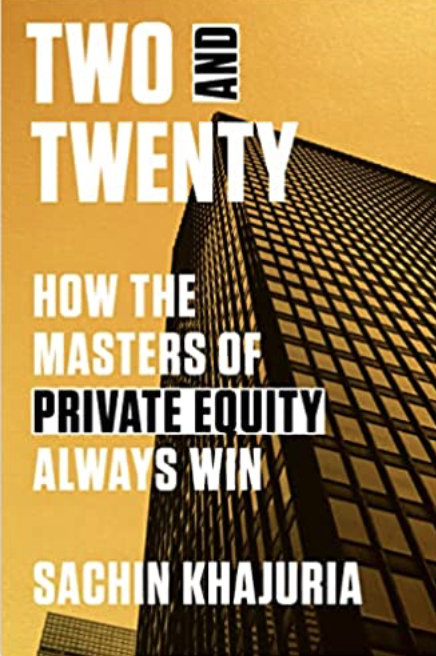
The following informative interview was provided by Sachin Khajuria, the founder of Achilles Management and a former Partner at Apollo, one of the world’s largest alternative asset management firms. He has twenty-five years of investment and finance experience and holds degrees in economics from the University of Cambridge. He is also the author of Two and Twenty: How the Masters of Private Equity Always Win, which was recently released.

This interview contains a lot of great information about the private equity fund industry and the economy. Some of the topics included are as follows:

  • What a private equity fund is and does
  • How private equity funds differ from hedge funds
  • The possibility of a recession
  • The current high inflation rate
  • Stagflation
  • The current state of the stock market
  • Advice for someone who wants to get into the private equity field
  • and much, much more!

The Sachin Khajuria Interview

Enjoy listening to the great insights and information that Sachin Khajuria provides.

To stream the interview, click:

HERE

It may take a few seconds to load. You can also download the interview as an mp3 file by right-clicking (or Control clicking) HERE and choosing “save as”.

The Two and Twenty Book

The book, Two and Twenty: How the Masters of Private Equity Always Win, is available through Amazon and other book stores.

More Information about Sachin Khajuria

Additional information can be found about Sachin Khajuria and his company at Achilleslp.com.

Enjoy the interview!

All opinions are those of Sachin Khajuria, and do not represent the opinions of this site or the interviewer. Neither this site, nor the interviewer, nor the interviewee are rendering tax, legal, or investment advice in this interview.


Affiliate links are on this page

Stocks Going Ex Dividend in July 2022

The following is a short list of some of the many stocks going ex dividend during the next month.

Many traders and investors use the stock trading technique called ‘Buying Dividends,’ also commonly referred to as ‘Dividend Capture.’ This is the strategy of buying stocks before the ex dividend date and selling the stock shortly after the ex date at about the same price, yet still being entitled to the dividend.

This technique generally works in bull markets and flat or choppy markets, but you need to avoid the strategy during bear markets. In order to be entitled to the dividend, you have to buy the stock before the ex-dividend date, and you can’t sell the stock until after the ex date.

The actual dividend may not be paid for another few weeks. WallStreetNewsNetwork.com has compiled a downloadable and sortable list of the stocks going ex dividend in the near future. The list contains many dividend paying companies, lots with market caps over $500 million, and some with yields over 2%. Here are a few examples showing the stock symbol, the ex-dividend date, the periodic dividend amount, and the yield.

Company & Symbol Ex date Amount Yield
Dollar General Corporation (DG) 7/1/2022 0.55 0.95%
Comcast Corporation (CMCSA) 7/5/2022 0.27 2.79%
Campbell Soup Company (CPB) 7/6/2022 0.37 3.26%
Intuit Inc. (INTU) 7/8/2022 0.68 0.74%
Oracle Corporation (ORCL) 7/11/2022 0.32 1.89%
Foot Locker, Inc. (FL) 7/14/2022 0.40 5.57%
Caterpillar, Inc. (CAT) 7/19/2022 1.20 2.49%
Colgate-Palmolive Company (CL) 7/20/2022 0.47 2.54%
Krispy Kreme, Inc. (DNUT) 7/26/2022 0.035 1.09%
Signet Jewelers Limited (SIG) 7/28/2022 0.20 1.31%
Hasbro, Inc. (HAS) 7/29/2022 0.70 3.50%

The additional ex-dividend stocks can be found HERE . (If you have been to the page before, and the latest link doesn’t show up, you may have to empty your cache.) If you like dividend stocks, you should check out some of the other high yield stock lists at WSTNN.com HERE .

Dividend definitions:

Declaration date: the day that the company declares that there is going to be an upcoming dividend.

Ex-dividend date: the day on which if you buy the stock, you would not be entitled to that particular dividend; or the first day on which a shareholder can sell the shares and still be entitled to the dividend.

Record date: the day when you must be on the company’s books as a shareholder to receive the dividend. The ex-dividend date is normally set for stocks at two business days before the record date.

Payment date: the day on which the dividend payment is actually made, which can be as long at two months after the ex date.

Don’t forget to reconfirm the ex-dividend date with the company before implementing this technique.

Disclosure: Author did not own any of the above at the time the article was written; affiliate links are on this page.

Looking for Short Squeeze Plays?

by Fred Fuld III

In case you haven’t noticed, the stock market has tanked recently, with most stocks dropping by a substantial amount. Some traders think we are due for a bounce, even if we are in a bear market (which I think we are).

If we are do for a bounce, what do you do?

Traders and investors can make money on the long side from short squeezes. One technique that stock traders utilize is buying short squeeze stocks, companies have been heavily shorted. Here is a more extensive explanation of  short squeezes.

When you short a stock, it means that your goal is to make money from a drop in the price of a stock. Technically, what happens is that you borrow shares of a stock, sell those shares, then buy back those shares at a hopefully lower price so that those shares can be returned. This all happens electronically, so you don’t actually see all the borrowing and returning of shares; it just shows up on your screen as a negative number of shares.

Short sellers can be profitable, but sometimes when the stock moves against them, and begins to rise, the short sellers jump in right away to buy shares to cover their positions, creating what is called a short squeeze. When a short squeeze takes place, it can cause the share prices to increase fast and furiously. Any good news can trigger the short squeeze.

Some traders utilize this situation by looking for stocks to buy that may have a potential short squeeze. Here is what a short squeeze trader should take into consideration:

Short Percentage of Float ~ The float is the number of freely tradable shares and the short percentage is the number of shares held short divided by the float. Amounts over 10% to 20% are considered high and potential short squeeze plays.

Short Ratio / Days to Cover / Short Interest Ratio -This is probably the most important metric when looking for short squeeze trades, no matter what you call it. This is the number of days it would take the short sellers to cover their position based on the average daily volume of shares traded. This is a significant ratio as it shows how “stuck” the short sellers are when they want to buy in their shares without driving up the price too much. Unfortunately for the shortsellers, the longer the number of days to cover, the bigger and longer the squeeze.

Short Percentage Increase ~ This is the percentage increase in in the number of short sellers from the previous month.

So what stocks are heavily shorted that may be worth a closer examination? Check out the following list, but be aware, that often some stocks are heavily shorted for a reason.

All these stocks have more than 30% of their float shorted, have days-to-cover greater than 6, and all are generating earnings with trailing and/or forward price to earnings ratios less than 15.

Company Symbol Short % of Float Days to Cover
Big 5 BGFV 38% 9
Big Lots BIG 34% 5.8
Conn’s CONN 42% 8.5
Camping World CWH 35% 9.1
Groupon GRPN 33% 6.2

Just keep in mind that just because a stock has good earnings ratios and are heavily shorted, doesn’t mean that the stock won’t continue to drop, especially in a bear market. Also, stocks that are significantly shorted may be shorted for a reason.

Disclosure: Author didn’t own any of the above at the time the article was written.

Why Cutting Back on Spending is the Stupidest Thing You Can Do During Rising Inflation

by Fred Fuld III

I’ve been seeing so-called experts on TV explaining about ways to survive during these inflationary times. They recommend such things as spending only the bare minimum when you go to the supermarket, buy just enough gas to get you through the next few days, and avoid going on vacation.

This is about the stupidest thing you could possibly due during a rising inflationary environment.

The best thing you can do is the exact opposite. When you shop for groceries, stock up on as many non-perishable as you can, such as canned goods (soup, vegetables, fruit, seafood), peanut butter, dried fruit, protein bars, oatmeal, honey, syrup, salt, sugar, spices, and bottled water.

Why? Because prices will continue to rise. You might as well pay lower prices now and have plenty to last you for a long while, instead of buying a little now and paying higher prices a few weeks or months from now.

You may have seen a previous post, called The Amazon Inflation Rate is Running at 68% Per Year, which showed that in a recent one-year period, the average price increases from items I ordered through Amazon increased by 68%, and even if you excluded the outliers, the items that more than doubled in price, the overall average increase was still an outrageously high 38%!!!

Inflation cannot be stopped immediately. It is not a light switch that can be turned off at any moment. It is more like turning around a giant ship, which can take a long time.

So, the same situation exists with buying gas for your car. Fill it to the maximum that the gas station has set for your credit card. (I keep hearing about people saying the pump stopped at $100 or $120.) You might as well fill your tank now instead of waiting a week, and paying 25 cents a gallon more.

As for vacations, why wait? Prices for flying will continue to rise. Airlines use petroleum fuel for their jets, and since the price of oil has been rising significantly in price, the airlines have to pass that cost along to their customers, along with all the other costs related to running an airline.

Plus, if you were considering traveling overseas, there is an additional reason to take your vacation now. The U.S. dollar is very strong compared to other currencies, so your spending will go a long way in many European and Asian countries.

Therefore, you should have no guilt about spending your money now. As a matter of fact, you would be doing yourself a financial favor.

Top Stock Market Father’s Day Gifts

by Fred Fuld III

Father’s Day is less than a week away. If you haven’t already done so, now is a great time to get a gift for your father who likes to invest or trade stocks.

The following may give you some great ideas to give as presents.

Bronze Bull and Bear Sculpture

The statue measures 10 inches wide by 9.5 inches high, and weighs 6 pounds. The state has a bronze finish with great detail.
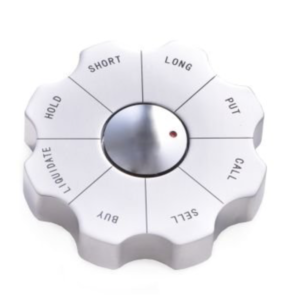
 

Stock Market Wall Street Decision Maker Desk Paperweight

This is cool! A paperweight that you can spin to determine if you should buy, sell, hold, short, etc.


Wall Street Double Feature

Available in both Blu-Ray and DVD.


Stock Traders Almanac 2022

Stock Traders Almanac
Every stock trader should have this. Filled with great information.


Bull and Bear Cuff Links

Know anyone who still wears cuff links? This would make a perfect gift.


Investment Trivia Book

This book has all kinds of trivia about the stock market, venture capital, bitcoin, and much more!



Bull Market T-Shirt

Here’s a Great Gift for Less Than 20 Bucks!
“I MADE MY MONEY BY BEING A BULL”


Bear Market T-Shirt

For those friends of yours who made their fortune by shorting the market.

Happy Father’s Day to all the fathers out there.


This page contains affiliate links.

Warren Buffett’s Portfolio Changes in Berkshire Hathaway

by Fred Fuld III

Warren Buffett has had a very long and successful career as a portfolio manager for Berkshire Hathaway. Many investors like to follow in his footsteps, at least in terms of buying the game long term investments that he is buying.

His Berkshire Hathaway stock has had an average annual return of around 20% since 1965. Not too shabby since the S&P 500 has only had a little over 10% average annual return over the same time frame.

So what has Warren Buffett been doing lately?

Warren Buffett Purchases

First, his buys. Buffett has purchased over 136 million shares of Occidental Petroleum (OXY) since the beginning of the year.

He also bought 104 million shares of HP Inc. (HPQ), and 55 million shares of Citigroup (C).

In addition, Buffett has added the following stocks to the Berkshire portfolio:

  • Celanese (CE)
  • Paramount Global (PARA)
  • McKesson (MCK)
  • Markel (MKL)
  • Ally Financial (ALLY)

Warren Buffett Sales

Buffett has also been liquidating some stocks in the Berkshire portfolio. These include:

  • Wells Fargo (WFC)
  • Abbvie (ABBV)
  • Bristol-Myers Squibb (BMY)

To see the full portfolio of Warren Buffett’s Berkshire Hathaway, click HERE.

Of course, if you really want to match the return of Berkshire Hathaway, you might as well buy the A shares (BRK-A) or the B shares (BRK-B) of the company.

Remember what Warren Buffett said:

“Don’t buy a stock unless you think it’s undervalued.”


Disclosure: Author didn’t own any of the above at the time the article was written.

Stocks Going Ex Dividend in June 2022

The following is a short list of some of the many stocks going ex dividend during the next month.

Many traders and investors use the stock trading technique called ‘Buying Dividends,’ also commonly referred to as ‘Dividend Capture.’ This is the strategy of buying stocks before the ex dividend date and selling the stock shortly after the ex date at about the same price, yet still being entitled to the dividend.

This technique generally works in bull markets and flat or choppy markets, but you need to avoid the strategy during bear markets. In order to be entitled to the dividend, you have to buy the stock before the ex-dividend date, and you can’t sell the stock until after the ex date.

The actual dividend may not be paid for another few weeks. WallStreetNewsNetwork.com has compiled a downloadable and sortable list of the stocks going ex dividend in the near future. The list contains many dividend paying companies, lots with market caps over $500 million, and some with yields over 2%. Here are a few examples showing the stock symbol, the ex-dividend date, the periodic dividend amount, and the yield.

Company Symbol Ex Div Date Payment Yield
Jack In The Box Inc. JACK 6/6/2022 0.44 2.60%
NVIDIA Corporation NVDA 6/8/2022 0.04 0.09%
Best Buy Co., Inc. BBY 6/13/2022 0.88 4.29%
DTE Energy Company DTE 6/16/2022 0.885 2.67%
Canadian Pacific Railway Limited CP 6/23/2022 0.148 0.82%
ConocoPhillips COP 6/27/2022 0.7 1.66%
Keurig Dr Pepper Inc. KDP 6/30/2022 0.188 2.17%

The additional ex-dividend stocks can be found HERE . (If you have been to the page before, and the latest link doesn’t show up, you may have to empty your cache.) If you like dividend stocks, you should check out some of the other high yield stock lists at WSTNN.com HERE .

Dividend definitions:

Declaration date: the day that the company declares that there is going to be an upcoming dividend.

Ex-dividend date: the day on which if you buy the stock, you would not be entitled to that particular dividend; or the first day on which a shareholder can sell the shares and still be entitled to the dividend.

Record date: the day when you must be on the company’s books as a shareholder to receive the dividend. The ex-dividend date is normally set for stocks at two business days before the record date.

Payment date: the day on which the dividend payment is actually made, which can be as long at two months after the ex date.

Don’t forget to reconfirm the ex-dividend date with the company before implementing this technique.

Disclosure: Author did not own any of the above at the time the article was written; affiliate links are on this page.

Statistics: Gold versus the Stock Market This Century

by Fred Fuld III

It may look like gold hasn’t been doing much of anything recently. Even for the last twelve months, gold has been relatively flat.

So what about long term. Can gold outperform the stock market over a long period of time?

Of course, it depends on the time frame, but let’s look at this century, beginning January 3, 2000 (the first business day of the year).

Based on that time frame, gold has far outperformed the various stock indices, including the S&P 500, the NASDAQ, and the Dow Jones Industrial Average.

As a matter of fact, gold has increased by 558% over that time, versus 329% for the S&P 500 as measured by the SPDR SPY ETF (SPY), which was only up 329%. This includes dividends for the SPY.

The statistics for the returns are below, which also include the Dow and the NASDAQ.

Gold versus Stocks This Century
Percentage increase in price from January 3, 2000 to the present
Dow Jones Industrial Average 190%
S&P 500 as measured by SPY 329%
NASDAQ as measured by QQQ 276%
Gold price per ounce 558%
* Adjusted for splits and dividend and/or capital gain distributions
Sources: Yahoo!Finance historical data, sdbullion.com

Is gold in your portfolio?

Hey Billionaires: If You Think That Taxes Should Be Raised for Billionaires, You Should …

by Fred Fuld III

The United States government has a huge amount of debt. As a matter of fact, the government debt now stands at more than $30,482,000,000,000.

One way to pay down that debt is through higher taxes. There are several billionaires that believe taxes on billionaires should be increased for themselves and other billionaires

Some of these wealthy individuals include:

  • Warren Buffett
  • Bill Gates
  • George Soros
  • Eli Broad
  • Michael Bloomberg
  • Mark Cuban

But what I can’t understand is that if the wealthy really believe this, what are they waiting for?

Billionaires that believe their taxes should be higher should go ahead and make more payments to the U.S. Government.

Nothing is stopping them. They can write a check out right now. Apparently, quite a few people have “donated” to the government.

There are actually a couple ways to make these payments to help reduce the national debt. Here is what they need to do:

They can go to Pay.gov, and pay online by credit card, debit card, PayPal, checking account, or savings account.

If they pay by credit card, I hope they have a nice high credit limit. Maybe they can earn points on their payments.

The other way is by writing a check, and make it payable to the Bureau of the Fiscal Service, and, in the memo section, notate that it is a gift to reduce the debt held by the public. The check should be mailed to:

Attn Dept G
Bureau of the Fiscal Service
P. O. Box 2188
Parkersburg, WV 26106-2188

So what are these billionaires waiting for? Why don’t they put their money where their mouth is?