Stocks Going Ex Dividend in November 2025

The following is a short list of some of the many stocks going ex-dividend during the next month, which can be helpful for traders and investors interested in the stock trading technique known as “Buying Dividends” or “Dividend Capture.” This strategy involves purchasing stocks before the ex dividend date and selling them shortly after the ex-date at a similar price, while still being eligible to receive the dividend payment.

Although this dividend capture strategy generally proves effective in bull markets and flat or choppy markets, it is advisable to exercise caution and consider avoiding this strategy during bear markets. To qualify for the dividend, it is necessary to buy the stock before the ex-dividend date and refrain from selling it until on or after the ex-date.

However, it is important to note that the actual dividend may not be paid for several weeks, as the payment date may not be until two months after the ex-dividend date.

For investors seeking a comprehensive list of stocks going ex-dividend in the near future, WallStreetNewsNetwork.com has compiled a downloadable list containing numerous dividend-paying companies. Here are a few examples showcasing the stock symbol, ex-dividend date, periodic dividend amount, and annual yield.

SiriusXM Holdings Inc. (SIRI)11/5/20250.274.98%
American Electric Power Company, Inc. (AEP)11/10/20250.953.16%
Starbucks Corporation (SBUX)11/14/20250.623.07%
PayPal Holdings, Inc. (PYPL)11/19/20250.140.81%
Applied Materials, Inc. (AMAT)11/20/20250.460.79%
Microsoft Corporation (MSFT)11/20/20250.910.70%
T-Mobile US, Inc. (TMUS)11/26/20251.021.94%

To access the entire list of over 100 ex-dividend stocks, subscribers will receive an email in the next couple days with the full list. If you are not already a subscriber, you can sign up using the provided signup box below. Don’t miss out on this valuable information, and the best part is that it’s free!

Dividend Definitions

To better understand the dividend-related terms, let’s define them:

Declaration date: This refers to the day when a company announces its intention to distribute a dividend in the future.
Ex-dividend date: On this day, if you purchase the stock, you would not be eligible to receive the upcoming dividend. It is also the first day on which a shareholder can sell their shares and still receive the dividend.
Record date: This marks the day when you must be recorded on the company’s books as a shareholder to qualify for the dividend. Typically, the ex-dividend date is set two business days prior to the record date.
Payment date: This is the day on which the dividend payment is actually made to the eligible shareholders. It’s important to note that the payment date can be as long as two months after the ex-date.

Before implementing the “Buying Dividends” technique, it is crucial to reconfirm the ex-dividend date with the respective company to ensure accuracy and avoid any unexpected changes.

In conclusion, being aware of the stocks going ex-dividend can be advantageous for traders and investors employing the “Buying Dividends” strategy. WallStreetNewsNetwork.com provides a convenient resource to access a comprehensive list of such stocks, allowing individuals to plan their investment decisions effectively. Remember to stay informed and consider market conditions before employing any investment strategy.

Disclosure: Author may have positions in some of the above at the time the article was written. No investment recommendations are expressed or implied.

Understanding the Short Squeeze: The Three Top High-Risk Squeeze Plays

by Fred Fuld III

Last week, on October 20, Beyond Meat (BYND) closed at 1.47 a share. Two days later, the stock spiked above $7 a share, an increase of over 400%, which many believe was caused by a short squeeze.

In the volatile world of stock trading, few phenomena capture the imagination quite like the short squeeze. It’s a dramatic reversal where the underdog stock suddenly roars back, leaving short sellers scrambling and fortunes flipping overnight.

But what exactly is a short squeeze, and why do certain stocks become prime candidates for this financial fireworks display? As of late October 2025, with market jitters high amid economic uncertainties, investors are eyeing heavily shorted names like Hertz Global Holdings (HTZ), C3.ai (AI), and Hims & Hers Health (HIMS).

These stocks boast some of the highest short interest levels as a percentage of their float—meaning a large chunk of available shares are bet against them—setting the stage for potential explosive moves if sentiment shifts.

At its core, short selling is a strategy where investors borrow shares of a stock they believe will decline in value, sell them immediately at the current price, and later buy them back at a (hopefully) lower price to return to the lender, pocketing the difference as profit. It’s a bearish bet, often used by hedge funds and traders anticipating trouble for a company, such as poor earnings or industry headwinds.

However, if the stock price rises instead—due to positive news, strong earnings, or even coordinated buying from retail investors—short sellers face mounting losses. To limit damage, they must “cover” by buying back the shares, which drives demand and pushes the price even higher. This feedback loop creates the squeeze: panic buying amplifies the rally, sometimes leading to parabolic gains.

The most infamous example is the 2021 GameStop (GME) saga, where short interest exceeded 140% of the float. Retail traders on platforms like Reddit’s WallStreetBets fueled a buying frenzy, sending the stock from under $20 to nearly $500 in days, inflicting billions in losses on short sellers like Melvin Capital.

Short squeezes aren’t just memes; they’re rooted in market mechanics and can signal deeper issues, like over-optimism among bears or undervalued fundamentals. Key indicators include high short interest (typically over 20-30% of float), low float (fewer shares available to trade), and rising borrow fees (the cost to short the stock).

In today’s environment, with AI hype, travel recovery, and telehealth booms influencing sectors, squeezes remain a wildcard. Below, we profile three stocks currently topping short interest lists, each with over 30% of their float shorted, exploring their businesses, challenges, and squeeze potential.

Hertz Global Holdings (HTZ): The Rental Giant in the Rearview Mirror

Hertz Global Holdings, Inc. (NASDAQ: HTZ) is a cornerstone of the global car rental industry, operating as one of the world’s leading providers of vehicle rental and mobility solutions. Founded over a century ago, the company—through subsidiaries like The Hertz Corporation—manages a fleet of more than 500,000 vehicles across two main segments: Americas Rental Car (RAC) and International RAC. It serves leisure and business travelers at thousands of airport and neighborhood locations worldwide, offering everything from economy cars to luxury rides and electric vehicles (EVs).

Hertz has been at the forefront of innovation, partnering with brands like Tesla to integrate EVs into its fleet and launching subscription models for urban dwellers. However, the company has weathered storms: It filed for bankruptcy in 2020 amid COVID-19 travel shutdowns, emerging in 2021 with a leaner structure but saddled with debt. By mid-2025, Hertz reported revenues of around $9 billion annually, though profitability remains elusive with net losses exceeding $2.8 billion in recent years, driven by high fleet depreciation and softening demand.

What makes HTZ a squeeze candidate? As of October 15, 2025, short interest stands at a staggering 43.22% of the float, with over 54.7 million shares shorted—reflecting skepticism about its EV pivot (which led to writedowns on unsold Teslas) and competition from peers like Enterprise and Avis. The stock trades around $5 per share, down sharply from post-bankruptcy highs, but recent stake-building by activists like Pershing Square has sparked buzz.

A surge in travel demand or successful debt refinancing could trigger covering, potentially mirroring the 2020-2021 rally that saw shares quintuple. Yet, with a market cap under $2 billion and ongoing losses, bears argue it’s a value trap—making any squeeze a high-octane gamble.

C3.ai (AI): Betting Against the AI Boom?

C3.ai, Inc. (NYSE: AI), founded in 2009 by enterprise software veteran Thomas Siebel, positions itself as a pioneer in enterprise artificial intelligence (AI), delivering a comprehensive platform to help large organizations harness AI for digital transformation.

Headquartered in Redwood City, California, the company offers over 130 pre-built, turnkey AI applications tailored for industries like manufacturing, energy, financial services, and defense. Its C3 Agentic AI Platform enables clients—ranging from Shell and the U.S. Air Force to Bank of America—to build, deploy, and operate AI models at scale, tackling use cases such as predictive maintenance, supply chain optimization, and fraud detection. Unlike consumer-facing AI tools, C3.ai focuses on “enterprise-grade” solutions, emphasizing explainability, security, and integration with legacy systems. In fiscal 2025, the firm reported accelerating revenue growth, with subscription bookings up amid the generative AI wave, though it remains unprofitable due to heavy R&D investments.

Short interest in C3.ai hovers at 31.71% of the float as of October 15, 2025, with nearly 40 million shares shorted, down slightly from summer peaks but still elevated amid broader AI sector volatility. Trading near $18 per share with a $2.4 billion market cap, the stock has underperformed peers like Palantir despite AI tailwinds, fueling bearish bets on overvaluation and competition from open-source alternatives.

A major contract win or blowout earnings—expected in November 2025—could ignite a squeeze, especially with days-to-cover at 4.5, amplifying any retail-driven rally. Optimists see C3.ai as undervalued in the AI gold rush; skeptics point to its history of missed targets. Either way, it’s a stock where technology hype meets short-seller skepticism.

Hims & Hers Health (HIMS): Telehealth’s Disruptive Darling

Hims & Hers Health, Inc. (NYSE: HIMS), launched in 2017, has redefined accessible healthcare through its telehealth platform, connecting millions to licensed providers for personalized treatments in sensitive areas like sexual health, hair loss, mental wellness, dermatology, primary care, and weight management.

What started as “Hims” for men’s issues (e.g., erectile dysfunction via sildenafil) expanded to “Hers” for women in 2018, and now offers compounded GLP-1 drugs for weight loss amid the Ozempic boom. Operating a direct-to-consumer model with online consultations, discreet shipping, and affordable generics, the company boasts over 1.5 million subscribers as of mid-2025. Its Q2 2025 results were a standout: Revenue soared 73% year-over-year to $544.8 million, with net income flipping positive at $42.5 million and adjusted EBITDA at $82.2 million, underscoring scalable growth in a post-pandemic telehealth surge.

Yet, with short interest at 36.67% of the float (over 66 million shares shorted) as of October 15, 2025, HIMS remains a battleground stock, trading around $48 per share with a $14 billion market cap. Bears cite regulatory risks around compounded drugs, margin pressures from marketing spends, and competition from traditional pharmacies, pushing short interest near all-time highs.

Days-to-cover sit at just 2.3, suggesting quick potential for a squeeze if subscriber growth accelerates or FDA approvals expand offerings. Recent acquisitions like Zava (a European telehealth provider) signal international ambitions, but valuation debates rage—forward multiples exceed 10x sales. For bulls, HIMS embodies the future of consumer health; for shorts, it’s frothy. A catalyst like Q3 earnings could decide the next chapter.

Short squeezes embody the market’s raw power dynamics: a clash between conviction and capitulation. While HTZ, AI, and HIMS offer tantalizing setups, they also carry risks—volatility, dilution, or fundamental cracks could crush longs too. Investors eyeing these should monitor borrow rates and news flow closely. In the end, the squeeze isn’t just about price; it’s a reminder that in stocks, the crowd can sometimes rewrite the script.

Disclosure: Author didn’t own any of the above at the time the article was written. No investment advice is expressed or implied.

Gold’s Impressive Rally Outperforming the S&P 500: Three Top Gold Stocks

by Fred Fuld III

This strong gain highlights gold’s resilience in a landscape marked by interest rate shifts, global supply chain disruptions, and ongoing inflationary trends.

When compared to major benchmarks, gold has notably outperformed the S&P 500, which returned about 14.8% over the same period, with the index climbing from 5,815 to 6,674.

This strong gain highlights gold’s resilience in a landscape marked by interest rate shifts, global supply chain disruptions, and ongoing inflationary trends.

When compared to major benchmarks, gold has notably outperformed the S&P 500, which returned about 14.8% over the same period, with the index climbing from 5,815 to 6,674.

However, it has trailed Bitcoin, the leading cryptocurrency, which saw a more explosive return of around 65.2%, rising from $67,041 to $110,781.

While Bitcoin’s volatility contributed to its higher gains, gold’s steadier appreciation—coupled with lower risk—has appealed to conservative investors seeking portfolio diversification.

Here’s a quick comparison of the one-year returns:

AssetStarting Price (Oct 15, 2024)Ending Price (Oct 15, 2025)Return (%)
Gold$2,663/oz$4,198/oz57.7
S&P 5005,8156,67414.8
Bitcoin$67,041$110,78165.2

Gold’s outperformance relative to the stock market can be attributed to several factors, including heightened demand from central banks, persistent inflation concerns, and safe-haven buying amid international conflicts. Unlike equities, which faced headwinds from tech sector corrections and varying corporate earnings, gold benefited from its intrinsic value as a non-yielding asset in a low-interest environment.

Spotlight on Gold Mining Stocks: Attractive Valuations and Dividends

For investors looking to gain exposure to gold’s upside without directly buying the metal, gold mining stocks offer an alternative with potential leverage to rising prices. Three notable companies—Barrick Mining (B), Harmony Gold Mining (HMY), and Newmont (NEM)—stand out for their operations in the sector. While their PE ratios are around 15-16, they feature Price to Earnings Growth [PEG] ratios generally below 1 in recent analyses, indicating potentially undervalued growth prospects relative to earnings. All three also pay dividends, providing income alongside capital appreciation potential.

Barrick Mining (B): As one of the world’s largest gold producers, Barrick boasts a trailing PE ratio of about 16.0 and a PEG ratio of 0.24. It pays a dividend with a payout ratio of around 29.8%, making it appealing for yield-seeking investors.

Harmony Gold Mining (HMY): Focused on South African and Papua New Guinean operations, Harmony has a PE ratio of approximately 16.2 and a PEG ratio of 0.16. Its forward dividend yield is about 1.1%, supported by a low payout ratio.

Newmont (NEM): The industry giant operates across multiple continents and carries a trailing PE ratio of around 16.1, with a PEG ratio of 0.24 (though some estimates show 2.83 for expected growth). Newmont offers a dividend yield of about 1.1%, with an annual payout of $1.00 per share.

These miners often amplify gold’s price movements due to operational leverage, but they also carry risks like production costs and regulatory hurdles. With gold’s momentum showing no signs of abating, these stocks could provide a compelling entry point for those bullish on the yellow metal.

In summary, while gold hasn’t surpassed Bitcoin’s stellar run, its solid outperformance against the S&P 500 underscores its role as a portfolio stabilizer in uncertain times. Investors eyeing the sector should consider both the metal itself and related mining equities for balanced exposure.

Disclosure: Author didn’t own any of the above at the time the article was written. No investment recommendations are expressed or implied.

Stocks Going Ex Dividend in October 2025

The following is a short list of some of the many stocks going ex-dividend during the next month, which can be helpful for traders and investors interested in the stock trading technique known as “Buying Dividends” or “Dividend Capture.” This strategy involves purchasing stocks before the ex dividend date and selling them shortly after the ex-date at a similar price, while still being eligible to receive the dividend payment.

Although this dividend capture strategy generally proves effective in bull markets and flat or choppy markets, it is advisable to exercise caution and consider avoiding this strategy during bear markets. To qualify for the dividend, it is necessary to buy the stock before the ex-dividend date and refrain from selling it until on or after the ex-date.

However, it is important to note that the actual dividend may not be paid for several weeks, as the payment date may not be until two months after the ex-dividend date.

For investors seeking a comprehensive list of stocks going ex-dividend in the near future, WallStreetNewsNetwork.com has compiled a downloadable list containing numerous dividend-paying companies. Here are a few examples showcasing the stock symbol, ex-dividend date, periodic dividend amount, and annual yield.

Comcast Corporation Class A (CMCSA)10/1/20250.334.34%
Morningstar, Inc. (MORN)10/3/20250.4550.80%
Intuit Inc. (INTU)10/9/20251.200.63%
Phillips Edison & Company, Inc. (PECO)10/15/20250.10833.86%
Horizon Technology Finance Corporation (HRZN)10/16/20250.1121.22%
(based on previous dividend)
Casey’s General Stores, Inc. (CASY)10/31/20250.570.41%
Scholastic Corporation (SCHL)10/31/20250.202.77%

To access the entire list of over 100 ex-dividend stocks, subscribers will receive an email in the next couple days with the full list. If you are not already a subscriber, you can sign up using the provided signup box below. Don’t miss out on this valuable information, and the best part is that it’s free!

Dividend Definitions

To better understand the dividend-related terms, let’s define them:

Declaration date: This refers to the day when a company announces its intention to distribute a dividend in the future.
Ex-dividend date: On this day, if you purchase the stock, you would not be eligible to receive the upcoming dividend. It is also the first day on which a shareholder can sell their shares and still receive the dividend.
Record date: This marks the day when you must be recorded on the company’s books as a shareholder to qualify for the dividend. Typically, the ex-dividend date is set two business days prior to the record date.
Payment date: This is the day on which the dividend payment is actually made to the eligible shareholders. It’s important to note that the payment date can be as long as two months after the ex-date.

Before implementing the “Buying Dividends” technique, it is crucial to reconfirm the ex-dividend date with the respective company to ensure accuracy and avoid any unexpected changes.

In conclusion, being aware of the stocks going ex-dividend can be advantageous for traders and investors employing the “Buying Dividends” strategy. WallStreetNewsNetwork.com provides a convenient resource to access a comprehensive list of such stocks, allowing individuals to plan their investment decisions effectively. Remember to stay informed and consider market conditions before employing any investment strategy.

Disclosure: Author may have positions in some of the above at the time the article was written. No investment recommendations are expressed or implied.

Bargain Hunters’ Delight: Four Stocks Trading Below Cash Per Share with Minimal Debt

by Fred Fuld III

In the volatile world of stock investing, few opportunities scream “value” louder than companies trading below their cash per share. This phenomenon occurs when a stock’s market price is lower than the amount of cash and cash equivalents divided by the number of outstanding shares—essentially meaning investors can buy a dollar’s worth of cash for less than a buck. When paired with little to no debt, these stocks offer a rare combination of safety and upside potential.

Why Buy Stocks Below Cash Per Share?

The allure is straightforward and compelling. First, downside protection is baked in: In the worst-case scenario, the company could liquidate its cash holdings, pay off any nominal debt, and return value to shareholders exceeding the current purchase price. This acts as a financial floor, shielding investors from total loss. Second, it often implies the underlying business is “free”—you’re paying for the cash pile but getting the operations, intellectual property, and growth prospects thrown in at no extra cost. Third, low-debt profiles minimize bankruptcy risk and interest burdens, allowing management flexibility to pivot, invest in R&D, or pursue acquisitions without the drag of leverage. Historically, such setups have attracted value investors like Warren Buffett, who famously sought “cigar butt” stocks—cheap, undervalued assets with one last puff of potential.

As of late September 2025, amid market rotations and sector-specific pressures, four notable names fit this profile: Alumis (ALMS), Arvinas (ARVN), Green Dot (GDOT), and Keros Therapeutics (KROS). These span biotech innovation and fintech stability, all with enterprise values dipping negative due to cash hoards outpacing market caps. Let’s dive in.

Alumis Inc. (ALMS): Precision Immunology on the Cheap

Alumis Inc. is a clinical-stage biopharmaceutical company laser-focused on immune-mediated diseases, leveraging a precision medicine platform to develop oral small-molecule therapies. Founded on cutting-edge genomics and AI-driven drug design, the company aims to transform treatments for conditions like psoriasis and atopic dermatitis, where current options fall short in efficacy or convenience.

Financially, Alumis is a textbook cash-rich bargain. As of June 30, 2025, it held $486.32 million in cash against just $38.78 million in debt—barely 8% of its liquid assets. With 96.88 million shares outstanding, that’s $5.02 in cash per share, dwarfing the September 26 closing price of $4.05 and a market cap of $421.46 million. Enterprise value? A negative -$26.08 million, signaling the market is essentially ignoring the biotech’s pipeline while over-discounting risks in early trials.

For investors, this setup offers fortress-like protection: Even if development hits snags, the cash runway extends years, funding Phase 2 readouts without dilution. Upside? Successful precision therapies could multiply value in a $100 billion immunology market.

Arvinas Inc. (ARVN): Degrading Disease Proteins for Pennies

Arvinas stands at the forefront of targeted protein degradation, pioneering PROTAC (proteolysis targeting chimeras) technology to tag and destroy disease-causing proteins inside cells—a leap beyond traditional inhibitors. The New Haven-based biotech targets oncology and neuroscience, with lead candidates like vepdegestrant in Phase 3 for breast cancer and ARV-102 advancing for neurodegenerative disorders.

On the balance sheet, Arvinas is awash in liquidity. Q2 2025 cash stood at $861.2 million, offset by a negligible $9.9 million in debt. Divided by 73.42 million shares, cash per share hits $11.73—well above the $8.27 close on September 26, with a $607.16 million market cap yielding a negative enterprise value of -$244.14 million. This undervaluation stems from trial delays and partnership dynamics, but the debt-free status (effectively) ensures no forced capital raises.

The advantage here is asymmetric: Minimal downside from the cash buffer, while PROTAC breakthroughs could validate a platform worth billions, attracting big pharma buyouts.

Green Dot Corporation (GDOT): Fintech Fortress with a Massive Cash Vault

Unlike its biotech peers, Green Dot Corporation operates in the more grounded realm of financial technology. As a registered bank holding company, it powers prepaid debit cards, digital banking, and payment platforms for underserved consumers and businesses—think Walmart’s MoneyCard or its B2B embedded finance solutions. Headquartered in Austin, Green Dot processes billions in transactions annually, capitalizing on the shift to cashless economies.

What sets it apart? An eye-popping $2.31 billion cash pile as of June 30, 2025, against $73.39 million in debt—less than 4% leverage. Per 55.39 million shares, that’s $41.71 in cash per share, towering over the $14.20 closing price and $786.58 million market cap. Enterprise value clocks in at a bizarre negative -$1.45 billion, reflecting regulatory headwinds and competition from neobanks, but underscoring the embedded value.

Investors get a stable, revenue-generating business (with recurring fees) essentially for free, backed by a war chest that could fuel acquisitions or share buybacks. Low debt amplifies resilience in economic downturns, when demand for affordable banking spikes.

Keros Therapeutics Inc. (KROS): Hematology Hope at a Discount

Keros Therapeutics is a clinical-stage biopharma zeroing in on hematologic disorders, developing novel activin receptor inhibitors to boost red blood cell production and treat conditions like myelodysplastic syndromes (MDS) and anemia. Its lead asset, KER-050, is in Phase 2 trials, with potential to address unmet needs in a market dominated by injectables.

Balance sheet-wise, Keros mirrors its peers: $690.21 million in cash at Q2 2025, dwarfing $17.95 million in debt. Cash per share? $17.00 across 40.62 million shares—edging out the $16.05 September 26 close and $651.88 million market cap, for a negative enterprise value of -$20.38 million. Clinical setbacks have pressured the stock, but the near-debtless structure provides a multi-year runway.

This translates to high-conviction value: Cash covers the downside, while positive trial data could catalyze a rerating in the $20 billion hematology space.

Navigating Risks in Cash-Rich Bargains

While these stocks offer compelling safety margins, they’re not risk-free. Biotechs like ALMS, ARVN, and KROS face binary trial outcomes and regulatory hurdles, potentially eroding cash through burns (though runways are long). GDOT contends with fintech disruption and consumer spending cycles.

In a market chasing growth narratives, these cash-heavy underdogs represent a contrarian play. With minimal debt and prices below cash per share, they embody the ultimate margin of safety—perfect for patient investors eyeing 2026 catalysts. As always, due diligence and diversification are key, but for value seekers, this quartet is worth a deeper look.

Disclosure: Author didn’t own any of the above at the time the article was written. No investment recommendations are expressed or implied.

Top 3 Stocks Using the Classic Ratios

by Fred Fuld III

Stock investors often rely on fundamental ratios to evaluate whether a company’s shares are attractively valued, fairly priced, or overvalued. Among the most widely used are the Price-to-Earnings (P/E) ratio, Price-to-Sales (P/S) ratio, Price-to-Earnings Growth (PEG) ratio, and Price-to-Book (P/B) ratio. Each of these measures captures a different perspective on valuation, and together they help investors build a more complete picture of a company’s financial standing and future prospects.

The P/E ratio is perhaps the most common valuation tool. It compares a company’s stock price to its earnings per share (EPS), essentially showing how much investors are willing to pay for each dollar of profit. A higher P/E ratio generally suggests that investors expect stronger future growth, while a lower P/E ratio may indicate undervaluation or weaker growth expectations. As regards to determining undervaluation, a P/E of less than 15 is good.

Within the P/E category, there is an important distinction between the trailing P/E and the forward P/E. The trailing P/E is based on the company’s actual earnings over the past twelve months, making it a snapshot of current profitability relative to stock price. By contrast, the forward P/E uses analysts’ earnings forecasts for the next twelve months, offering a more forward-looking perspective. While the forward P/E can highlight growth potential, it also carries greater risk of inaccuracy since it depends on estimates rather than historical data.

The Price-to-Sales ratio, or P/S ratio, provides another lens for valuation. Instead of focusing on profits, which can be influenced by accounting choices and one-time charges, the P/S ratio compares a company’s stock price to its revenue per share. This makes it especially useful for evaluating companies that are not yet profitable or are experiencing earnings volatility, such as startups or firms in cyclical industries. A lower P/S ratio may suggest that a stock is undervalued relative to its sales, though it should be interpreted in the context of profit margins and industry standards. A P/S ratio of less than 1 is considered good in terms of undervaluation of a stock.

The PEG ratio adds another layer of nuance by combining the P/E ratio with expected earnings growth. It divides a company’s P/E ratio by its projected annual earnings growth rate, providing a measure of whether the stock’s valuation is justified by its growth prospects. A PEG ratio of 1.0 is often seen as “fair value,” with higher numbers suggesting that investors are paying a premium for growth and lower numbers signaling potential undervaluation. The PEG ratio is particularly helpful for growth stocks, where high P/E ratios might otherwise appear expensive without considering the company’s future earnings potential.

The Price-to-Book ratio, or P/B ratio, compares a company’s stock price to its book value per share, which represents the net asset value of the company recorded on its balance sheet. This ratio is especially relevant for industries with significant tangible assets, such as financial institutions, real estate, and manufacturing. A P/B ratio below 1.0 can indicate that a stock is trading for less than the value of its assets, potentially signaling a bargain. However, in asset-light industries like technology, where intangible assets such as intellectual property drive value, the P/B ratio may be less meaningful.

Here are three companies all of which have all favorable ratios:

(MOS) The Mosaic Company

  • Trailing P/E: ~11.6
  • Forward P/E: Lower, roughly 10.8. This reflects analysts’ estimates of future earnings being higher than what was earned in the past twelve months. 
  • P/S (Price-to-Sales): Trailing P/S is about 0.96, forward P/S about 0.76.
  • P/B (Price-to-Book): MOS has a P/B of roughly 0.87. That is, the stock is trading below book value per share.
  • PEG: MOS’s PEG ratio is approximately 0.88. That means relative to its expected earnings growth, the stock appears modestly undervalued (a PEG below 1 is often seen as potentially favorable, depending on growth risk, etc.).

Interpretation for MOS: The forward P/E being lower than the trailing P/E suggests that earnings are expected to improve. Combined with a PEG under 1, and a P/B less than 1, it may indicate the market is not fully pricing in MOS’s growth or is cautious for some reason (commodity price risk, fertilizer demand, regulatory risk, etc.). The P/S near 1 also means price is roughly equivalent to sales, but profitability margins will matter a lot in assessing how attractive that is.


(GT) Goodyear Tire & Rubber

  • Trailing P/E: ~ 6.0.
  • Forward P/E: ~ 6.36. This is higher than its trailing P/E, suggesting that earnings are expected to be lower (or the growth is not strong) or that recent earnings were unusually good or a one-off.
  • P/S: Very low, around 0.13 trailing and forward.
  • P/B: ~ 0.48. The stock is trading well below its book value per share.
  • PEG: ~ 0.41 according to one source.

Interpretation for GT: Goodyear’s low trailing P/E, low P/S, and fairly low P/B suggest the market is strongly discounting its earnings prospects or anticipating trouble. The fact that forward P/E is higher than trailing P/E might suggest either earnings are expected to decline or that trailing earnings were boosted in the recent period. A PEG of ~0.48 might look attractive on its face, but one must question whether the growth assumptions underlying that PEG are realistic. For cyclical and capital-intensive businesses like tire manufacturing, external factors (rubber prices, labor costs, supply chain, demand cycles) can cause big swings.


(BFH) Bread Financial Holdings

  • Trailing P/E: ~ 10.8
  • Forward P/E: 7.0
  • P/S: 0.63
  • P/B: 0.94
  • PEG: 0.97

Interpretation for BFH: With a trailing P/E of about 10.6×, BFH is not extremely expensive on a historical earnings basis, and with a much lower forward P/E, further earnings growth is expected.

These examples illustrate how the fundamental ratios give different lenses — trailing vs forward P/E to see past vs expected earnings; P/S when profits might be volatile; P/B when assets matter; PEG to combine valuation with growth.

Taken together, these four fundamental ratios—P/E, P/S, PEG, and P/B—help investors analyze stocks from multiple angles, balancing current profitability, revenue generation, growth potential, and underlying asset value. None of them should be used in isolation, as industries and business models vary widely, but when combined they form a powerful toolkit for making informed investment decisions.

Disclosure: Author didn’t own any of the above at the time the article was written. No recommendations are expressed or implied.

Stocks Going Ex Dividend in September 2025

The following is a short list of some of the many stocks going ex-dividend during the next month, which can be helpful for traders and investors interested in the stock trading technique known as “Buying Dividends” or “Dividend Capture.” This strategy involves purchasing stocks before the ex dividend date and selling them shortly after the ex-date at a similar price, while still being eligible to receive the dividend payment.

Although this dividend capture strategy generally proves effective in bull markets and flat or choppy markets, it is advisable to exercise caution and consider avoiding this strategy during bear markets. To qualify for the dividend, it is necessary to buy the stock before the ex-dividend date and refrain from selling it until on or after the ex-date.

However, it is important to note that the actual dividend may not be paid for several weeks, as the payment date may not be until two months after the ex-dividend date.

For investors seeking a comprehensive list of stocks going ex-dividend in the near future, WallStreetNewsNetwork.com has compiled a downloadable list containing numerous dividend-paying companies. Here are a few examples showcasing the stock symbol, ex-dividend date, periodic dividend amount, and annual yield.

QUALCOMM Incorporated (QCOM)9/4/20250.892.21%
PepsiCo, Inc. (PEP)9/5/20251.42253.83%
Alphabet Inc. Class A (GOOGL)9/8/20250.210.39%
NVIDIA Corporation (NVDA)9/11/20250.010.02%
Nasdaq, Inc. (NDAQ)9/12/20250.271.14%
T. Rowe Price Group, Inc. (TROW)9/15/20251.274.72%
Xcel Energy Inc. (XEL)9/15/20250.573.15%
Xerox Holdings Corporation (XRX)9/30/20250.0252.51%

To access the entire list of over 100 ex-dividend stocks, subscribers will receive an email in the next couple days with the full list. If you are not already a subscriber, you can sign up using the provided signup box below. Don’t miss out on this valuable information, and the best part is that it’s free!

Dividend Definitions

To better understand the dividend-related terms, let’s define them:

Declaration date: This refers to the day when a company announces its intention to distribute a dividend in the future.
Ex-dividend date: On this day, if you purchase the stock, you would not be eligible to receive the upcoming dividend. It is also the first day on which a shareholder can sell their shares and still receive the dividend.
Record date: This marks the day when you must be recorded on the company’s books as a shareholder to qualify for the dividend. Typically, the ex-dividend date is set two business days prior to the record date.
Payment date: This is the day on which the dividend payment is actually made to the eligible shareholders. It’s important to note that the payment date can be as long as two months after the ex-date.

Before implementing the “Buying Dividends” technique, it is crucial to reconfirm the ex-dividend date with the respective company to ensure accuracy and avoid any unexpected changes.

In conclusion, being aware of the stocks going ex-dividend can be advantageous for traders and investors employing the “Buying Dividends” strategy. WallStreetNewsNetwork.com provides a convenient resource to access a comprehensive list of such stocks, allowing individuals to plan their investment decisions effectively. Remember to stay informed and consider market conditions before employing any investment strategy.

Disclosure: Author may have positions in some of the above at the time the article was written.

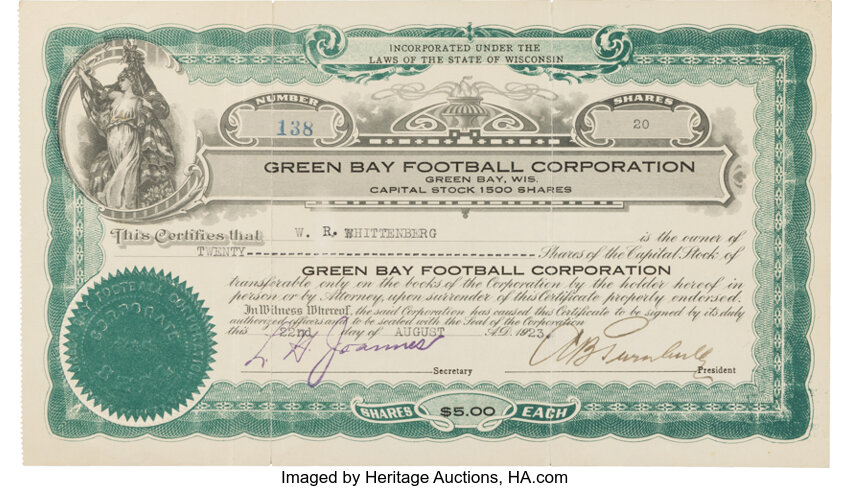
Beyond the Stock Market: Investing in History with Autographed Stock Certificates

By Fred Fuld III

Earlier this month, a book written by Harry Houdini that included his signature went up for auction at Potter & Potter Auctions, with a starting bid of $3,000 and an estimate of $6,000 to $12,000. After much spirited bidding, the item was hammered at $50,400. 

As an investor, you may be looking for an item that is more reasonably priced and connected to stocks and bonds. You could consider a Houdini Picture Corporation stock certificate, handsigned by Harry Houdini, which would probably be priced between $6,000 and $10,000.

In the world of alternative investments, few assets offer the unique blend of financial potential and tangible history as autographed documents, particularly antique stock certificates and other historical papers bearing the signatures of the famous. Beyond the value of the paper itself, a signature from a titanic figure—be it a President, a titan of industry, or a cultural icon—transforms a simple document into a coveted collectible and a compelling investment.

For the savvy collector, historic documents signed by famous figures, a field known as scripophily when focusing on stock certificates and bonds, are gaining significant attention. But as with any investment, prudence, authentication, and proper care are the pillars of success.


The Financial Lure of a Famous Hand

The value of an autographed document is determined by several key factors: The signer’s fame, the rarity of their signature, the condition of the document, and the historical significance of the item itself.

Antique stock certificates, which once represented shares of ownership in companies, are a prime example. While a certificate from a defunct company may be financially worthless as a security, a signature from an influential founder like J. P. Morgan, on a New Jersey Junction Railroad bond, or Henry Wells and William Fargo, on an American Express stock, can catapult its value into the thousands, or even tens of thousands, of dollars. Even some modern certificates with a noted signature can command around a thousand dollars, such as Jack Tramiel’s signature on an Atari stock.

Key Financial Benefits:

  • Appreciation Potential: Signatures of historical and cultural icons, especially those whose output was limited or who died young, exhibit strong long-term appreciation due to finite supply and enduring demand.
  • Tangible Asset: Unlike digital assets, a historic document is a physical, hard asset that can be viewed, held, and displayed.
  • Historical Context: Signatures on documents that relate directly to the person’s historical legacy (e.g., an Abraham Lincoln-signed military document) command a premium over a simple “cut” signature. The convergence of history and autograph creates exceptional value.
  • Diversification: Collectibles offer a degree of portfolio diversification, often performing independently of traditional financial markets.

The Importance of Authentication: Vetting Your Investment

The market for autographs is lucrative, which, unfortunately, makes it a target for counterfeiters. Forging a famous signature is far easier than printing millions of dollars in banknotes. For investors, authenticity is an important factor.

This is where respected Third-Party Authentication, also referred to as TPA, services come into play. Organizations like PSA/DNA (Professional Sports Authenticator) and Beckett Authentication Services (BAS) employ forensic analysis, comparing signatures against extensive databases of known genuine examples.

Why TPA is Essential:

  • Establishes Credibility: A TPA certificate of authenticity (COA) provides a court-approved chain of evidence, instilling buyer confidence and eliminating doubt about the item’s legitimacy.
  • Enhances Market Value: Items authenticated by major services consistently sell for significantly higher prices than unauthenticated pieces. A TPA COA acts as a verifiable pedigree.
  • Protection Against Fraud: The forensic methods used by these services—analyzing ink, paper aging, and signature fluidity—are the best defense against sophisticated forgeries.

If the item is not already authenticated but you want the Certificate of Authenticity, factor the cost of TPA into your investment budget.


Preservation is Protection: The Importance of Safe Storage

An autographed document is a fragile piece of history, vulnerable to its environment. Failure to store it correctly can lead to irreparable damage, fading the ink and degrading the paper, thus destroying its financial value. Preservation is not just care; it is an act of financial protection.

Best Practices for Storing Historic Autographed Documents:

  1. Climate Control is Key: Store documents in a cool, dry place with stable temperature and humidity (ideally 65–75°F and 35–55% relative humidity). Avoid high-risk areas like basements, attics, and garages, where fluctuations can cause warping, mold, or mildew.
  2. Go Acid-Free: Paper and acidic storage materials will yellow and become brittle over time. Use only acid-free, archival-quality materials. Store unframed documents in Mylar or other acid-free sleeves and place them inside archival storage containers.
  3. Light is the Enemy: Ultraviolet (UV) light from the sun and fluorescent bulbs will rapidly fade most inks, especially dye-based and certain other pen inks.
    • Displaying: If framing, use only UV-filtering glass or acrylic and acid-free matting. Hang framed pieces away from direct sunlight.
    • Storage: Keep stored documents in a dark environment.
  4. Avoid Destructive Fasteners: Immediately remove metal fasteners like paper clips and staples, as they will rust and stain the paper. Also, never use common adhesive tapes (like clear or masking tape) for repairs, as their adhesives will permanently damage and stain the document.
  5. Handling: Always handle documents with clean, dry hands. For paper documents, wearing clean cotton or nitrile gloves is a prudent step to prevent the transfer of dirt and natural oils.

By carefully curating a collection, considering reputable third-party authentication, and prioritizing archival-quality storage, investors can ensure that their autographed historic documents not only serve as a direct link to the past but also as a sound financial asset for the future. These collectibles can be a rewarding and financially sound addition to any portfolio.

Investment Outlook on Healthcare Plan Stocks Amid Market Turbulence

by Fred Fuld III

The healthcare sector, particularly managed‑care insurers, has been under pressure recently, driven by rising medical costs, regulatory scrutiny, earnings disappointments, and reputational challenges. Many of these companies’ stocks have significantly lagged the broader market, and investors are grappling with whether these sectors present contrarian value opportunities or structural pitfalls.

A high‑profile case is UnitedHealth (UNH): after a December 2024 incident—the murder of its insurance‑division CEO Brian Thompson—plus unexpected medical cost overruns and a DOJ investigation, the company endured a painful sell‑off. Its stock plunged by around half year‑to‑date earlier in 2025.

Yet, in a classic “buy the dip” moment, Warren Buffett’s Berkshire Hathaway added over 5 million UNH shares (worth approximately $1.6 billion) by end of June. This triggered a “Buffett Bounce,” with UNH shares rising substantially upon the announcement, Analysts now see UNH as undervalued, with forward P/E at or below historical norms, a decent dividend yield (~3%), and a consensus Buy rating with upside potential above 20%.

This recovery has pulled other managed‑care stocks—including Elevance Health (ELV)—into renewed investor focus, with many seeing longer‑term upside as the sector’s economic fundamentals reassert themselves.


Stock Profiles

UnitedHealth (UNH)

Once a Wall‑Street favorite for consistent profits and dominant scale, UNH now contends with broad operational headwinds. It slashed its 2025 earnings guidance to around $16 per share (vs. ~$20.64 expectation and prior guidance of $30+), due to soaring costs, Medicare reimbursement challenges, and regulatory and legal complications. The company faces intensive scrutiny, including criminal probes related to Medicare billing and claims practices.

However, for value investors, the valuation reset is significant. With Buffett’s entry and positive analyst sentiment, some see UNH as a turnaround play—not without risks, but potentially rewarding for those betting on operational reforms under returning CEO Stephen Hemsley and cost containment initiatives.

The stock, with a market cap of $275 billion, trades at 13 times trailing earnings and 17 times forward earnings. It carries a favorable Price to Sales Ratio of 0.65, and provides a yield of 2.8%.

Cigna (CI)

Two months ago, Cigna was trading near $297, with relatively muted volatility compared to peers. Cigna aligns with the broader managed‑care sector and likely shares similar cost and regulatory pressures. Its profile suggests steadiness and defensive appeal, though without the explosive risk/reward of UNH at current levels.

This $79 billion market cap stock has a trailing price to earnings ratio of 16 and a forward P/E of 9. The price to sales ratio is an excellent 0.30. The stock sports a yield of about 2.5%.

CVS Health (CVS)

CVS encompasses pharmacy chains, PBM services, and Aetna’s insurance plans. Although CVS’s integrated model offers resilience, its exposure to Medicare Advantage and cost pressures mirrors peers. Reports indicate investor focus on whether CVS can sustain momentum under its current management amid sector‑wide headwinds.

The stock has a market cap of $96 billion, a trailing P/E of 19, and a forward P/E of 9.6.The price sales ratio is a superior 0.23, with a fairly high yield of 3.9%.

Elevance Health (ELV)

Elevance Health was formerly Anthem. Analysts hold a bullish consensus “Buy” rating, with a 12‑month price target near $412—implying about 33% upside.

Elevance’s valuation appears attractive, with forward P/E near 10, following a 13 trailing P/E, and dividend yield around 2.2%. Though it has trended down from a 52‑week high over $567, the volatility is modest and relative fundamentals solid. Market forecasts place it as a stable performer in managed‑care. The market cap is $69.7 billion.


Conclusion

The current landscape offers a mix of risks and opportunities across healthcare plan stocks, the following which all have dividend yields above 2%:

  • UnitedHealth (UNH) represents high-risk, high-reward territory. The battered valuation, combined with Buffett’s backing and potential for operational recovery, may appeal to contrarian, value-minded investors—but only for those comfortable with regulatory and reputational risks.
  • Elevance Health (ELV) strikes a compelling balance between stability, valuation, and growth potential. With solid fundamentals and moderate upside, it’s positioned for cautious optimism.
  • Cigna (CI) and CVS Health (CVS) are less volatile and potentially more defensively oriented—though sector-wide headwinds remain a concern.

For investors evaluating this sector, the decision likely hinges on risk tolerance and time horizon: are you looking for a possible rebound champion (UNH), a strong core holding (ELV), or stable, less dramatic exposure (CI) and (CVS)? Investors attracted to contrarian, value-oriented plays may find the sector appealing right now. However, the path forward depends on successful cost management, legal clarity, and renewed growth momentum.

Disclosure: Author didn’t own any of the above at the time the article was written. No investments are expressed or implied.

3 Stocks with High Insider Buying: A Potential Indicator of Investment Opportunity

by Fred Fuld III

For investors seeking an edge in the stock market, observing the actions of company insiders can offer valuable insights. “Insider buying” refers to the purchase of a company’s shares by its own executives, directors, or other key employees. These individuals have intimate knowledge of the company’s operations, future plans, and overall health, making their investment decisions potentially significant signals for external investors.

Why might insider buying be a favorable sign? The rationale is straightforward: insiders are likely to buy their company’s stock when they believe it is undervalued and has the potential for future growth. Their personal capital is at stake, suggesting a strong conviction in the company’s prospects. This can be seen as a vote of confidence from those with the most in-depth understanding of the business. While insider buying doesn’t guarantee stock price appreciation, it can be a compelling indicator that aligns with a positive outlook for the company.

Here are a few stocks that have shown notable recent insider buying activity, along with a brief profile and recent financial highlights:

Asbury Automotive Group, Inc. (ABG)

  • Profile: Asbury Automotive Group is one of the largest automotive retailers in the United States. It operates through a network of dealerships offering a wide range of new and used vehicles, as well as related services such as parts, vehicle maintenance, and finance and insurance products. The company has a significant presence across multiple states and represents numerous domestic and foreign brands.
  • Recent Financial Information: The company has a market cap of $4.37 billion. The stock trades at 8.1 times trailing earnings and 8.2 times forward earnings, and sports an extremely favorable price to sales ratio of 0.25. Earnings per share growth was over 40% year-over-year on a revenue growth of 8.4%. Recently, several insiders, including a director, have been reported to have purchased shares of ABG in the open market. Insider ownership jumped 53% in the last six months.

Marriott Vacations Worldwide Corporation (VAC)

  • Profile: Marriott Vacations Worldwide is a leading global vacation company that offers vacation ownership, exchange, rental, and resort and property management services. The company develops, markets, sells, and manages vacation ownership interests under the Marriott Vacation Club®, Grand Residences by Marriott®, Sheraton Vacation Club®, Westin Vacation Club®, The Ritz-Carlton Destination Club®, and St. Regis Residence Club® brands.
  • Recent Financial Information:  The company has a market cap of $2.45 billion. The stock has a trailing price to earnings ratio of 10.7 and a forward P/E of 9.2. It has an excellent price to sales ratio of 0.48 and is even selling below book value. Earnings per share growth skyrocketed over 63% year-over-year on a revenue growth of 7.7%. In recent filings, multiple insiders, including executive officers, have disclosed purchases of VAC stock in the open market, with net insider buying transactions increasing by 33.3%.

Victoria’s Secret & Co. (VSCO)

  • Profile: Victoria’s Secret & Co. is a leading specialty retailer of lingerie, pajamas, and beauty products. The company operates through its Victoria’s Secret and PINK brands, offering a wide assortment of apparel, fragrances, and accessories. Victoria’s Secret sells its products through stores and online channels globally.
  • Recent Financial Information: The company, which has a market cap of $1.69 billion, trades at 10.6 times trailing earnings and 9.9 times forward earnings, and offers a very favorable price to sales ratio of 0.27. Earnings per share growth was over 59% year-over-year on a revenue growth of 1.4%. Notably, several insider transactions indicate open market purchases of VSCO stock by directors and executive officers, with a net increase of more than 22% during the last six months.

Important Considerations:

While insider buying can be an encouraging sign, it’s crucial to remember that it’s just one piece of the investment puzzle. Investors should conduct thorough due diligence, analyzing the company’s financials, industry trends, and overall market conditions. Insider selling, for instance, doesn’t necessarily indicate a negative outlook, as insiders may sell for various personal financial reasons. Furthermore, the volume and frequency of insider buying activity should be considered. Small, infrequent purchases might not carry the same weight as large, consistent buying by multiple insiders.

Conclusion:

Tracking insider buying activity can provide valuable insights into how company executives view their own stock’s prospects. When multiple insiders are putting their own money into the company, it can suggest a belief in future positive performance. However, it should always be used in conjunction with a comprehensive investment strategy that includes fundamental analysis and risk assessment. By considering insider buying as one indicator among many, investors can potentially identify undervalued opportunities and make more informed investment decisions.

Please remember that this article and all our articles are for informational purposes only and should not be considered financial advice. Always consult with a qualified financial advisor before making any investment decisions.

Disclosure: Author didn’t own any of the above at the time the article was written.