The Art of Preventing Stupid

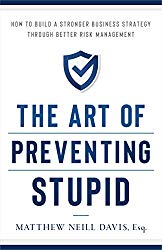
If you own a small business (like me), or even run a medium size or larger business, you need to read the book, The Art of Preventing Stupid: How to Build a Stronger Business Strategy Through Better Risk Management by Matthew Neill Davis, Esq.

Businesses can’t avoid problems completely, but they can prepare for them and they can do many things to prevent problems as much as possible. Davis explains how businesses can do this, and one of the key ways is to avoid the stupid mistakes. The other strategy a business owner can utilize is to know how to deal with problems before they arise.

These strategies are covered thoroughly in the book. Probably the most important chapter is Chapter 6, The Preventing Stupid Method.

The book has many easy to understand tables and figures, and ends the book with actual case studies. In addition, the author provides bullet point summaries at the end of each chapter.

So if you want to prevent major problems (including bankruptcy) with your business, and how to deal with problems when they do happen, you should read  The Art of Preventing Stupid.

Water Stocks are Floating on Dividends

by Fred Fuld III

If you are looking for growth along with income, you should check out the water utilities. Most communities are served by governmental water district entities, but residents of some communities buy water through publicly traded companies that own water rights. The nicest feature about these companies is that they are practically recession-proof since people don’t stop showering or drinking water. There are several of these water companies that investors can choose from.

One example is American States Water (AWR), founded in 1929, which is a distributor of water in over 70 communities in California. It trades at 35 times forward earnings and pays a yield of 1.58%. Last summer, the company raised its dividends by 7.8%. Earnings for the latest quarter were up significantly, by 23%, year over year.

Aqua America (WTR) distributes water to customers in Pennsylvania, Texas, North Carolina, Ohio, Illinois, New Jersey, New York, Florida, Indiana, Virginia, Maine, and Georgia. The stock has a forward price to earnings ratio of 24, and yields 2.41%. The company has raised its dividends every year since 1988 and has had many stock splits during that time.

Connecticut Water Service (CTWS) trades at 29 times forward earnings and yields 1.83%. The company, which was founded in 1956, serves customers in over 50 towns in Connecticut.

Maybe I’m all wet but one of these water companies might just clench the thirst of your portfolio.

Disclosure: Author didn’t own any of the above at the time the article was written.

From Monk to Money Manager

“Money is not the root of all evil. Money is the root of everything, good and evil. Ignoring half the truth blinds us to the truth.”

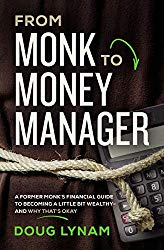
From Monk to Money Manager: A Former Monk’s Financial Guide to Becoming a Little Bit Wealthy – And Why That’s Okay

Doug Lynam used to be a monk, and he’s now a financial advisor. He’s a sort of unicorn to most people, but that’s what makes this book so important. For too long religion and money have been held separate. But as Lynam says, “The cold, hard truth is that in this modern life we need money. We can’t live our lives and serve others without it.”

Lynam joined a monastery, in part, to escape the world of money and ended up spending more time worrying about money than almost anyone in the outside world because the monastery was going broke – and he had to fix it. Another irony, directly related to the first, is that he learned he is good at helping people with their financial problems.

The lessons Lynam learned as a monk made him realize that the most powerful way for him to have an impact in the world was to leave the monastery and advise people about their finances full time.

What makes this book different is Lynam’s unique background and experiences that have brought him to where he is today and the helpful mindsets he shares. This is a different kind of ‘financial book’ because of the connection of money problems to the personal and spiritual components. Lynam helps people uncover what those are to avoid them all getting tangled together.

Lynam wrote From Monk to Money Manager: A Former Monk’s Financial Guide to Becoming a Little Bit Wealthy – And Why That’s Okay (Thomas Nelson, March 26, 2019) as a mass-appeal book intended to hook adults of all ages, religions, and political persuasions because the discussion of ethics and money impacts you regardless of your beliefs. He believes the lack of money is the key driver for most of the suffering in the world, and if we can face that problem squarely, honestly, and with good minds and hearts we can mitigate some of the worst problems in the world.

More specifically, the book is aimed at anyone who wants to learn how to become wealthy while remaining an ethical person. Even more precisely it helps anyone who wants to:

•       Retire on time and with dignity
•       Live debt free
•       Pay for college
•       Stop living paycheck to paycheck
•       Afford quality healthcare
•       Own a home
•       Start a business
•       Conquer their emotional money baggage

Doug Lynam, author of From Monk to Money Manager: A Former Monk’s Financial Guide to Becoming a Little Bit Wealthy – And Why That’s Okay, is Director of Educator Retirement Services at LongView Asset Management in Santa Fe, New Mexico, is a self-proclaimed Suffering Prevention Specialist.

How to Invest in Ride Hailing Stocks

by Fred Fuld III

Did you notice what happened with the IPO of Lyft (LYFT)? The stock came out at $72 per share and immediately jumped to 88.60 per share. Since that time, it has drifted downwards, and closed at exactly 70.00 today, two bucks a share below its original offering price.

The stock has a market cap of almost $20 million but no earnings. The price to sales ratio is 7.61.

Lyft’s biggest competitor is Uber, which hasn’t gone public yet. Unless you are an accredited investor who may have gotten pre-IPO shares, the chances of you getting some IPO shares from your broker are slim.

Currently, the largest shareholder of Uber is Softbank (SFBTY), the telecommunications and e-commerce company based in Japan. The company currently owns about 15% of Uber. Softbank trades at 9.42 times trailing earnings and even pays a small dividend of 0.40%.

There is a small publicly traded company called HereCar (HYRE) which has a business that allows car owners to rent their idle cars to ride-sharing service drivers. The company has a market cap of $63 million and a price sales ratio of 4.55.

Hopefully one of the ride sharing stocks can your portfolio for a ride to higher profits.

Disclosure: Author didn’t own any of the above at the time the article was written.

Every Woman’s Pocket Guide to Financial Sovereignty

by Fred Fuld III

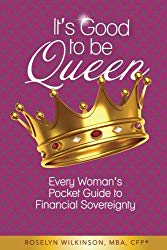
If you are a woman who wants to learn all the basics about personal finance, it doesn’t matter what stage you are in life, you need to read It’s Good to be Queen: Every Woman’s Pocket Guide to Financial Sovereignty by Roselyn Wilkinson.

The book covers all aspects of money in an easy to understand format. Wilkinson doesn’t just describe the “what” and the “how”, she also gives the “why”.

The book details everything from budgeting, to insurance, to debt, to investing. Chapter 11 discusses the option of finding a financial advisor and how to find a good one.

Readers will also enjoy the humor of a few cartoons scattered through the book.

I recommend It’s Good to be Queen: Every Woman’s Pocket Guide to Financial Sovereignty by Roselyn Wilkinson to any woman who doesn’t have considerable knowledge about finance and money and wants to learn more.

How the 2017 Tax Reform Bill Impacts Small Business

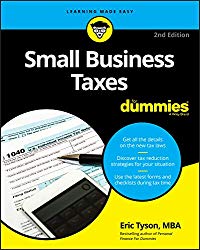
Just in time for tax season, Eric Tyson, MBA, and author of Small Business Taxes for Dummies, reveals how the recent tax reform bill will impact small businesses this year and beyond.

          Hoboken, NJ (March 2019)—As a small business owner, you’ve likely always struggled to minimize your taxes and stay profitable. Now at last, there’s some good news! When the Tax Cuts and Jobs Act federal income tax bill took effect in 2018, it produced many changes that reduced and positively impacted small business taxes. With tax season right around the corner, it pays (literally) to know how this reform impacts your small business’s bottom line.

“All small business owners should be aware of how the recent tax reform affects their tax picture,” says Tyson, author of Small Business Taxes For Dummies®, Second Edition(Wiley, March 2019, ISBN: 978-1-119-51784-9, $26.99). “Not only do most of these changes signify good things for your tax return this year, but understanding them can help you strategize wisely for the future.”

What does the new tax landscape mean for you? Keep reading to learn how the Tax Cuts and Jobs Act will affect (and mostly benefit) your small business.

It reduces individual income tax rates. The Tax Cuts and Jobs Act slashed the corporate income tax rate from 35 to 21 percent, a 40 percent reduction. Likewise, individual income tax rates were also reduced under the new act. Most of the tax bracket rates were reduced by several percentage points. This is great news for the vast majority of U.S. small business owners who operate their businesses as pass-through entities (for example, sole proprietorships, LLCs, partnerships, and S-corps).

It allows a 20 percent deduction for pass-through entities. In redesigning the tax code, Congress rightfully realized that many small businesses operating as pass-through entities would be subjected to higher federal income tax rates compared with the new 21 percent corporate income tax rate.

To address this concern, Congress provided a 20 percent deduction for those businesses. For example, if your sole proprietorship netted you $60,000 in 2018 as a single taxpayer, that would push you into the 22 percent federal income tax bracket. But, you get to deduct 20 percent of that $60,000 of income (or $12,000) for the pass-through deduction, so you would owe federal income tax only on the remaining $48,000. However, this deduction gets phased out for service business owners (such as lawyers, doctors, real estate agents, consultants, etc.) at single taxpayer incomes above $157,500 (up to $207,500) and for married couples filing jointly with incomes more than $315,000 (up to $415,000). For other types of businesses above these income thresholds, this deduction may be limited, so consult with your tax advisor.

“This is a major change that has made small business owners exceedingly optimistic about being able to grow their businesses,” says Tyson.

It allows you to enjoy better equipment expensing rules. Through so-called Section 179 rules, small businesses have historically been able to immediately deduct the cost of equipment, subject to annual limits, they purchase for use and place into service in their business. But the 2017 tax bill expanded these rules. Now, more businesses can immediately deduct up to $1 million in such equipment expense annually (up to the limit of their annual business income). And, this deduction can also now be used for purchases on used equipment. These provisions, which don’t apply to real estate businesses, remain in effect through 2022 and then gradually phase out until 2027 when the prior depreciation schedules are supposed to kick back in.

It increases the maximum depreciation deduction for automobiles. The new tax bill included a major increase in the maximum amount of auto depreciation that can be claimed. The annual amounts of auto depreciation have more than tripled. Effective with tax year 2018, the maximum amounts that can be claimed are as follows:

Year 1: $10,000 up from the prior limit of $3,160
Year 2: $16,000 up from the prior limit of $5,100
Year 3: $9,600 up from the prior limit of $3,050
Year 4 and beyond: $5,760 up from the prior limit of $1,875, until costs are fully recovered.

These annual limits will increase with inflation for cars placed into service after 2018.

It limits your interest deductions. Effective with 2018, companies with annual gross receipts of at least $25 million on average over the prior three years are limited in their deduction of interest from business debt. Net interest costs are capped at 30 percent of the business’s earnings before interest, taxes, depreciation, and amortization (EBITDA). Farmers and most real estate companies are exempt. Then, effective in 2022, this provision actually gets more restrictive and would thus affect even more businesses. At that point, the 30 percent limit will apply to earnings before interest and taxes.

It reduces meal and entertainment deductions. The tax reform bill of 2017 eliminated the entertainment expense deduction for businesses. Under prior tax law, 50 percent of those expenses were deductible (for example, when a business entertained customers and even employees at sporting events, fitness clubs, and restaurants).

The new rules do include some exceptions. On-site cafeterias at a company’s offices and meals provided to employees as well as business meals associated with travel are 50 percent deductible. Meals provided to prospective customers as part of a seminar presentation are still fully deductible. Holiday parties and company picnics are also fully deductible as long as they are inclusive of everyone.

It eliminates the health insurance mandate. Since the Affordable Care Act (a.k.a. Obamacare) was passed by Congress in 2010, some Republicans in Congress vowed to repeal it. With the election of Republican Donald Trump in 2016, it seemed that the pieces were in place for Obamacare’s successful repeal. But, Republicans fell one vote short in the Senate when the late Arizona Senator John McCain gave the repeal measure his infamous thumbs-down vote.

So, the 2017 tax bill included a little-known or -discussed measure that eliminated Obamacare’s mandate effective in 2019, which required people to have or buy health insurance coverage, and if they didn’t, they’d face a tax penalty. So, the penalty tax also disappears in 2019.

It revises rules for using net operating losses. Net operating losses (NOLs) can no longer be carried back for two years. However, NOLs may now be carried forward indefinitely until they are used up. Previously, the carry-forward limit was 20 years. NOLs are limited each year to 80 percent of taxable income.

“Where business taxes are concerned, knowledge is always power,” concludes Tyson. “Learn how you can benefit from this long-overdue tax reform and use that knowledge to make more informed decisions. And by all means, take comfort in knowing that you have plenty of reasons to be optimistic about growing your small business.”

# # #

About the Author:
Eric Tyson, MBA, is the author of Small Business Taxes For Dummies®, Second Edition(Wiley, March 2019, ISBN: 978-1-119-51784-9, $26.99). Eric is an internationally acclaimed and best-selling personal finance author, counselor, and writer. He is the author of five national best-selling financial books including Investing For Dummies, Personal Finance For Dummies, and Home Buying Kit For Dummies. He has appeared on NBC’sToday show, ABC, CNBC, FOX News, PBS, and CNN, and has been interviewed on hundreds of radio shows and print publications.

About the Book:
Small Business Taxes For Dummies®, Second Edition (Wiley, March 2019, ISBN: 978-1-119-51784-9, $26.99) is available at bookstores nationwide and Amazon and other major online booksellers.

How to Get Paid $18,565 for Watching TV in Bed

Are you looking for a side gig where you can get paid almost twenty grand for just lounging around in bed, watching television, and eating? Not too bad for a two month period.

Here is the deal. NASA is looking for subjects to participate in an experiment that will take 60 days. You will stay in bed, and while you are doing so, you get to read, watch TV, eat and drink. Of course, you get to sleep too. Plus, you get to have your own private room.

The experiment will take place in Germany. If you are interested, you must be between the age of 24 and 55 to apply and you must be able to speak German.

Information can be found at the bed rest study. If you want to see it in English, click HERE.

Stocks Going Ex Dividend in April 2019

by Fred Fuld III

The following is a short list of some of the many stocks going ex dividend during the next month.

Many traders and investors use the stock trading technique called ‘Buying Dividends,’ also commonly referred to as ‘Dividend Capture.’ This is the strategy of buying stocks before the ex dividend date and selling the stock shortly after the ex date at about the same price, yet still being entitled to the dividend.

This technique generally works in bull markets and flat or choppy markets, but you need to avoid the strategy during bear markets. In order to be entitled to the dividend, you have to buy the stock before the ex-dividend date, and you can’t sell the stock until after the ex date.

The actual dividend may not be paid for another few weeks. WallStreetNewsNetwork.com has compiled a downloadable and sortable list of the stocks going ex dividend in the near future. The list contains many dividend paying companies, lots with market caps over $500 million, and many with yields over 2%. Here are a few examples showing the stock symbol, the ex-dividend date, the periodic dividend amount, and annual yield.

Comcast Corporation (CMCSA) 4/2/2019 0.21 2.13%
American Express Company (AXP) 4/4/2019 0.39 1.43%
Barnes & Noble, Inc. (BKS) 4/4/2019 0.15 11.11%
Morningstar, Inc. (MORN) 4/4/2019 0.28 0.93%
General Mills, Inc. (GIS) 4/9/2019 0.49 3.86%
Colgate-Palmolive Company (CL) 4/17/2019 0.43 2.61%
Foot Locker, Inc. (FL) 4/17/2019 0.38 2.67%
WD-40 Company (WDFC) 4/17/2019 0.61 1.44%
CVS Health Corporation (CVS) 4/22/2019 0.50 3.57%
Clorox Company (CLX) 4/23/2019 0.96 2.43%
Hasbro, Inc. (HAS) 4/30/2019 0.68 3.26%

The additional ex-dividend stocks can be found HERE . (If you have been to the page before, and the latest link doesn’t show up, you may have to empty your cache.) If you like dividend stocks, you should check out some of the other high yield stock lists HERE . Most of the lists are free.

Dividend definitions:

Declaration date: the day that the company declares that there is going to be an upcoming dividend.

Ex-dividend date: the day on which if you buy the stock, you would not be entitled to that particular dividend; or the first day on which a shareholder can sell the shares and still be entitled to the dividend.

Monthly Dividend Stock List

Record date: the day when you must be on the company’s books as a shareholder to receive the dividend. The ex-dividend date is normally set for stocks at two business days before the record date.

Payment date: the day on which the dividend payment is actually made, which can be as long at two months after the ex date.

Don’t forget to reconfirm the ex-dividend date with the company before implementing this technique.

Disclosure: Author did not own any of the above at the time the article was written.

Investing in Guitars? Bob Dylan’s Sold for $187,000

Have you ever considered investing in collectible guitars? Some of them sell for pretty substantial amounts.

For example, Heritage Auctions recently held an auction of entertainment memorabilia, with a lot of interesting items that were put up for sale.

A guitar that Bob Dylan personally owned, a Fender Electric XII Twelve-String electric guitar was hammered at $187,000, including buyers premium. This was the guitar that Bob Dylan played on the Blonde on Blonde sessions.

20 Cybersecurity Stocks to Choose From

Doesn’t it seem like there is a  cybersecurity attack on a company almost every day? Because hacking and cyber attacks are such a big issue, the Securities and Exchange Commission issued stronger guidelines last year to to publicly traded companies regarding cybersecurity. The Equifax issue didn’t help.

Consumers are now worried about the Dark Web, which is a concealed Internet where supposedly anyone can buy any of the four H’s: heroin, hitmen, hackers, and harlots. The big money is in the marketing of email addresses, Social Security numbers, credit card numbers and other personal data.

Fortunately, there are companies that are working hard to prevent attacks on businesses and consumers.  There are 20 publicly traded companies that are involved in cybersecurity.

One of the biggest players in the industry is California based Symantec (SYMC), a cybersecurity provider for consumer and enterprise customers, which was founded in 1982. The stock has a trailing price to earnings ratio of 85 and a forward P/E of 13. It even pays a dividend of 1.3%. It has a market cap of $14.7 billion.

Another large cybersecurity firm is Palo Alto Networks (PANW), a California based company founded in 2012. The company provides network and endpoint cybersecurity solutions. The stock trades at 48 times forward earnings, however, earnings for the past few years have been negative. The market cap is $22.8 billion.

TRIVIA: 50% OF ALL PUBLICLY TRADED CYBERSECURITY COMPANIES ARE BASED IN CALIFORNIA

Checkpoint (CHKP) is an Israeli based network security company. The stock has a trailing price to earnings ratio of 24 and a forward P/E of 20. It does not pay a dividend.

There are several other smaller security companies to choose from including Tenable Holdings, Inc. (TENB), Okta, Inc. (OKTA), Carbon Black, Inc. (CBLK), and Zscaler, Inc. (ZS)

If you aren’t sure which cyber security stock to buy, maybe you should consider a cyber security ETF.  There are a couple to choose from, the ETFMG Prime Cyber Security ETF (HACK) and the First Trust NASDAQ Cybersecurity ETF (CIBR).

For a list of about 20 cybersecurity stocks, click HERE to access the stock list page.

Disclosure: Author didn’t own any of the above at the time the article was written.