The Latest Stock Market and Investing Books

If you re looking for new and interesting books to read over the holidays that are related to the stock market and investing, look no further than the following list.

These are books that have recently been released or will be released within the next couple weeks.

Happy reading!


Quantitative Momentum: A Practitioner’s Guide to Building a Momentum-Based Stock Selection System

– – –

Frontier Investor: How to Prosper in the Next Emerging Markets

– – –
Stock Market 101: From Bull and Bear Markets to Dividends, Shares, and Margins_Your Essential Guide to the Stock Market

– – –
Great Investment Ideas

– – –

The Harriman Stock Market Almanac 2017: Seasonality Analysis and Studies of Market Anomalies to Give You an Edge in the Year Ahead

– – –
The Stock Picker: A financial history from the sharp end

– – –
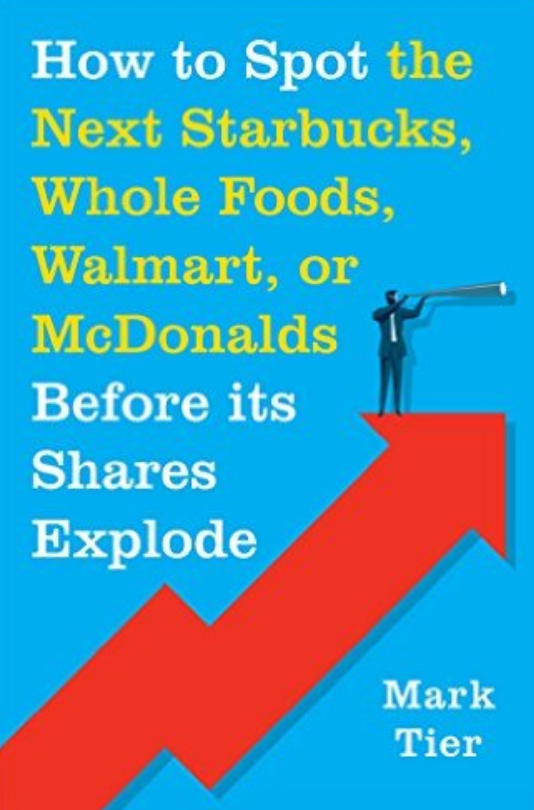
How to Spot the Next Starbucks, Whole Foods, Walmart, or McDonald’s BEFORE Its Shares Explode

– – –

New Rules to End Corruption in Corporate America

Toolkit for Change

Guest Article By Michael G. Winston, Ph.D.

So many leaders have failed themselves, their families, their shareholders, and their neighbors on the most important of leadership behaviors…honesty, integrity and ethical decision-making. Let’s try to rid the world of companies that abuse shareholders, customers, employees and society. Are you in?

There are many factors internal to the financial services firms which give rise to such aberrant practices, yet attempts to stop or slow them failed miserably. However, what about the culture outside where laws were considered mere suggestions, rules were thought of as arbitrary, governance practices were shelved and society became Armageddon-like around the globe? President Obama’s promise of the most transparent administration in history was clearly not kept. The promise of holding parties responsible for the financial collapse accountable did not materialize. Our hallowed institutions became the fodder for late-night TV jokes. We were witnessing the unraveling of the fabric of society that held us together.

Like you, I am concerned that none of the C- Suite Chiefs who caused the 2008 global financial crisis have been held fully accountable. Trillions of dollars have been lost by investors while millions of borrowers have lost their homes and/or jobs. Yet none of the people who ran the institutions that contributed to the disaster have been found liable.   

Punishment is not the only way to modify behavior, but it works. Instead, executives now realize that they face virtually no consequences for reckless lending, exotic investments and fraud. Thus, these actions continue.

One well-deserved “public hanging” will send a signal around the world that will dramatically reduce wrongdoing. The current settlement posture and practice is not and will not deter crime. Until their moral compass kicks in, there are things we can do:

  • Break up the too-big-to-fail-or-jail banks. Then break them up again. They do not serve us. They rule us and those who govern us.
  • Create such stringent and onerous rules and regulations that the big banks voluntarily disaggregate.

What can and should be done to reward good performance and punish bad performance? Here is my list:

  • Elevate the platform of whistleblowers to expose fraud and corruption. Reward them for doing so. Ensure they are well-protected in reality not just rhetorically.  Mete out immediate and harsh punishment for retaliation against whistleblowing.
  • Require reimbursement of incentive compensation paid to executives whose fraud or intentional misconduct cause the company to restate its financial statements. This should be retroactive to the point of the misconduct. This has been promised, but not delivered over the past seven years. This policy should be irrevocable, no-excuse.
  • Require that certain awards contain ‘claw back’ provisions which allow the Corporation to cancel all or a portion of the award under specified circumstances. Have zero tolerance on this.
  • Each year, the Board, Audit and various Corporate Governance Committees should evaluate their own effectiveness. They should view self-evaluation as an ongoing process designed to achieve high levels of Board and committee performance. Shareholder input should be factored in.  This entire process should be facilitated by a thoroughly objective outside party.
  • Adopt a stronger approach to risk management. Each year, have the management team recommend, and the board of directors approve a total risk appetite for the company that management will then allocate across the lines of business. Share this with ALL stakeholders and regulatory bodies.
  • Hold regulatory bodies accountable for compliance with the above. The responsible executive acting more in synch with clients than the public should be severely censured.
  • Evaluate compensation practices to ensure direct linkage between executive pay and company performance. For good performance years, the total compensation awards for executives is at target levels. For poor performance years, compensation should be significantly below target levels. For years of questionable business practices, the Board should award no year-end cash or equity compensation awards to executives.
  • Adapt the same practices down the line at all levels.
  • Regardless of growth, profit, margins, ROI, etc., if performance does not meet expectations against a broader and higher standard of metrics, inclusive of ethical decision-making, absence of “whistle-blower complaints,” certification of clarity, transparency, accountability and long-term strength, the Board should award no year-end cash incentive, restricted stock or stock option awards.
  • Make long-term stock ownership mandatory for executives, with no vesting on restricted stock and stock option awards until the third anniversary of the grant and an additional hold requirement on net proceeds from stock option exercises.
  • Amidst fraud, corruption, malfeasance and the like, reinstitute the practice of insisting on personal accountability. For wide-spread institutionalized “white-collar” crime, jail time must replace settlements as the consequence.
  • Detection of a loophole deliberately implanted in regulations to assist one’s colleagues in evading the law must lead to dismissal.
  • The DOJ must be encouraged and rewarded for exacting criminal penalties when warranted.
  • Make it policy that creditors, not taxpayers, should shoulder the losses of banks.

Do these things, and even the miscreants will behave themselves.

The U.S. and Europe thwarted white-collar investigations, let alone prosecutions. They continue to do so. On the other hand, Iceland prosecuted the fraudster banking CEO’s. As a result, their economy recovered quickly, due to the restoration of trust in the financial system.

We need real solutions – solutions we have not seen before. Albert Einstein said we cannot expect those in control of our world to solve the problems they have created, and continue to defend . . . by any means necessary. We continue to repeat the same measures destined to fail. This unfailingly yields lost jobs, lost income/wages, and loss of entire life support systems. We should abandon this failed paradigm.

Here’s another idea. Take the same amount of money that our government gave to the Banks, and instead next time spend it directly bailing out the homeowners, and mandate that the Banks pay a penalty for having sold out their own customers and contracts.

Result: the banks get their money (what money was not gotten by shorting the homeowners), but they have to get it from the homeowners themselves. The homeowners get to keep on living where they want. The Banks eventually recover, but on OUR terms, not theirs.

Should this happen? Yes.  Will this happen? Of course not. The current Administration has protected and shielded Wall Street and the fraudsters from any wrongdoing.  However, it is time for a change.

Michael Winston had a career of distinction in executive positions for over three decades in five Fortune 100 companies across three industries, including serving in executive positions for Motorola, Merrill Lynch, McDonnell Douglas, Lockheed and Countrywide. As global head of leadership and organization strategy, he worked closely with C-Suite Officers to develop business models, craft strategies and structure, create cultures and develop leaders.

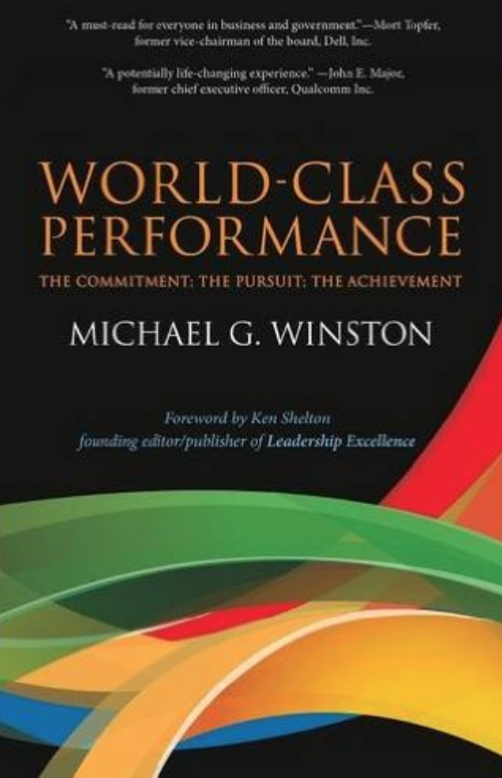
His book, World-Class Performance, is available for purchase on Amazon and other fine booksellers.

The Purpose is Profit: The Truth About Starting and Building Your Own Business

If you have ever considered starting your own business, or maybe you are at the beginning stages of your startup, you owe it to yourself to read the book  The Purpose Is Profit: The Truth about Starting and Building Your Own Business  by Ed “Skip” McLaughlin and Wyn Lydecker. The book is very complete and covers everything from the type of business you should start to the important factors in selling your business.

Some of the more important chapters are Dynamic Planning which covers realization of the business vision in spite of and dealing with challenges, Entrepreneurial Branding, Sales is a Contact Sport, and Realizing Value.

One of the more important lessons covered in the book is that it is better to bootstrap than use other people’s money. Another lesson is that profit should be examined for every decision that is made.

The section I found most informative was Appendix B: The Startup Funding Guide, which spells out how to determine how much funding you need, forecasting, valuation, and sources of funding.

For all you starters out there, I highly recommend  The Purpose Is Profit.


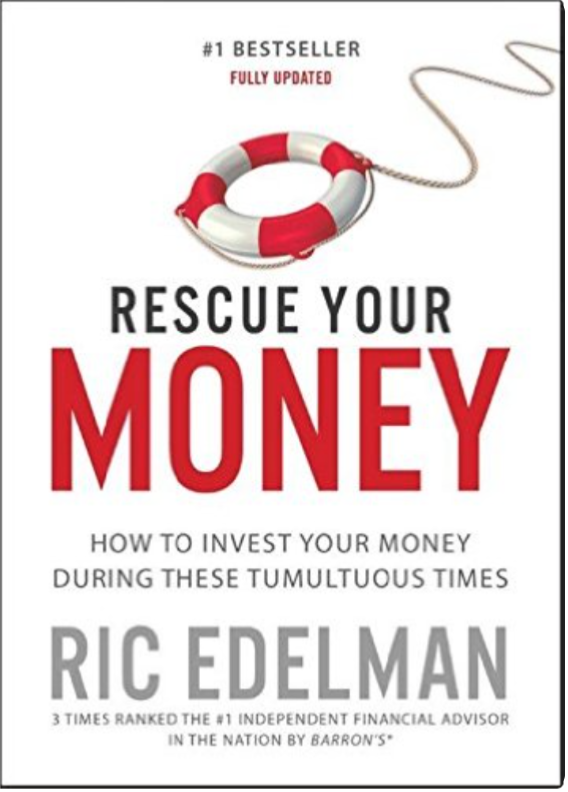
Rescue Your Money: How to Invest Your Money During These Tumultuous Times

The book, Rescue Your Money: How to Invest Your Money During these Tumultuous Times by Ric Edelman, originally came out in 2009. It has recently been revised, updated, and re-released.

For those who have never invested before, or those who have done some investing but have been unsuccessful, this book could be what you are looking for.

The book is a short quick read which covers the obsticle you will run into, various investing techniques that don’t work, and the truths that prevent you from investing successfully.

You have heard the term “Buy Low Sell High.” The author shows you the best way to do it. There is even a chapter on what to do if you are already retired.

This #1 New York Times bestselling author was ranked the #1 Independent Financial Advisor by Barron’s three times.

Rescue Your Money is available on Amazon.


Four Failure Points that Undermine Biz Success: #1 is Dont Follow Your Passion

by Ed McLaughlin

Veteran entrepreneur and former Fortune 100 executive, Ed McLaughlin comments below about the reality that Americans can see failure as a stepping stone to success, “It’s difficult to celebrate failure as a stepping stone to startup success if entrepreneurs can’t pay their bills, provide for their families, meet payroll or realize their business visions.” Ed’s own research tells us that 75% of new businesses fail within the first five years. Ed continues with this challenge for small business owners and entrepreneurs in some of the big ‘innovation-driven’ cities, “What if we could turn the tables on the startup failure rate by introducing a new set of business principles that increases the probability of startup success?” He also offers the four failure points things that undermine the success of a small business below, excerpted from his book, using his own company as an example. Ed has also highlighted the framework for sustainability and profitability in his new book, The Purpose Is Profit: The Truth about Starting and Building Your Own Business, by focusing entrepreneurs on these principles, including: Distinctive Competence, Dynamic Planning, and the Ten Commandments of Startup Profit. 

Only nine months after starting USI, I launched a second business called Sigma Communications Inc., or Sigma for short. Starting Sigma had been the culmination of a long-term vision to create a vehicle that would more efficiently connect buyers and sellers of commercial real estate. After three years of bleeding red ink, I was forced to shut down Sigma.

Here are the 4 failure points that undermined the success of Sigma Communications.  

             Failure Point #1: Starting a business based on passion alone, rather than building a business based on distinctive competence.  

When I started Sigma, I believed that my passion for publishing the magazine would trump everything else. That proved to be a costly assumption. The hardest lesson I learned from the Sigma experience is that a venture filled with passion is not enough. You will substantially increase your probability of startup success if you build a business based on your distinctive competence.

Failure Point #2: Starting up without preorders to validate your business model. 

I made the fateful decision to launch the magazine without selling advertising and securing paying customers first. In the end analysis, I took a huge gamble on a concept business with an untested business model. Sigma spent millions before I shuttered the business in failure. Securing preorders is the single most important point of validation for a startup.

Failure Point #3: Launching your business without adequate time and funding to reach profitability. 

Unfortunately, I had not properly factored the size and scale of Sigma, nor how long it would take to ramp-up to profitability. Since I had never manufactured and shipped a product before, I underestimated the continuous cash drain from ongoing production and distribution. Rather than bootstrapping the business with the profits from USI, I should have lined-up outside funding with a more reasonable timeline to breakeven. Make sure to allocate the time and the funding needed to achieve profitability. 

Failure Point #4: Closing your ears to the advice of industry experts. 

Rather than listening to my advisors, I convinced myself that I could beat the normal ramp-up to profitability in the publishing industry. My unbridled passion for becoming a publisher, combined with my lack of distinctive competence put blinders on me. Cultivate relationships and heed the advice of industry experts.

Ed McLaughlin is the founder & CEO of Blue Sunsets LLC, a real estate and angel investment firm based in Darien, CT. Previously, McLaughlin founded and served as chairman & CEO of United Systems Integrators (USI) Corporation, a corporate real estate outsourcing firm, sold to Johnson Controls (JCI) in 2005. In 2001, he earned Entrepreneur of the Year honors from Ernst & Young, and USI was named to the Inc. 500 list of America’s fastest growing companies. His book,  The Purpose Is Profit: The Truth about Starting and Building Your Own Business, is available on Amazon.

Excerpt reprinted with permission from Ed McLaughlin’s PR firm.


The Latest Top Selling Investment Books for August

Looking for more investing and stock market books to read while you are sitting on the beach during your vacation or while you are flying on a plane? Here are the latest books which cover stocks and investments, that have just been released. Interestingly, two of them are about Warren Buffett.

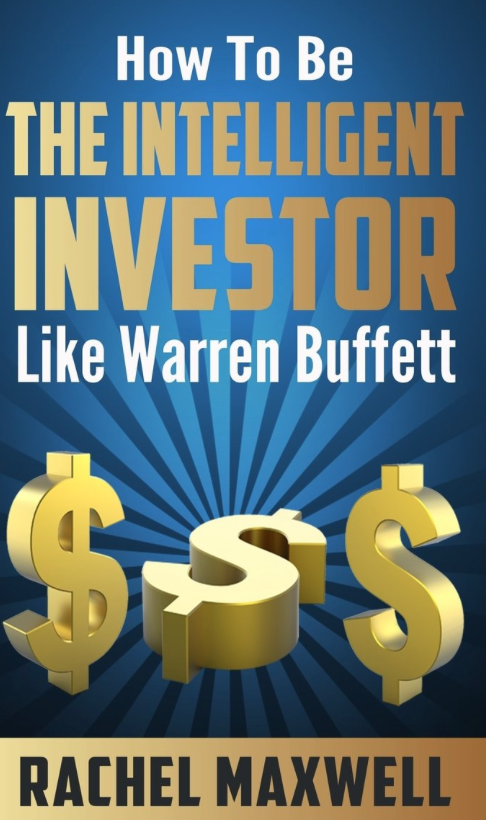
How To Be The Intelligent Investor Like Warren Buffett
by Rachel Maxwell
Warren Buffett is intelligent investor and he is undoubtedly the most successful stock market trader today. He is currently worth billions of dollars and his net worth is still on the rise. Many investors strive to be just like him, but sadly only a few of them are actually successful in emulating even a fraction of his success. What is the secret to Warren Buffett’s enormous wealth? Does he have superpowers that allow him to see into the future and take stock of his investments? The truth may actually shock you because it is much simpler than you think.The reason why Warren Buffett was able to amass as much money as he did is because he is a “intelligent investor” and it is recommended that you become one as well.What is a intelligent investor? Unlike other traders in the stock market, intelligent investor do not really pay too much heed in what is currently happening in the marketplace, they are much more interested in the actual value of the stocks.Value investor take into consideration the strengths and weaknesses of the companies they plan to invest in, and this requires a lot of analysis and not too much guesswork.

In this Warren Buffett book, you will learn the techniques and mindset that Warren Buffett uses whenever he goes into trades. Even though it is not really guaranteed that you will be met with the same kind of success, you are assured to get some valuable insights on how to invest your money properly and ensure that you actually make money instead of lose it.Here you will learn how to determine the true worth of a company so you will have an easier time determining whether or not it is worth it to invest your money in their stocks.Once you learn the basics of Warren Buffett’s value investing strategy, your entire view of the stock trading marketplace will change for the better.


Invest in the Best: Applying the principles of Warren Buffett for long-term investing success
by Keith Ashworth-Lord
This book concentrates on the investment style of Business Perspective Investing, as practiced by Benjamin Graham and Warren Buffett. It takes the reader through the realisation that the thought process involved when buying shares in a company is no different to buying the company in its entirety.

Adaptive Investing
by Tony Pow
To be successful in investing, we have to adapt to the current market. We evaluate our tools (screens, scoring system and our way to time the market) consistently as they change consistently. For example, some screens work better than others in different phases of a market cycle. So are the fundamental metrics. Early Recovery (a phase defined in this book) provides the best time to make easy money. Today, ignore most testing results older than 2000 as the market are quite different than today. The better test results are 6 months (or 3 months for short term) from today as they resemble the market closely. This book should make you a better investor for advance beginners and fund managers alike. This book does not make you wealthy overnight. However, I have proven step-by-step techniques to time the market, find and evaluate stocks for profits from my experiences and other retail investors (not traders) like most of you. We do not have the Holy Grail in investing but we have something close to it: Select the fundamental (technical too) metrics and the screens that have performed well lately. To illustrate, if the screen or a fundamental metric such as Price/Cash Flow works in the last few months, there is a better chance it will work this month than not. 


How to Make Money with Global Macro
by Dr. Javier Gonzalez
GLOBAL MACRO is the study of the interrelations between economic policy, asset classes, politics, and war. In his idiosyncratic book, Javier Gonzalez shows how these elements weave an intricate higher-dimensional puzzle that affect our portfolios and our lives.With his innovative approach, readers are likely to interpret events around them in a new light, realizing new interconnections.

“How to Make Money with Global Macro” is Kindleberger’s “Manias, Panics, and Crashes” for speculators. (Kindleberger’s book is rather academic).
Traders and investors could find useful gaining a thorough understanding of global macro, regardless of whether their strategy is value investing, trend following, discretionary global macro, or other. Knowing how global macro might be affecting price or might affect it in the near future is crucial to making an investment decision.


The Investment Code: Ancient Jewish Wisdom for the Wise Investor
by H. W. Charles
Why are so many Jews Successful Investors that Accumulate Massive Wealth?  Jews are known to be the most successful and best performing hedge-fund managers, investors, and traders in the world. Out of the best 25 money managers since the advent of American Capitalism, 17 are Jewish! Some of those in the top 25 are very famous: George Soros, Steven Cohen, James Simon, David Tepper, John Paulson, Carl Icahn, Daniel Loeb, Leon Cooperman, Israel Englander, David Einhorn, Seth Klarman, and Bruce Kovner.

Groundbreaking research has found that one of the key components to the success of the Jews is their religion—Judaism. The Tanakh, a Jewish religious text, contains codes and messages secretly hidden within its pages—decoded by the Talmud, it offers practical guidance that can be applied to your investing and business practices.

The Investing Code contains the time-tested secret wisdom found in the Tanakh that has worked to help the Jews accumulate wealth generation after generation. It can be applied by anyone today to attain wealth through wise investing practices.


Illusions of Wealth: Actively Manage Your Investments or Expect Losses in this Volatile Economy
by Doug Eberhardt
In order to keep your wealth from being an illusion, you must possess the ability to adjust your portfolio as the economic and investment climates change. Buy-and- hold strategies can work with some assets, but should not be the way forward for all your holdings. Applying the common sense of this book can grant you control of your future and your wealth.

First, it is important to have a foundational understanding of our monetary, economic, banking, and Federal Reserve systems. That is the basis on which you build your portfolio, and this book is designed to make it easy to comprehend, as technical as it may seem. You’re driving blind in the investment world without this knowledge.
From there it’s a matter of choosing the right advisor by asking the right questions—which you will find in this book. Or, you can acquire the confidence to manage your investments yourself, using the insights provided here. Many will skip over the foundational sections and go straight to the Investment section. I understand this desire to “tell me what to do” and you’ll find this section thorough in helping you maintain your wealth and profit moving forward.
What are the economic conditions on the horizon that can affect your wealth? Why do you invest the way you do? Is it because someone told you to invest that way? Who do you trust for investment advice, and why? Are they any good? How much do they make from their recommendations to you? Did they protect your portfolio during the last financial crisis? Is another financial crisis around the corner? How have you structured your portfolio differently to protect your wealth if we were to experience another economic downturn?
Inadequate education failed to teach us how to invest, so we relinquish control to advisors who may or may not have our best interests at heart. This book is written to bring you the awareness, confidence and insight necessary to conquer the future panics, crashes, and crises that will inevitably arise, and teach you how to profit whether the market is rising or falling. But most importantly, it is written to stand the test of time for generations to come, fulfilling the void left by our educational system. Isn’t it time you took control of your financial future?


Wall Street Smarts: A Guide to Finding Your Inner Investor
by Miles Goodwin
In the dizzying world of investment opportunities, finding a successful personal strategy is a daunting task. But the more you can understand yourself, the better chance you will have finding something that works for you.

In Wall Street Smarts, author Miles Goodwin presents a remarkable compilation and review of some of today’s best books for individual investors. Important works, such as The Art of Speculation by Philip Carret, Common Stocks and Uncommon Profits by Philip Fisher, The Intelligent Investor by Benjamin Graham, A Random Walk Down Wall Street by Burton G. Malkiel, and The Nature of Risk, Stock Market Survival and the Meaning of Life by Justin Mamis, provide profound wisdom and insight to enable you to learn how to successfully invest your own money. In addition, the book contains a risk tolerance quiz designed by Dr. J. E. Grable of the University of Georgia and Dr. R. H. Lytton of Virginia Tech University, Professors of Financial Planning, to help you learn how your “inner investor” shapes your investment decisions.
Divided into twelve easy-to-understand chapters, this remarkable resource compiles the best information from these books and breaks down a host of investment fundamentals and strategies, providing a comprehensive look at the various concepts you need to understand to be successful.
So if you want to learn more about investing and how to handle your money yourself, crack open this book, dive in, and discover what works best for you! If you have never discussed finances and Wall Street with your children, this book is a great starting point.


Enjoy!!!

10 Ways to Survive an Upcoming Catastrophe Part 2

12 More Must Have Survival Products

If you missed the article last month that I wrote called 10 Ways to Survive an Upcoming Catastrophe, you should really check it out first.

When you see the news about Brexit, the election, the economy. the candidates, the toppy stock market, the terror attacks, and the shootings, you may be a little concerned. Which is why I wrote about products you may want to stock up on, in the event you have no electricity, natural gas, heat, Internet, or water.

Since I wrote that article, I have received many suggestions of additional survival items that you may want to consider. Here they are.

1. SurvivalSPARK Emergency Magnesium Fire Starter with Compass and Whistle
This is a cool tool The whistle and compass are added bonuses.

2. Cyalume SnapLight Red Light Sticks
These are great because they last for twelve hours.

3. Emergency Survival Mylar Thermal Reflective Cold Weather Shelter Tube Tent
I mentioned the mylar thermal blanket in my previous article. But to compliment that, you should get this mylar tent.

4. Safe-T-Proof Solar, Hand-Crank Emergency Radio, Flashlight, Beacon, Cell Phone Charger The fact that this runs off both solar and hand crank is a great feature. I don’t have this yet but I’ve heard great things about it and I plan to make this my next survival product purchase.

5. Potable Aqua Water Purification Tablets
Have you ever had giardia? You don’t ever want to get it, unless you enjoy spending a week in the bathroom. This will purify water, so you won’t get it from spring or river water.

6. Build the Perfect Bug Out Bag
Do you think you may need to skip out quickly? Get a Bug Out bag, fully stocked. Keep it in your trunk.

BOOKS

7. 100 Deadly Skills: The SEAL Operative’s Guide

8. Prepper’s Long-Term Survival Guide

9. Bushcraft 101: A Field Guide to the Art of Wilderness Survival

FOOD

10. Mountain House Biscuits and Gravy

11. Mountain House, Raspberry Crumble

12. Mountain House Just In Case… Essential Bucket

Hopefully, you will get these survival items but won’t need them. They should be considered cheap insurance.

The Top Free Investing Books

If you are looking for books on investing and the stock market, that won’t cost you are bull and a bear, how about some books for free? The following are books about investments and finance that are currently available for no charge as Amazon Kindle books.

Often, Amazon and/or the author make these offers for a limited time, so I would suggest that if you have an interest in any of them, you should order them now.

Day Trading: Tips & Tricks For Maximum Profit and Reduced Risk by Matthew Maybury. Rated 4.5 Stars.

925 Ideas to Help You Save Money, Get Out of Debt and Retire A Millionaire by Devin D. Thorpe. Rated 4 Stars.

BULLSH*T FREE GUIDE TO BUTTERFLY SPREADS by Gavin McMaster. Rated 4.5 Stars.

How To Buy And Sell Gold & Silver PRIVATELY by Doyle Shuler and Evan Silverton. Rated 5 Stars.

Investing For Beginners (Introduction to Investing) by David Cohne. Rated 4.5 Stars.

Stock Trading: Tips for Trading Stocks by Carl Robertts. Rated 4 Stars.

Happy reading.