

Gold’s Impressive Rally Outperforming the S&P 500: Three Top Gold Stocks

by Fred Fuld III

This strong gain highlights gold’s resilience in a landscape marked by interest rate shifts, global supply chain disruptions, and ongoing inflationary trends.

When compared to major benchmarks, gold has notably outperformed the S&P 500, which returned about 14.8% over the same period, with the index climbing from 5,815 to 6,674.

This strong gain highlights gold’s resilience in a landscape marked by interest rate shifts, global supply chain disruptions, and ongoing inflationary trends.

When compared to major benchmarks, gold has notably outperformed the S&P 500, which returned about 14.8% over the same period, with the index climbing from 5,815 to 6,674.

However, it has trailed Bitcoin, the leading cryptocurrency, which saw a more explosive return of around 65.2%, rising from $67,041 to $110,781.

While Bitcoin’s volatility contributed to its higher gains, gold’s steadier appreciation—coupled with lower risk—has appealed to conservative investors seeking portfolio diversification.

Here’s a quick comparison of the one-year returns:

AssetStarting Price (Oct 15, 2024)Ending Price (Oct 15, 2025)Return (%)
Gold$2,663/oz$4,198/oz57.7
S&P 5005,8156,67414.8
Bitcoin$67,041$110,78165.2

Gold’s outperformance relative to the stock market can be attributed to several factors, including heightened demand from central banks, persistent inflation concerns, and safe-haven buying amid international conflicts. Unlike equities, which faced headwinds from tech sector corrections and varying corporate earnings, gold benefited from its intrinsic value as a non-yielding asset in a low-interest environment.

Spotlight on Gold Mining Stocks: Attractive Valuations and Dividends

For investors looking to gain exposure to gold’s upside without directly buying the metal, gold mining stocks offer an alternative with potential leverage to rising prices. Three notable companies—Barrick Mining (B), Harmony Gold Mining (HMY), and Newmont (NEM)—stand out for their operations in the sector. While their PE ratios are around 15-16, they feature Price to Earnings Growth [PEG] ratios generally below 1 in recent analyses, indicating potentially undervalued growth prospects relative to earnings. All three also pay dividends, providing income alongside capital appreciation potential.

Barrick Mining (B): As one of the world’s largest gold producers, Barrick boasts a trailing PE ratio of about 16.0 and a PEG ratio of 0.24. It pays a dividend with a payout ratio of around 29.8%, making it appealing for yield-seeking investors.

Harmony Gold Mining (HMY): Focused on South African and Papua New Guinean operations, Harmony has a PE ratio of approximately 16.2 and a PEG ratio of 0.16. Its forward dividend yield is about 1.1%, supported by a low payout ratio.

Newmont (NEM): The industry giant operates across multiple continents and carries a trailing PE ratio of around 16.1, with a PEG ratio of 0.24 (though some estimates show 2.83 for expected growth). Newmont offers a dividend yield of about 1.1%, with an annual payout of $1.00 per share.

These miners often amplify gold’s price movements due to operational leverage, but they also carry risks like production costs and regulatory hurdles. With gold’s momentum showing no signs of abating, these stocks could provide a compelling entry point for those bullish on the yellow metal.

In summary, while gold hasn’t surpassed Bitcoin’s stellar run, its solid outperformance against the S&P 500 underscores its role as a portfolio stabilizer in uncertain times. Investors eyeing the sector should consider both the metal itself and related mining equities for balanced exposure.

Disclosure: Author didn’t own any of the above at the time the article was written. No investment recommendations are expressed or implied.
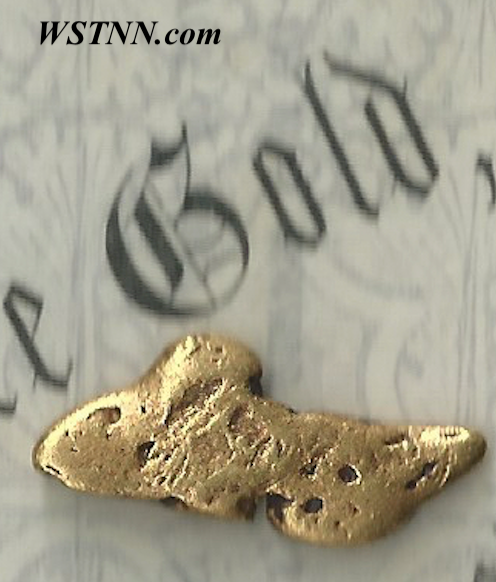
Exploring the Significance of Gold in History and the Economy

A couple weeks ago, we posted an article about silver as an investment. Now it’s time for gold.

Gold has captivated humanity for millennia, with its allure dating back to ancient civilizations. As shiny nuggets were first discovered, gold quickly became a symbol of wealth and power. The scarcity and distinctive properties of gold made it highly prized. This led to the adoption of gold as currency by various cultures across the globe. Gold played a crucial role in shaping economies and trade networks, facilitating commerce and influencing political dynamics.

The California Gold Rush of the mid-19th century marked a pivotal moment in gold’s history. The discovery of gold nuggets at Sutter’s Mill in 1848 sparked a large migration to the American West, drawing people from all walks of life in search of fortune. The influx of prospectors fueled rapid economic growth and transformed California into a growing economy. 

Gold is often regarded as a hedge against inflation due to its historical track record of preserving wealth during times of economic uncertainty. When inflation rises, the purchasing power of fiat currencies decreases. This leads investors to seek assets that can retain their value. Gold has demonstrated its ability to act as a store of value over centuries, making it a popular choice for investors looking to protect their wealth from the devastating effects of inflation.

During periods of high inflation, the price of gold tends to increase as investors flock to it as a safe haven asset. Gold’s scarcity and tangible nature contribute to its appeal as a hedge against inflation. Unlike fiat currencies, which can be subject to manipulation by central banks. The gold supply is limited, providing a natural defense against currency devaluation. Additionally, gold has inherent value and is not reliant on the performance of financial markets, making it a reliable hedge during times of economic turbulence.

Gold’s status as a globally recognized currency adds to its appeal as an inflation hedge. This universal acceptance of gold allows its liquidity as a hedge against inflation in various economic environments. Central banks and institutional investors often allocate a portion of their portfolios to gold to mitigate the effects of inflation and safeguard their wealth over the long term.

Some of the major U.S. gold mining companies are:

CompanyCompany SymbolPrice to BookPEGPEPrice to SalesForward PEYield
Coeur Mining IncCDE1.7NAna2.216.260
i-80 Gold CorpIAUX0.89NANA7.24NA0
Newmont CorpNEM1.550.79NA3.8214.482.56%
Novagold Resources Inc.NG25.84NANANANA0.00%
Royal Gold, Inc.RGLD2.797.4933.6913.3222.461.32%
SSR Mining IncSSRM0.32NANA0.7615.55.45%

Throughout history, gold has retained its status as a safe haven asset and a hedge against economic uncertainty. Its value surged during times of crisis, such as wars, financial crises, and geopolitical tensions. In the modern era, gold continues to play a crucial role in investment portfolios and central bank reserves, providing stability in volatile markets. Its timeless appeal as a store of value ensures that gold remains a cornerstone of global finance and culture.

Stay ahead of the game and subscribe to our newsletter now to unlock the hottest investment opportunities!

Subscribe Here

Disclosure: Author had no positions in any of the above at the time the article was written.

Advantages of Gold Royalty Trusts

by Fred Fuld III

Have you ever thought about investing in gold mining companies but were concerned about the risks and lack of dividend income? You may want to consider investing in gold royalty trusts as an alternative.

Gold royalty trusts provide funds to mining company which need a large amount of capital to run their mining operations. In return, the royalty trusts receive a percentage of the gold revenues. The trusts can fund many different mining companies to provide diversification and often buy gold royalty contracts from other companies.

Some trusts also use precious metals streaming, which is when a company makes an agreement with a mining company to purchase all or part of their precious metals production at a predetermined discounted price.

So some of the main benefits of gold royalty trusts are:

  • Income
  • Inflation hedge
  • Portfolio diversification of royalty contracts
  • Gold diversification from bullion, coins, and mining companies
  • Possible tax benefits for the dividends
  • Avoidance of the risks of mining companies
  • Significantly lower expenses due to small number of employees for the trust versus the large employe expenditures for the mining companies
  • Liquidity

Here are some examples of gold and silver royalty trusts that may be worth further investigation for you hard assets and/or income portfolio.

Franco-Nevada (FNV) is a Toronto, Ontario, Canada based owner of royalties and streams, and which trades on the New York Stock Exchange. The company has a market cap of $28.4 billion and pays a dividend yield of 0.78%.  Dividends are paid quarterly and have increased every year since 2014. The stock trades at 48 times trailing earnings and 44 times forward earnings. Over the last three years, revenues have grown by 15%, operating income has increased by 36%, and net income has gone up by 19%.

Wheaton Precious Metals (WPM), based in Vancouver, Canada, specializes in silver metal streaming, and has a market cap of $21 billion. Some of the companies that Wheaton has contracts with include Barrick Gold (GOLD) and Goldcorp (now part of Newmont (NEM)). Wheaton has a yield of 1.03%, with dividends paid quarterly. The latest dividend was increased by 7.7%. The stock has trailing price to earnings ratio of 37 and a forward P/E of 32.

Royal Gold (RGLD), based in Denver, Colorado and trades on the NASDAQ, provides a yield of 0.94%. Dividends were increased by 7.1% this year, and have increased every year since 2004. It is an $8.3 billion company with a trailing P/E of 31 and a forward P/E of 33.

Sandstorm Gold (SAND), based in Vancouver, has a market cap of $1.7 billion. It has a trailing P/E of 57 and a forward P/E of 56. Currently, there is no dividend.

For a list of more than half a dozen gold and silver royalty trusts along with their yields and other information, click HERE.

Hopefully, one of these gold royalty trusts will help you strike it rich.

Disclosure: Author has a long position in WPM and SAND.