
Understanding the Short Squeeze: The Three Top High-Risk Squeeze Plays

by Fred Fuld III

Last week, on October 20, Beyond Meat (BYND) closed at 1.47 a share. Two days later, the stock spiked above $7 a share, an increase of over 400%, which many believe was caused by a short squeeze.

In the volatile world of stock trading, few phenomena capture the imagination quite like the short squeeze. It’s a dramatic reversal where the underdog stock suddenly roars back, leaving short sellers scrambling and fortunes flipping overnight.

But what exactly is a short squeeze, and why do certain stocks become prime candidates for this financial fireworks display? As of late October 2025, with market jitters high amid economic uncertainties, investors are eyeing heavily shorted names like Hertz Global Holdings (HTZ), C3.ai (AI), and Hims & Hers Health (HIMS).

These stocks boast some of the highest short interest levels as a percentage of their float—meaning a large chunk of available shares are bet against them—setting the stage for potential explosive moves if sentiment shifts.

At its core, short selling is a strategy where investors borrow shares of a stock they believe will decline in value, sell them immediately at the current price, and later buy them back at a (hopefully) lower price to return to the lender, pocketing the difference as profit. It’s a bearish bet, often used by hedge funds and traders anticipating trouble for a company, such as poor earnings or industry headwinds.

However, if the stock price rises instead—due to positive news, strong earnings, or even coordinated buying from retail investors—short sellers face mounting losses. To limit damage, they must “cover” by buying back the shares, which drives demand and pushes the price even higher. This feedback loop creates the squeeze: panic buying amplifies the rally, sometimes leading to parabolic gains.

The most infamous example is the 2021 GameStop (GME) saga, where short interest exceeded 140% of the float. Retail traders on platforms like Reddit’s WallStreetBets fueled a buying frenzy, sending the stock from under $20 to nearly $500 in days, inflicting billions in losses on short sellers like Melvin Capital.

Short squeezes aren’t just memes; they’re rooted in market mechanics and can signal deeper issues, like over-optimism among bears or undervalued fundamentals. Key indicators include high short interest (typically over 20-30% of float), low float (fewer shares available to trade), and rising borrow fees (the cost to short the stock).

In today’s environment, with AI hype, travel recovery, and telehealth booms influencing sectors, squeezes remain a wildcard. Below, we profile three stocks currently topping short interest lists, each with over 30% of their float shorted, exploring their businesses, challenges, and squeeze potential.

Hertz Global Holdings (HTZ): The Rental Giant in the Rearview Mirror

Hertz Global Holdings, Inc. (NASDAQ: HTZ) is a cornerstone of the global car rental industry, operating as one of the world’s leading providers of vehicle rental and mobility solutions. Founded over a century ago, the company—through subsidiaries like The Hertz Corporation—manages a fleet of more than 500,000 vehicles across two main segments: Americas Rental Car (RAC) and International RAC. It serves leisure and business travelers at thousands of airport and neighborhood locations worldwide, offering everything from economy cars to luxury rides and electric vehicles (EVs).

Hertz has been at the forefront of innovation, partnering with brands like Tesla to integrate EVs into its fleet and launching subscription models for urban dwellers. However, the company has weathered storms: It filed for bankruptcy in 2020 amid COVID-19 travel shutdowns, emerging in 2021 with a leaner structure but saddled with debt. By mid-2025, Hertz reported revenues of around $9 billion annually, though profitability remains elusive with net losses exceeding $2.8 billion in recent years, driven by high fleet depreciation and softening demand.

What makes HTZ a squeeze candidate? As of October 15, 2025, short interest stands at a staggering 43.22% of the float, with over 54.7 million shares shorted—reflecting skepticism about its EV pivot (which led to writedowns on unsold Teslas) and competition from peers like Enterprise and Avis. The stock trades around $5 per share, down sharply from post-bankruptcy highs, but recent stake-building by activists like Pershing Square has sparked buzz.

A surge in travel demand or successful debt refinancing could trigger covering, potentially mirroring the 2020-2021 rally that saw shares quintuple. Yet, with a market cap under $2 billion and ongoing losses, bears argue it’s a value trap—making any squeeze a high-octane gamble.

C3.ai (AI): Betting Against the AI Boom?

C3.ai, Inc. (NYSE: AI), founded in 2009 by enterprise software veteran Thomas Siebel, positions itself as a pioneer in enterprise artificial intelligence (AI), delivering a comprehensive platform to help large organizations harness AI for digital transformation.

Headquartered in Redwood City, California, the company offers over 130 pre-built, turnkey AI applications tailored for industries like manufacturing, energy, financial services, and defense. Its C3 Agentic AI Platform enables clients—ranging from Shell and the U.S. Air Force to Bank of America—to build, deploy, and operate AI models at scale, tackling use cases such as predictive maintenance, supply chain optimization, and fraud detection. Unlike consumer-facing AI tools, C3.ai focuses on “enterprise-grade” solutions, emphasizing explainability, security, and integration with legacy systems. In fiscal 2025, the firm reported accelerating revenue growth, with subscription bookings up amid the generative AI wave, though it remains unprofitable due to heavy R&D investments.

Short interest in C3.ai hovers at 31.71% of the float as of October 15, 2025, with nearly 40 million shares shorted, down slightly from summer peaks but still elevated amid broader AI sector volatility. Trading near $18 per share with a $2.4 billion market cap, the stock has underperformed peers like Palantir despite AI tailwinds, fueling bearish bets on overvaluation and competition from open-source alternatives.

A major contract win or blowout earnings—expected in November 2025—could ignite a squeeze, especially with days-to-cover at 4.5, amplifying any retail-driven rally. Optimists see C3.ai as undervalued in the AI gold rush; skeptics point to its history of missed targets. Either way, it’s a stock where technology hype meets short-seller skepticism.

Hims & Hers Health (HIMS): Telehealth’s Disruptive Darling

Hims & Hers Health, Inc. (NYSE: HIMS), launched in 2017, has redefined accessible healthcare through its telehealth platform, connecting millions to licensed providers for personalized treatments in sensitive areas like sexual health, hair loss, mental wellness, dermatology, primary care, and weight management.

What started as “Hims” for men’s issues (e.g., erectile dysfunction via sildenafil) expanded to “Hers” for women in 2018, and now offers compounded GLP-1 drugs for weight loss amid the Ozempic boom. Operating a direct-to-consumer model with online consultations, discreet shipping, and affordable generics, the company boasts over 1.5 million subscribers as of mid-2025. Its Q2 2025 results were a standout: Revenue soared 73% year-over-year to $544.8 million, with net income flipping positive at $42.5 million and adjusted EBITDA at $82.2 million, underscoring scalable growth in a post-pandemic telehealth surge.

Yet, with short interest at 36.67% of the float (over 66 million shares shorted) as of October 15, 2025, HIMS remains a battleground stock, trading around $48 per share with a $14 billion market cap. Bears cite regulatory risks around compounded drugs, margin pressures from marketing spends, and competition from traditional pharmacies, pushing short interest near all-time highs.

Days-to-cover sit at just 2.3, suggesting quick potential for a squeeze if subscriber growth accelerates or FDA approvals expand offerings. Recent acquisitions like Zava (a European telehealth provider) signal international ambitions, but valuation debates rage—forward multiples exceed 10x sales. For bulls, HIMS embodies the future of consumer health; for shorts, it’s frothy. A catalyst like Q3 earnings could decide the next chapter.

Short squeezes embody the market’s raw power dynamics: a clash between conviction and capitulation. While HTZ, AI, and HIMS offer tantalizing setups, they also carry risks—volatility, dilution, or fundamental cracks could crush longs too. Investors eyeing these should monitor borrow rates and news flow closely. In the end, the squeeze isn’t just about price; it’s a reminder that in stocks, the crowd can sometimes rewrite the script.

Disclosure: Author didn’t own any of the above at the time the article was written. No investment advice is expressed or implied.


Top Biotech Short Squeeze Stocks

by Fred Fuld III

A short squeeze is a phenomenon that occurs in financial markets when investors who have sold shares of a stock short (i.e., betting that the stock price will fall) are forced to buy those shares back at a higher price than they expected. This can happen when the stock’s price rises sharply, causing losses for short sellers who need to buy the stock to cover their position and limit their losses.

As more and more short sellers try to buy the stock to close out their positions, this increased buying activity can drive the stock price even higher, creating a feedback loop that can lead to a rapid and dramatic increase in price. This can create a challenging situation for short sellers, who may be forced to buy back the stock at a loss, or risk even greater losses if the stock continues to rise. A short squeeze can also create opportunities for long investors who have purchased the stock, as they may be able to sell their shares at a higher price to short sellers looking to cover their positions.

When you short a stock, it means that your goal is to make money from a drop in the price of a stock. Technically, what happens is that you borrow shares of a stock, sell those shares, then buy back those shares at a hopefully lower price so that those shares can be returned. This all happens electronically, so you don’t actually see all the borrowing and returning of shares; it just shows up on your screen as a negative number of shares.

Short sellers can be profitable, but sometimes when the stock moves against them, and begins to rise, the short sellers jump in right away to buy shares to cover their positions, creating what is called a short squeeze. When a short squeeze takes place, it can cause the share prices to increase fast and furiously. Any good news can trigger the short squeeze.

Some traders utilize this situation by looking for stocks to buy that may have a potential short squeeze. Here is what a short squeeze trader should take into consideration:

Short Percentage of Float ~ The float is the number of freely tradable shares and the short percentage is the number of shares held short divided by the float. Amounts over 10% to 20% are considered high and potential short squeeze plays.

Short Ratio / Days to Cover / Short Interest Ratio -This is probably the most important metric when looking for short squeeze trades, no matter what you call it. This is the number of days it would take the short sellers to cover their position based on the average daily volume of shares traded. This is a significant ratio as it shows how “stuck” the short sellers are when they want to buy in their shares without driving up the price too much. Unfortunately for the shortsellers, the longer the number of days to cover, the bigger and longer the squeeze.

Short Percentage Increase/Decrease ~ This is the percentage increase in in the number of short sellers from the previous month.

Investing in biotechnology stocks offers a unique opportunity for individuals looking to gain exposure to one of the most dynamic and innovative sectors of the market. The biotechnology industry is at the forefront of medical advancements, driving breakthroughs in treatments and therapies that can transform lives. However, like any investment, it comes with its own set of risks and rewards.

The following are some heavily shorted biotech stocks that may be worth considering.

Biotechnology companies often work on cutting-edge solutions to address unmet medical needs, making their stocks particularly attractive to investors with a long-term outlook. For instance, Phathom Pharmaceuticals Inc. (PHAT) is a clinical-stage biopharmaceutical company dedicated to developing treatments for gastrointestinal diseases. Their lead product candidate, vonoprazan, is designed to treat acid-related disorders, offering potential advantages over traditional therapies. If successful, Phathom’s innovations could capture significant market share, making it a compelling choice for investors willing to bet on novel therapies with strong commercial potential. The stock has a Short Interest Ratio (Days To Cover) of 10.7, which means it would take over ten days for short sellers to cover their short position. Plus, 48% of the shares are short.

Another company in the biotech space is CervoMed Inc. (CRVO), which focuses on developing treatments for neurodegenerative diseases, including Alzheimer’s and Parkinson’s. As the global population ages, the demand for therapies to combat these debilitating conditions is expected to rise dramatically. CervoMed’s pipeline positions it to address these needs, although the path to market approval for such treatments can be fraught with regulatory and clinical hurdles. Investors who believe in the company’s science and potential market opportunity may find CRVO a high-risk but high-reward prospect. The company has short interest of 42.7%.

Cassava Sciences Inc. (SAVA) also operates in the neurodegenerative disease space, with a focus on Alzheimer’s disease. Its lead drug candidate, simufilam, has generated considerable attention, with the company claiming it can improve cognitive function in patients. While the promise of treating Alzheimer’s is enticing, Cassava has faced controversy and scrutiny over its research methodologies, leading to heightened volatility in its stock price. Investors in SAVA must weigh the potential for groundbreaking success against the risk of regulatory setbacks and scientific criticism. The short interest rate is 41.3%.

Molecular Templates Inc. (MTEM) represents a different facet of biotechnology, specializing in targeted cancer therapies. The company’s proprietary engineered toxin bodies (ETBs) platform seeks to deliver highly specific treatments that can minimize side effects and maximize efficacy. While Molecular Templates has shown promise in early-stage trials, like many biotech companies, it relies heavily on continued funding and successful trial outcomes to advance its pipeline. Investors must be prepared for the inherent unpredictability of clinical trial results and the financial pressures faced by smaller biotech firms. The company has short interest of 41.2%.

Despite the exciting potential of these companies, investing in biotechnology stocks carries significant risks. The industry is heavily regulated, and the path from research to market approval is often lengthy and uncertain. Many biotech firms operate without consistent revenue streams, relying on external funding or partnerships to sustain operations. A failed clinical trial or regulatory rejection can lead to substantial stock price declines.

Moreover, the highly speculative nature of biotechnology stocks can result in dramatic volatility. While success stories abound, such as breakthrough drugs that yield massive returns for investors, the failure rate in drug development is high. Investors should diversify their portfolios and only allocate capital they can afford to lose to this high-risk sector.

In conclusion, biotechnology stocks like Phathom Pharmaceuticals, CervoMed, Cassava Sciences, and Molecular Templates offer compelling opportunities for those willing to navigate the inherent risks. Their work addresses some of the most pressing medical challenges of our time, and successful innovations can result in both societal benefits and financial gains. However, potential investors must perform thorough due diligence and remain mindful of the risks, balancing their enthusiasm for scientific breakthroughs with a clear-eyed view of the sector’s challenges.

Disclosure: Author didn’t own any of the above at the time the article was written.

Identifying Potential Short Squeeze Opportunities on the NYSE

Have you ever been in a situation where you’ve shorted a stock, only to witness a sudden surge, leading to an immediate scramble to close your position?

What occurred is commonly referred to as a Short Squeeze. Even veteran traders have encountered this event. Yet, do they truly grasp what happened?

A short squeeze occurs when a heavily shorted stock experiences a significant surge in buying volume, prompting short sellers to close their positions, thus driving prices higher due to the resulting covers.

Shorting a stock involves aiming to profit from its price decline. Essentially, you borrow shares, sell them, and later repurchase them ideally at a lower price to return. This process occurs electronically, so you won’t physically witness the borrowing and returning; instead, it reflects as a negative share count on your screen.

Short sellers can see profits, but when a stock starts to move against them, rising in value, they often rush to buy shares to close their positions, resulting in a short squeeze. This rapid increase in share prices during a short squeeze can be triggered by any positive news.

Finding a stock for a short squeeze involves identifying certain characteristics that make it a potential candidate: 

  1. Look for stocks with high short interest ratios (the ratio of shares sold short compared to shares available for trading), as these indicate a large number of investors betting against the stock. 
  • Additionally, consider stocks with low float (the number of shares available for trading), as a smaller float can exacerbate price movements, especially if demand suddenly increases.
  • Lastly, monitor stocks with upcoming catalysts such as earnings reports or significant news announcements, as positive developments can trigger short squeezes by prompting short sellers to cover their positions quickly.

Some traders capitalize on this scenario by seeking out stocks with potential for a short squeeze. Below, you’ll find further elaboration on the information provided above:

Short Percentage of Float indicates the portion of shares held short divided by the total float, representing freely tradable shares. A short percentage exceeding 10% to 20% is often seen as high and may suggest potential opportunities for short squeezes.

The Short Ratio, also referred to as Days to Cover or Short Interest Ratio, is a critical measure for identifying potential short squeeze opportunities. It signifies the number of days it would take for short sellers to repurchase their positions based on the average daily trading volume of shares. This ratio is significant because it reveals the challenge short sellers encounter in covering their positions without significantly impacting the stock price. A higher number of days to cover implies a more prolonged squeeze, amplifying potential losses for short sellers.

Short Percentage Increase denotes the percentage rise in the number of short sellers compared to the previous month.

The following are some heavily shorted NYSE stocks that may be worth considering for a short squeeze.

CompanyCompany SymbolShort InterestShort % ChangeShort Interest Ratio
Kohl’s CorporationKSS33.39%3%6.9
Guess?, Inc.GES32.34%4%6.7
C3.ai IncAI31.85%1%4.7
Virgin Galactic Holdings IncSPCE29.18%11%7.5
ChargePoint Holdings IncCHPT28.58%-2%7.9
Carvana CoCVNA28.54%-4%4.2
Big Lots, Inc.BIG28.37%6%5.1

The first stock on the list, Kohl’s Corporation (KSS) has over 33% of its float shorted, an increase of 3% over last month. The short interest ratio is 6.9, which means that it would take the short sellers over six days to cover their position, based on recent average volume.

The second stock on the list, Guess?, Inc. (GES) has over 32% of its float shorted, an increase of 4% over last month. The short interest ratio is 6.7, which means that it would take the short sellers under seven days to cover their position, based on recent average volume. 

An interesting stock on the list, Virgin Galactic Holdings Inc. (SPCE) has over 29% of its float shorted, a large increase of 11% over last month. The short interest ratio is 7.5, which means that it would take the short sellers just over a week to cover their position, based on recent average volume. 

While a stock might display promising ratios and draw considerable short interest, it’s essential to understand that these indicators alone don’t assure an upward price movement, especially in a bear market. Moreover, elevated levels of short interest in a stock may indicate underlying issues or concerns that have led investors to take positions against its performance.

Disclosure: Author had no positions in any of the above at the time the article was written.

How to Spot Potential Short Squeeze Opportunities on the NASDAQ

Ever found yourself shorting a stock only to see a sudden spike, prompting an urgent need to cover your position as soon as possible?

What happened was called a Short Squeeze. Even the most seasoned traders have experienced this phenomenon. But do they really know what happened? 

A short squeeze happens when a heavily shorted stock has a shape increase in buying volume causing short sellers to close out their positions, which drives the prices higher from the covers. As you have read in a previous article about NYSE Squeezes, NASDAQ is home to many short squeezes as well. 

The most famously known NASDAQ short squeeze is GameStop (GME) in 2021. GameStock is a brick and mortar gaming merchandise retailer that had declining sales, which caused investors to heavily short the stock. GameStop had more shares sold short than the total number of shares available for trading (a situation known as a “short interest”). 

A group of retail investors on the Reddit forum r/WallStreetBets noticed that GameStop was heavily shorted and began buying the stock which started driving up the stock price. As the aggressive buying started to surge, this put pressure on the short sellers to cover their positions (buying back at higher prices to limit the losses). 

The unprecedented surge in GameStop’s stock price caused extreme volatility and attracted widespread media attention. The GameStop short squeeze had significant repercussions in the financial markets, leading to losses for some hedge funds that had heavily shorted the stock and prompting scrutiny from regulators and lawmakers. It also sparked a broader interest in retail trading and the democratization of investing. 

Some traders utilize this situation by looking for stocks to buy that may have a potential short squeeze. Here is what a short squeeze trader should take into consideration:

Short Percentage of Float refers to the proportion of shares held short divided by the total float, where the float represents freely tradable shares. A short percentage exceeding 10% to 20% is typically regarded as high and may indicate potential short squeeze opportunities.

The Short Ratio, also known as Days to Cover or Short Interest Ratio, is a crucial metric in identifying potential short squeeze opportunities. It represents the number of days it would take for short sellers to buy back their positions based on the average daily trading volume of shares. This ratio is significant because it indicates the level of difficulty short sellers face when attempting to cover their positions without significantly impacting the stock price. However, for short sellers, a higher number of days to cover implies a greater and more prolonged squeeze, increasing their potential losses.

Short Percentage Increase refers to the percentage growth in the number of short sellers compared to the preceding month.

The following are some heavily shorted NASDAQ stocks that may be worth considering for a short squeeze.

CompanyCompany SymbolShort InterestShort % ChangeShort Interest Ratio
Novavax IncNVAX41.58%5%6.4
Beyond Meat IncBYND37.86%1%7.8
Immunitybio IncIBRX36.07%7%11.4
Upstart Holdings IncUPST35.63%-11%2.6
Luminar Technologies IncLAZR35.28%13%11.6
Prime Medicine IncPRME34.06%-7%3.9
Blink Charging CoBLNK32.27%-1%2.3

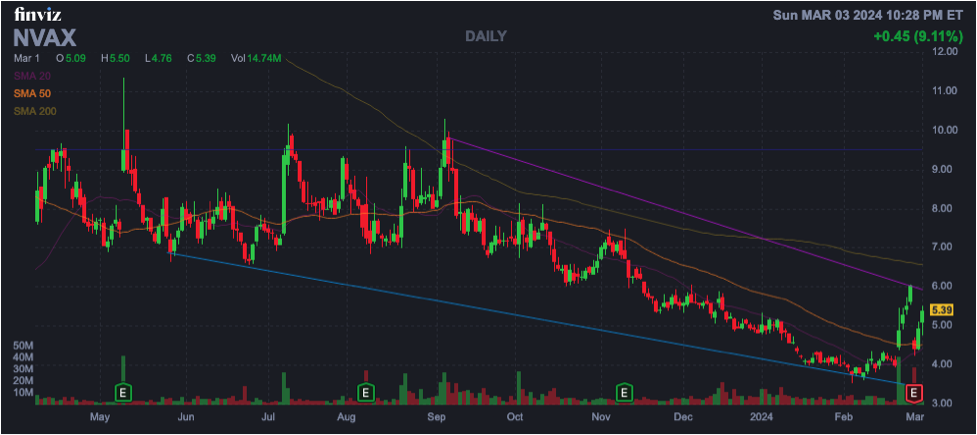
The first stock on the list, Novavax Inc (NVAX) has over 41% of its float shorted, an increase of 5% over last month. The short interest ratio is 6.4, which means that it would take the short sellers over six days to cover their position, based on recent average volume. Take a look at the chart below, you can see increased volume in the past few days…

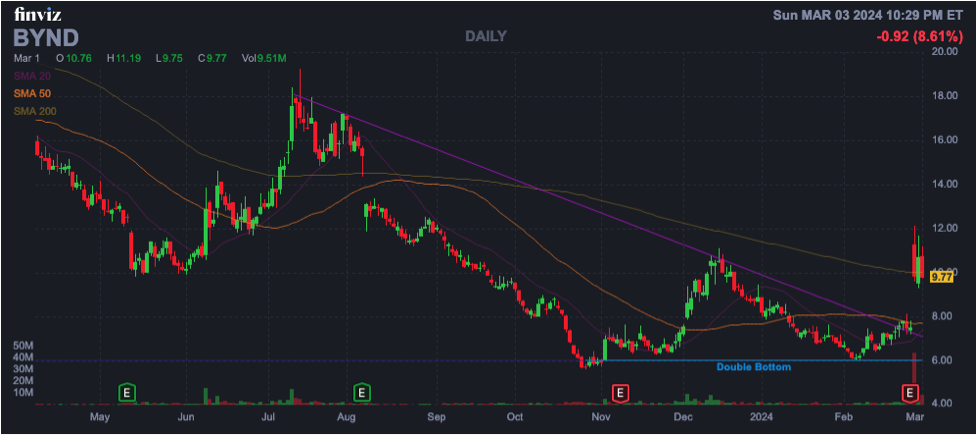
The second stock on the list, Beyond Meat Inc. (BYND) has over 37% of its float shorted, an increase of 1% over last month. The short interest ratio is 7.8, which means that it would take the short sellers over seven days to cover their position, based on recent average volume. As you can see here, it looks like BYND may have been squeezed.

The last stock on the list, Blink Charging Co. (BLNK) has over 32% of its float shorted, an decrease of 1% over last month. The short interest ratio is 2.3, which means that it would take the short sellers over two days to cover their positions, based on recent average volume. 

Although a stock may exhibit favorable ratios and attract significant short interest, it’s crucial to recognize that these factors alone do not guarantee an upward movement in its price, particularly in a bear market. Additionally, high levels of short interest in a stock could signal underlying issues or concerns that have prompted investors to bet against its performance.

Don’t forget to subscribe to our newsletter in order to become aware of the latest investment opportunities.

Disclosure: Author had no positions in any of the above at the time the article was written.

NYSE Stocks with the Highest Short Interest for Short Squeeze Plays

by Fred Fuld III

Have you ever wondered why stocks that are heavily shorted can spike up in price so much?

When you short a stock, it means that you plan to make money from a drop in the price of a stock. Technically, what happens is that you borrow shares of a stock, sell those shares immediately, then buy back those shares at a hopefully lower price so that you can return those shares. This all happens electronically, so you don’t actually see all the borrowing and returning of shares; it just shows up on your screen as a negative number of shares.

Short sellers can make money, but sometimes when the stock moves against them, and begins to rise, the short sellers jump in fast to buy shares to cover their positions, creating what is called a short squeeze. When a short squeeze takes place, it can cause the share prices to increase fast and furiously. Any positive news can trigger the short squeeze.

Some traders utilize this situation by looking for stocks to buy that may have a potential short squeeze. Here is what a short squeeze trader should take into consideration:

Short Percentage of Float ~ The float is the number of freely tradable shares and the short percentage is the number of shares held short divided by the float. Amounts over 10% to 20% are considered high and potential short squeeze plays.

Short Ratio / Days to Cover / Short Interest Ratio -This is probably the most important metric when looking for short squeeze trades, no matter what you call it. This is the number of days it would take the short sellers to cover their position based on the average daily volume of shares traded. This is a significant ratio as it shows how “stuck” the short sellers are when they want to buy in their shares without driving up the price too much. Unfortunately for the shortsellers, the longer the number of days to cover, the bigger and longer the squeeze.

Short Percentage Increase ~ This is the percentage increase in the number of short sellers from the previous month.

The following are some heavily shorted stocks that may be worth considering.

CompanySymbolShort InterestShort % ChangeShort Interest Ratio
Fisker IncFSR47.28%13%3.8
Carvana CoCVNA40.04%-11%3.9
C3.ai IncAI38.08%-2%4.3
Kohl’s CorporationKSS27.11%8%5.4
Cinemark Holdings, Inc.CNK26.53%-1%9.4
IONQ IncIONQ26.22%2%5.4

The fourth stock on the list, Kohl’s (KSS) has over 27% of its float shorted, an increase of 8% over last month.

The short interest ratio is 5.4, which means that it would take the short sellers over five days to cover their position, based on recent average volume.

Cinemark Holdings (CNK) is another stock that is heavily shorted with over 26% now short with almost no change in short interest from the previous month.

The short interest ratio is 9, which means that it would take the short sellers over nine days to cover their position, based on recent average volume.

Just keep in mind that just because a stock has good ratios and is heavily shorted, doesn’t mean that the stock will go up, especially in a bear market. Also, stocks that are significantly shorted may be shorted for a reason.

Disclosure: Author had no positions in any of the above at the time the article was written.

5 Stocks with Short Interest Over 40%: Possible Short Squeeze Plays

by Fred Fuld III

Did you know that at one point, GameStop (GME), the high flying meme stock, had 140% of its total outstanding shares shorted, according to the book, The Antisocial Network (now republished as Dumb Money).

It is possible for a stock to have a short interest exceeding 100% of its outstanding shares. However, this is relatively rare and can occur due to several factors:

1. Naked Short Selling: This illegal practice involves selling borrowed shares without first locating them. While most brokers have safeguards to prevent naked short selling, it can still happen, especially with less-regulated stocks. In such cases, the number of shorted shares can temporarily exceed the number of outstanding shares.

2. Share Lending and Relending: When shares are borrowed for short selling, they can be re-lent to other short sellers multiple times. This can create a situation where the total number of shorted shares appears to be more than the number of outstanding shares, even though no naked short selling has occurred.

3. Synthetic Short Positions: These positions involve using derivatives like options or futures contracts to mimic the effect of short selling. While not directly borrowing shares, these positions can still contribute to the overall short interest and push it above 100%.

It is probably the lending and relending that contributed the most to GameStop short interest going over 100%.

A short squeeze is a phenomenon that occurs in financial markets when investors who have sold shares of a stock short (i.e., betting that the stock price will fall) are forced to buy those shares back at a higher price than they expected. This can happen when the stock’s price rises sharply, causing losses for short sellers who need to buy the stock to cover their position and limit their losses.

As more and more short sellers try to buy the stock to close out their positions, this increased buying activity can drive the stock price even higher, creating a feedback loop that can lead to a rapid and dramatic increase in price. This can create a challenging situation for short sellers, who may be forced to buy back the stock at a loss, or risk even greater losses if the stock continues to rise. A short squeeze can also create opportunities for long investors who have purchased the stock, as they may be able to sell their shares at a higher price to short sellers looking to cover their positions.

When you short a stock, it means that your goal is to make money from a drop in the price of a stock. Technically, what happens is that you borrow shares of a stock, sell those shares, then buy back those shares at a hopefully lower price so that those shares can be returned. This all happens electronically, so you don’t actually see all the borrowing and returning of shares; it just shows up on your screen as a negative number of shares.

Short sellers can be profitable, but sometimes when the stock moves against them, and begins to rise, the short sellers jump in right away to buy shares to cover their positions, creating what is called a short squeeze. When a short squeeze takes place, it can cause the share prices to increase fast and furiously. Any good news can trigger the short squeeze.

Some traders utilize this situation by looking for stocks to buy that may have a potential short squeeze. Here is what a short squeeze trader should take into consideration:

Short Percentage of Float ~ The float is the number of freely tradable shares and the short percentage is the number of shares held short divided by the float. Amounts over 10% to 20% are considered high and potential short squeeze plays.

Short Ratio / Days to Cover / Short Interest Ratio -This is probably the most important metric when looking for short squeeze trades, no matter what you call it. This is the number of days it would take the short sellers to cover their position based on the average daily volume of shares traded. This is a significant ratio as it shows how “stuck” the short sellers are when they want to buy in their shares without driving up the price too much. Unfortunately for the shortsellers, the longer the number of days to cover, the bigger and longer the squeeze.

Short Percentage Increase/Decrease ~ This is the percentage increase in in the number of short sellers from the previous month.

The following are some heavily shorted stocks that have short interest above 40%.

CompanySymbolShort InterestFloatOutstdS. I. Ratio% chg from prev month
Fisker IncFSR47.28%199.17M218.20M4.54%
Novavax IncNVAX43.94%111.96M118.79M6.58%
Upstart Holdings IncUPST41.91%72.37M85.06M3.5-1%
Beyond Meat IncBYND40.09%60.86M64.54M8.2-5%
Carvana CoCVNA40.04%94.11M106.54M4.38%

The second stock on the list, Novavax (NVAX) has almost 44% of its float shorted, with an 8% increase in short interest over last month.

The short interest ratio is 6.5, which means that it would take the short sellers over six days to cover their position, based on recent average volume.

Just keep in mind that just because a stock has good short interest ratios and is heavily shorted, doesn’t mean that the stock will go up, especially in a bear market.

In addition, the short positions and other data can change at any time.

Also, stocks that are significantly shorted may up being just lemons.

Disclosure: Author didn’t own any of the above at the time the article was written.

Top 6 NASDAQ Short Squeeze Play Stocks

by Fred Fuld III

On May 11 of this year, I posted an article about NYSE short squeeze stocks, and pointed out Carvana (CVNA). In less than a month after the article was posted, the stock doubled. The stock is still up over 145% since then.

Another stock that was mentioned was Wayfair (W), which increased by almost 43% in one month.

A short squeeze is a phenomenon that occurs in financial markets when investors who have sold shares of a stock short (i.e., betting that the stock price will fall) are forced to buy those shares back at a higher price than they expected. This can happen when the stock’s price rises sharply, causing losses for short sellers who need to buy the stock to cover their position and limit their losses.

As more and more short sellers try to buy the stock to close out their positions, this increased buying activity can drive the stock price even higher, creating a feedback loop that can lead to a rapid and dramatic increase in price. This can create a challenging situation for short sellers, who may be forced to buy back the stock at a loss, or risk even greater losses if the stock continues to rise. A short squeeze can also create opportunities for long investors who have purchased the stock, as they may be able to sell their shares at a higher price to short sellers looking to cover their positions.

The stock with the biggest short ratio (days to cover), at 14.3 back then, was Heron Therapeutics, Inc. (HRTX). It rose by 9.5% in three days.

When you short a stock, it means that your goal is to make money from a drop in the price of a stock. Technically, what happens is that you borrow shares of a stock, sell those shares, then buy back those shares at a hopefully lower price so that those shares can be returned. This all happens electronically, so you don’t actually see all the borrowing and returning of shares; it just shows up on your screen as a negative number of shares.

Short sellers can be profitable, but sometimes when the stock moves against them, and begins to rise, the short sellers jump in right away to buy shares to cover their positions, creating what is called a short squeeze. When a short squeeze takes place, it can cause the share prices to increase fast and furiously. Any good news can trigger the short squeeze.

Some traders utilize this situation by looking for stocks to buy that may have a potential short squeeze. Here is what a short squeeze trader should take into consideration:

Short Percentage of Float ~ The float is the number of freely tradable shares and the short percentage is the number of shares held short divided by the float. Amounts over 10% to 20% are considered high and potential short squeeze plays.

Short Ratio / Days to Cover / Short Interest Ratio -This is probably the most important metric when looking for short squeeze trades, no matter what you call it. This is the number of days it would take the short sellers to cover their position based on the average daily volume of shares traded. This is a significant ratio as it shows how “stuck” the short sellers are when they want to buy in their shares without driving up the price too much. Unfortunately for the shortsellers, the longer the number of days to cover, the bigger and longer the squeeze.

Short Percentage Increase/Decrease ~ This is the percentage increase in in the number of short sellers from the previous month.

The following are some heavily shorted tech stock that may be worth considering.

CompanySymbolShort InterestFloatShort Interest RatioShort % change from previous month
Novavax Inc NVAX49.10%87.57M3.3-3%
Beyond Meat Inc BYND40.70%60.71M12.4-2%
Upstart Holdings Inc UPST38.35%71.13M3.73%
Ebix Inc EBIX35.71%24.25M7.718%
Faraday Future Intelligent Elec. FFIE34.21%17.27M2.242%
Groupon Inc GRPN33.82%16.17M3.60%2%

The second stock on the list, Beyond Meat (BYND) has over 40% of its float shorted, with not much change in short interest over last month.

The short interest ratio is 12.4, which means that it would take the short sellers over 12 days to cover their position, based on recent average volume.

Just keep in mind that just because a stock has good short interest ratios and is heavily shorted, doesn’t mean that the stock will go up, especially in a bear market. Also, stocks that are significantly shorted may be shorted for a reason.

Disclosure: Author didn’t own any of the above at the time the article was written.

Top NYSE Short Squeeze Stocks

by Fred Fuld III

Many stocks have dropped during the last few weeks.

This may create a buying opportunity for New York Stock Exchange stocks that are heavily shorted.

Do short squeeze stocks actually go up?

On August 22, 2022, I posted an article about meme related short squeeze stocks, and pointed out Bed Bath and Beyond (BBBY) after it had its big run-up. In exactly one week after the article was posted, the stock jumped by more than 43%.

Another stock that was mentioned was Intercept Pharmaceuticals, Inc. (ICPT), which increased by almost 5% in just two days.

The stock with the biggest short ratio (days to cover) last August, at 14.3 back then, was Heron Therapeutics, Inc. (HRTX). It rose by 9.5% in three days.

When you short a stock, it means that your goal is to make money from a drop in the price of a stock. Technically, what happens is that you borrow shares of a stock, sell those shares, then buy back those shares at a hopefully lower price so that those shares can be returned. This all happens electronically, so you don’t actually see all the borrowing and returning of shares; it just shows up on your screen as a negative number of shares.

Short sellers can be profitable, but sometimes when the stock moves against them, and begins to rise, the short sellers jump in right away to buy shares to cover their positions, creating what is called a short squeeze. When a short squeeze takes place, it can cause the share prices to increase fast and furiously. Any good news can trigger the short squeeze.

Some traders utilize this situation by looking for stocks to buy that may have a potential short squeeze. Here is what a short squeeze trader should take into consideration:

Short Percentage of Float ~ The float is the number of freely tradable shares and the short percentage is the number of shares held short divided by the float. Amounts over 10% to 20% are considered high and potential short squeeze plays.

Short Ratio / Days to Cover / Short Interest Ratio -This is probably the most important metric when looking for short squeeze trades, no matter what you call it. This is the number of days it would take the short sellers to cover their position based on the average daily volume of shares traded. This is a significant ratio as it shows how “stuck” the short sellers are when they want to buy in their shares without driving up the price too much. Unfortunately for the shortsellers, the longer the number of days to cover, the bigger and longer the squeeze.

Short Percentage Increase ~ This is the percentage increase in in the number of short sellers from the previous month.

The following are some heavily shorted stocks that may be worth considering.

CompanySymbolShort % of floatShort % changeShort Interest Ratio
Carvana CoCVNA58.05%1%2.8
Silvergate Capital CorpSI45.08%-12%0.8
Big Lots, Inc.BIG39.78%11%7.3
Fisker IncFSR37.34%7%8.7
Wayfair IncW30.02%-5%4.3

The third stock on the list, Big Lots (BIG) has almost 40% of its float shorted, an increase of 11% over last month.

The short interest ratio is 7, which means that it would take the short sellers 7 days to cover their position, based on recent average volume.

Just keep in mind that just because a stock has good ratios and is heavily shorted, doesn’t mean that the stock will go up, especially in a bear market. Also, stocks that are significantly shorted may be shorted for a reason.

Disclosure: Author didn’t own any of the above at the time the article was written.

NYSE Stocks with the Highest Short Interest

by Fred Fuld III

A short squeeze is a phenomenon that occurs in financial markets when investors who have sold shares of a stock short (i.e., betting that the stock price will fall) are forced to buy those shares back at a higher price than they expected. This can happen when the stock’s price rises sharply, causing losses for short sellers who need to buy the stock to cover their position and limit their losses.

As more and more short sellers try to buy the stock to close out their positions, this increased buying activity can drive the stock price even higher, creating a feedback loop that can lead to a rapid and dramatic increase in price. This can create a challenging situation for short sellers, who may be forced to buy back the stock at a loss, or risk even greater losses if the stock continues to rise. A short squeeze can also create opportunities for long investors who have purchased the stock, as they may be able to sell their shares at a higher price to short sellers looking to cover their positions.

On August 22, 2022, I posted an article about meme related short squeeze stocks, and pointed out Bed Bath and Beyond (BBBY) after it had its big run-up. In exactly one week after the article was posted, the stock jumped by more than 43%.

Another stock that was mentioned was Intercept Pharmaceuticals, Inc. (ICPT), which increased by almost 5% in just two days.

The stock with the biggest short ratio (days to cover), at 14.3 back then, was Heron Therapeutics, Inc. (HRTX). It rose by 9.5% in three days.

When you short a stock, it means that your goal is to make money from a drop in the price of a stock. Technically, what happens is that you borrow shares of a stock, sell those shares, then buy back those shares at a hopefully lower price so that those shares can be returned. This all happens electronically, so you don’t actually see all the borrowing and returning of shares; it just shows up on your screen as a negative number of shares.

Short sellers can be profitable, but sometimes when the stock moves against them, and begins to rise, the short sellers jump in right away to buy shares to cover their positions, creating what is called a short squeeze. When a short squeeze takes place, it can cause the share prices to increase fast and furiously. Any good news can trigger the short squeeze.

Some traders utilize this situation by looking for stocks to buy that may have a potential short squeeze. Here is what a short squeeze trader should take into consideration:

Short Percentage of Float ~ The float is the number of freely tradable shares and the short percentage is the number of shares held short divided by the float. Amounts over 10% to 20% are considered high and potential short squeeze plays.

Short Ratio / Days to Cover / Short Interest Ratio -This is probably the most important metric when looking for short squeeze trades, no matter what you call it. This is the number of days it would take the short sellers to cover their position based on the average daily volume of shares traded. This is a significant ratio as it shows how “stuck” the short sellers are when they want to buy in their shares without driving up the price too much. Unfortunately for the shortsellers, the longer the number of days to cover, the bigger and longer the squeeze.

Short Percentage Increase ~ This is the percentage increase in in the number of short sellers from the previous month.

The following are some heavily shorted tech stock that may be worth considering.

CompanyTickerShort % of FloatShort % ChangeShort Interest Ratio
Silvergate Capital CorpSI76.92%-6%1.2
Carvana CoCVNA52.82%0%1.8
Wayfair IncW33.65%0%4.2
Big Lots, Inc.BIG32.44%-1%7
C3.ai IncAI27.31%5%1.4
Fubotv IncFUBO26.57%-27%3.2
Virgin Galactic HoldingsSPCE25.92%9%5.9
Bakkt Holdings IncBKKT24.53%6%4.3
AMC EntertainmentAMC24.39%1%3.7
Cinemark Holdings, Inc.CNK23.73%0%7.6

The third stock on the list, Wayfair (W) has over 33% of its float shorted, with no change in short interest over last month.

The short interest ratio is 4.2, which means that it would take the short sellers over 4 days to cover their position, based on recent average volume.

Just keep in mind that just because a stock has good earnings ratios and is heavily shorted, doesn’t mean that the stock will go up, especially in a bear market. Also, stocks that are significantly shorted may be shorted for a reason.

Disclosure: Author didn’t own any of the above at the time the article was written.

Top Biotech Short Squeeze Stocks

by Fred Fuld III

Last week was the worst performing of the year for stocks, so far. Especially for the biotech stocks.

This may create a buying opportunity for biotech stocks that are heavily shorted.

Do short squeeze stocks actually go up?

On August 22, 2022, I posted an article about meme related short squeeze stocks, and pointed out Bed Bath and Beyond (BBBY) after it had its big run-up. In exactly one week after the article was posted, the stock jumped by more than 43%.

Another stock that was mentioned was Intercept Pharmaceuticals, Inc. (ICPT), which increased by almost 5% in just two days.

The stock with the biggest short ratio (days to cover), at 14.3 back then, was Heron Therapeutics, Inc. (HRTX). It rose by 9.5% in three days.

When you short a stock, it means that your goal is to make money from a drop in the price of a stock. Technically, what happens is that you borrow shares of a stock, sell those shares, then buy back those shares at a hopefully lower price so that those shares can be returned. This all happens electronically, so you don’t actually see all the borrowing and returning of shares; it just shows up on your screen as a negative number of shares.

Short sellers can be profitable, but sometimes when the stock moves against them, and begins to rise, the short sellers jump in right away to buy shares to cover their positions, creating what is called a short squeeze. When a short squeeze takes place, it can cause the share prices to increase fast and furiously. Any good news can trigger the short squeeze.

Some traders utilize this situation by looking for stocks to buy that may have a potential short squeeze. Here is what a short squeeze trader should take into consideration:

Short Percentage of Float ~ The float is the number of freely tradable shares and the short percentage is the number of shares held short divided by the float. Amounts over 10% to 20% are considered high and potential short squeeze plays.

Short Ratio / Days to Cover / Short Interest Ratio -This is probably the most important metric when looking for short squeeze trades, no matter what you call it. This is the number of days it would take the short sellers to cover their position based on the average daily volume of shares traded. This is a significant ratio as it shows how “stuck” the short sellers are when they want to buy in their shares without driving up the price too much. Unfortunately for the shortsellers, the longer the number of days to cover, the bigger and longer the squeeze.

Short Percentage Increase ~ This is the percentage increase in in the number of short sellers from the previous month.

The following are some heavily shorted tech stock that may be worth considering.

CompanySymbolShort % of FloatShort % ChangeShort Interest Ratio
NovavaxNVAX43% 0% 4.5
ImmunitybioIBRX29%6%14
PMV PharmaceuticalsPMVP29%-4%16.5
SpringWorks TherapeuticsSWTX30%-2%16.5

The second stock on the list, Immunitybio (IBRX), which develops  therapies and vaccines that amplify the immune system to defeat cancers and infectious diseases, has about 29% of its float shorted, an increase of 6% over last month.

The short interest ratio is 14, which means that it would take the short sellers 14 days to cover their position, based on recent average volume.

Just keep in mind that just because a stock has good earnings ratios and is heavily shorted, doesn’t mean that the stock will go up, especially in a bear market. Also, stocks that are significantly shorted may be shorted for a reason.

Disclosure: Author didn’t own any of the above at the time the article was written.