
7 Ways to Trade a Bear Market

by Fred Fuld III

Many investors and traders believe that we have finally reached the top, and are in the beginning of a bear market.

Several techniques are available to make money in a bear market, some of which are speculative, and some not so risky. Even if you have a small account, there are ways to protect themselves, and even make money on the downside. Here are some of those strategies.

1. Shorting Stocks

This is one of the most speculative ways of making money in a bear market. In simple terms, you make money when the stock goes down and you lose money when the stock goes up. What technically happens is that you borrow the shares and immediately sell them (this all is done electronically through your brokerage firm) and since you owe those shares, you eventually have to buy them back at some price, hopefully a lower price, in order to return those hares. The difference between your sale price and eventual purchase price is your profit (or loss, if you buy back at a higher price).

Can you make a lot of money shorting stocks in a bear market? Yes. Is it speculative? Very. Can you lose a lot? Most definitely. This is why it is so risky. When you short a stock, the lowest point it can drop to is zero. Whereas, if the stock goes up, the amount it can rise is unlimited. Let’s say you short 100 shares of a stock at $20 a share. If you put up funds equal to 100% of the value of the shorted amount, and the stock drops to zero, you’ve made a 100% return. However, suppose the stock goes from 20 to 100, you end up losing 400% of your money with lots of margin calls along the way. But even on a short term basis, an investor can lose money very fast.

So in summery, do I think you should short stocks? Absolutely not, unless you are a professional trader. The risk is almost infinite. If you understand options real well, hedged short selling might be OK, as long as you are an advanced trader, and know what you’re doing.

2. Short (Bearish) ETFs

The Exchange Traded Fund known as the Bearish ETF or Short ETF is another option. What these ETFs do is provide a return opposite to the return of the index, sector, or industry that it is tracking.

For example, the Short Dow30 ProShares (DOG) provides a return that is the inverse of the Dow Jones Industrial Average. If the Dow goes down 2%, the DOG goes up 2%. The Short QQQ ProShares (PSQ) ETF gives a return that is the inverse of the NASDAQ 100 Index. If you are bearish on gold, you can buy the PowerShares DB Gold Short ETN (DGZ) ETF.

The nice thing about these short ETFs is that your losses are limited. Also, if you are long individual stocks that you don’t want to sell, these can be good for protecting your portfolio on the downside.

3. Leveraged Bearish ETFs

If you like volatility, you will love the leveraged bearish ETFs. What these ETFs do is provide double, and in some cases triple the inverse return of indices.Some examples include the UltraShort Consumer Services ProShares (SCC) and the ProShares UltraShort S&P S&P 500 (SDS).

In addition there are several triple leveraged bearish ETFs. Direxion Daily MCSI Real Estate Bear 3X Shares (DRV), Direxion Daily Energy Bear 2X Shares (ERY), and ProShares UltraPro Short Russell 2000 (SRTY) are just a few of the many leveraged bearish ETFs.

The volatility of these things is substantial, and so are the wide bid and asked spreads that I’ve seen occasionally.

The advantage of these trading vehicles is that they are a way of shorting on margin, with a limit on the downside. The disadvantage is that the losses are quick and large, especially with the triple leverage short ETFs.

4. Bear Funds

It may be hard to believe, but there are actually a large number of bearish mutual funds for the long term bearish investors. These include the Grizzly Short Fund (GRZZX), the PIMCO StocksPlus TR Short Strategy Institutional Fund (PSTIX), and the ProFunds Bear Investors Fund (BRPIX). These funds have minimum investments ranging from $1,000 to $5,000,000.

5. Puts

First, a little about option pricing.  Puts and calls are priced on a per share basis, so a put at $1 would cost $100 for a 100 share option, or a call at $3.50 would cost $350.

A put is the option to put your stock to someone at a particular price within a certain period of time. In other words, if you own a stock that is trading at 22 and you buy a put at a dollar which gives you the right to put your stock to someone at $20 per share within three months, there are a couple of things that could happen. The stock could tank to $14 a share and you could put your stock at 20, or just resell the put for 6 (the difference between 14 and 20) and collecting the profit. You would be far better off than just doing nothing. And if the stock goes up or stays about the same, you are just out your $100 for the option. Puts can be useful for experienced traders.

6. Sell a Vertical Call Spread

If you are familiar with options, then selling a vertical call spread is a great way to make money when a stock drops while protecting yourself if the stock goes up. (This happens to be my favorite strategy.)

This involves shorting an out of the money call option and buying a further out of the money cal option at the same time. If the stock drops or stays the same, you make money from the short call which exceeds the loss on the long call. If the stock goes up to the strike price of the short call, you still make a profit. It is only when the stock rises above the strike price of the short call that you begin losing money.

7. Cash

There is one other way to make money in a bear market. Sell everything, and keep your money in cash, with the safest way being a T-bill money market fund, that only owns T-bills. (Money market funds that invest in repos are supposed to be just as safe, but I consider them slightly more risky than T-bills.) The advantages are that you can’t lose money and you can receive an income from the investment.

The alternative cash investment is putting your money in a bank certificate of deposit or savings account. Your money is safe up to the FDIC limits, but the interest rate can be very low.

If we are in a bear market, hopefully you can protect your portfolio and make a little on the downside.

Author does not own any of the above mentioned securities.

Stocks Going Ex Dividend in December 2021

The following is a short list of some of the many stocks going ex dividend during the next month.

Many traders and investors use the stock trading technique called ‘Buying Dividends,’ also commonly referred to as ‘Dividend Capture.’ This is the strategy of buying stocks before the ex dividend date and selling the stock shortly after the ex date at about the same price, yet still being entitled to the dividend.

This technique generally works in bull markets and flat or choppy markets, but you need to avoid the strategy during bear markets. In order to be entitled to the dividend, you have to buy the stock before the ex-dividend date, and you can’t sell the stock until after the ex date.

The actual dividend may not be paid for another few weeks. WallStreetNewsNetwork.com has compiled a downloadable and sortable list of the stocks going ex dividend in the near future. The list contains many dividend paying companies, lots with market caps over $500 million, and some with yields over 2%. Here are a few examples showing the stock symbol, the ex-dividend date, the periodic dividend amount.

Goldman Sachs Group, Inc. (GS) 12/1/2021 2.00 2.05%
Home Depot, Inc. (HD) 12/1/21 1.65 1.64%
Nike, Inc. (NKE) 12/3/2021 0.305 0.73%
HP Inc. (HPQ) 12/7/2021 0.25 2.89%
Jack In The Box Inc. (JACK) 12/8/2021 0.44 2.00%
Best Buy Co., Inc. (BBY) 12/13/2021 0.70 2.44%
DTE Energy Company (DTE) 12/17/2021 0.885 3.20%
Portland General Electric (POR) 12/23/2021 0.43 3.47%
Yamana Gold Inc. (AUY) 12/30/2021 0.03 2.95%
Wolverine World Wide, Inc. (WWW) 12/31/2021 0.10 1.19%

The additional ex-dividend stocks can be found HERE . (If you have been to the page before, and the latest link doesn’t show up, you may have to empty your cache.) If you like dividend stocks, you should check out some of the other high yield stock lists at WSTNN.com HERE .

Dividend definitions:

Declaration date: the day that the company declares that there is going to be an upcoming dividend.

Ex-dividend date: the day on which if you buy the stock, you would not be entitled to that particular dividend; or the first day on which a shareholder can sell the shares and still be entitled to the dividend.

Record date: the day when you must be on the company’s books as a shareholder to receive the dividend. The ex-dividend date is normally set for stocks at two business days before the record date.

Payment date: the day on which the dividend payment is actually made, which can be as long at two months after the ex date.

Don’t forget to reconfirm the ex-dividend date with the company before implementing this technique.

Disclosure: Author did not own any of the above at the time the article was written; affiliate links are on this page.

Rivian Automotive has no income, no sales, but a Market Cap of $130 Billion

by Fred Fuld III

Rivian Automotive (RIVN) just went public a week ago, and since then, the stock has been up every day until today. As I write this, the market cap for the company is $130 billion. That’s “billion” with a B.

This California based company was founded in 2009 and is in the business of developing electric vehicles.

For the trailing twelve months, net income has been a negative $1,635,000,000.

Revenues for the company have been zero.

Yesterday, the market cap for the company was $151.9 Billion.

That market cap is larger than all of the following automobile manufacturers:

  • Ford (F)
  • General Motors (GM)
  • Honda Motor (HMC)
  • Nissan Motor (NSANY)
  • Daimler (DDAIF)
  • BMW Bayerische Motoren Werke (BMWYY)
  • Volkswagen (VWAGY)
  • Porsche Automobil (POAHY)

I wonder if Ford stopped making cars if it would increase the market cap of the company.

Disclosure: Author owns F and DDAIF. Author has a vertical call position on RIVN.

The Amazon Inflation Rate is Running at 68% Per Year

by Fred Fuld III

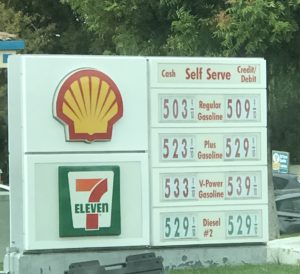
You might have noticed price increases at the pump. In California, if you can find gas for less than $5 a gallon, even regular, it’s a bargain.

Shell gas prices

Or maybe when you checkout at the supermarket, you noticed that your bill is a bit higher than normal.

groceries

If you have noticed these things, then you are starting to feel the effects of inflation.

According to the United States Government Bureau of Labor Statistics, in October, the Consumer Price Index for All Urban Consumers rose by 6.2 percent over the last 12 months.

I personally think that that rate may be a bit too low. Why? I did my own analysis of a random sample of purchases made through Amazon (AMZN) over the last twelve months, comparing what I paid in the past to what the current price is now, and the results were shocking.

These items included such things as office supplies, food, vitamins, toothpaste, book, disposable masks, garden hose, and even a robot vacuum.

The lowest increase in price was for a 40 ounce bag of raw whole natural Blue Diamond almonds, which increased in price by only 5%.

The next lowest increase had a substantially higher price rise. Scotch Heavy Duty Shipping Packaging Tape went up by 15%.

Now for the big increases. Surprisingly, snack foods had the greatest rise in prices. Crunchmaster Multi-Seed Crackers almost tripled in price by rising 194% and Sensible Portions Garden Veggie Chips spiked by 173%.

Both BROOKSIDE Dark Chocolate Candy with Acai & Blueberry, and a 21 Ounce Bag Dulzura Borincana Sesame Seed with Honey and Almonds doubled in price. (I guess now you can see the kinds of snacks that I like.)

However, what is most interesting is the overall average of the price increases. Based on the rate of increase in cost over the last year for more than 25 different items purchased on Amazon, the average of those percentage increases is 68%!!!

Even if you exclude the high increase outliers, the ones that more than doubled, the overall average price increase of the remaining items is 38%, still extraordinarily high, and way above what the government reported. 

Here is a list of the items below:

Anycolor Compatible Label Tape Replacement for Brother M Tape 39%
Blue Diamond Almonds, Raw Whole Natural, 40 Oz 5%
BROOKSIDE Dark Chocolate Candy , Acai & Blueberry, 21 Ounce Bag 148%
BUMBLE BEE Premium Light Tuna in Water, Ready to Eat Tuna Fish 21%
Columbian Clasp Envelopes, 10 x 13 Inches, Brown Kraft, 100 Per Box 44%
Crunchmaster Multi-Seed Crackers, Artisan Cheesy Garlic Bread, 4 Ounce 194%
Disposable Filter Masks, Eventronic 3 Ply Face Masks, For Home & Office (50 Pcs) 20%
Dulzura Borincana Sesame Seed with Honey and Almonds 134%
FIJI Water Artesian Water, 16.9 Fl Oz (Pack of 6) 34%
Filexec, 93630, Art Presentation Book, 24 Pocket, 11″ x 14″, 1 Each Black 25%
Hammermill Paper, Copy Plus Paper, 8.5 x 11 Paper, Letter Size, 20lb Paper, 1 Ream 53%
Hermard 50ft Expandable Garden Hose with 9 Function Nozzl 32%
KIND Bars, Dark Chocolate Mocha Almond, Gluten Free, 1.4 Ounce, 12 Count 26%
Krazy Glue Home and Office Brush-On Glue, 0.18 oz 74%
NOW Supplements, Vitamin D-3 5,000 IU, High Potency, 240 Softgels 32%
Polysporin First Aid Topical Antibiotic Ointment with Bacitracin Zinc 54%
Puritans Pride Lutein 20 mg with Zeaxanthin Softgels, 120 Count 94%
Samsung POWERbot R7040 Robot Vacuum 159%
Scotch Tape Heavy Duty Shipping Packaging Tape, 1.88 Inches x 800 Inches, 1 Pack 15%
Sensible Portions – 30357 Garden Veggie Straws, Sea Salt, 1 oz. (Pack of 8) 20%
Sensible Portions Garden Veggie Chips, Sea Salt, 7 oz. 173%
Sensodyne Pronamel Intensive Enamel Repair Toothpaste for Sensitive Teeth 62%
Seresto Flea and Tick Collar for Dogs, 8-Month Flea and Tick Collar for Large Dogs Over 18 Pounds 38%
The Family Upstairs: A Novel 114%
Triple Leaf Tea Jasmine Green Tea, Decaffeinated, 20 Count 25%
V8 Juice, Original 100% Vegetable Juice, 11.5 Ounce Can (Pack of 24) 138%
AVERAGE RATE OF INCREASE 68%
AVERAGE RATE OF INCREASE excluding doubling outliers 38%

If you are an avid Amazon shopper like me, you can do your own analysis. Just click on the Orders link, choose 2020, click on View Order Details to get the price you paid, then click on the Order Again button to see what the current price is. Once you have that, subtract the price paid from the current price, then divide that result by the price paid, and that is your percentage increase.

Of course, maybe I have a tendency to only buy things that happen to have a way of significantly rising in price. Or maybe not.

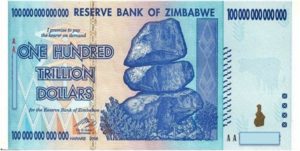
This increase in prices certainly doesn’t come close to Zimbabwe’s previous hyperinflation, whereby $100 trillion dollar bills were issued. However, it is a wake-up call.

Zimbabwe 100 trillion

Let me know what your Amazon inflation rate is.


Disclosure: Author owns AMZN and also has a short vertical call position in AMZN. 

Stocks with High Sales Growth Selling at a 30% Discount

by Fred Fuld III

Every investor likes getting a bargain. So how about stocks that have had sales growth over the last five years greater than 25% yet trading is down 30% for the quarter?

Here is a list of those stocks, three of which are involved in the healthcare sector.

Emergent BioSolutions Inc. (EBS) is a life sciences company that produces products and solutions, including vaccines, that address accidental, deliberate, and naturally occurring public health threats. The stock, which has a market cap of almost $2 billion, trades at 8.83 times trailing earnings and 7.35 times forward earnings. The company just announced a stock repurchase program a couple days ago.

eHealth, Inc. (EHTH), based in Santa Clara, California, is a provider of private health insurance exchange services to individuals, families, and small businesses. The market cap is $739 million, and has a forward price to earnings ratio of 16.

PagSeguro Digital Ltd. (PAGS), based in Brazil, is a provider of financial technology solutions and services for consumers, individual entrepreneurs, micro-merchants, and small and medium-sized companies in Brazil and various other countries.  The company has a market cap of $11.6 billion, a trailing P/E ratio of 50.56, and a forward P/E of 24.63.

Timber Pharmaceuticals, Inc. (TMBR) is involved in the development and commercialization of treatments for orphan dermatologic diseases. This New Jersey based company has an extremely low market cap at $19 million.

Maybe one of these bargain basement stocks can benefit your portfolio, but keep in mind that sometimes there is a reason why a company has had a huge price drop.

Disclosure: Author didn’t own any of the above at the time the article was written.

Wouldn’t It Be Great If You Could Track the Retail Trading Activity of the Top 10 Stocks for Free? Well You Can

by Fred Fuld III

I’ve always thought it would be great to know what retail investors are doing with popular stocks. Are the buying or selling? This would be especially useful with the meme stocks.

Well guess what. You can now get this information, from NASDAQ, which is offering the Retail Trading Activity Tracker.

The price for this service? Free! Of course, there is a premium service which allows you to access a lot more information.

What does it give you?

The Activity, which is the Ratio of money traded by retail investors in a given stock divided by total amount of money traded by retail investors across all stocks. The amount ranges from 0 to 1.

It also gives you the Sentiment Score, which is the retail net flows of buy vs. sell of the most recent 10 trading days. The value ranges from +100 to -100, where the more positive the score, the greater the proportion of recent retail net buying, and the more negative the score,  the greater the proportion of recent retail net selling.

What a great service from NASDAQ .

The Infrastructure Bill Passed: Here’s What’s Included

by Fred Fuld III

The new infrastructure bill went to a vote last night, Friday, November 5, passing 228 to 206, with 13 Republicans joining all but 6 Democrats in supporting the legislation.

First, the various names of the bill:

  • Infrastructure Investment and Jobs Act
  • Bipartisan Infrastructure Framework (BIF)
  • Bipartisan Infrastructure Deal
  • INVEST in America Act
  • Infrastructure Bill

Details about what is included can be found at Forbes, the Wall Street Journal, and other publications.

Here is a summary:

  • $110 billion for roads and bridges
  • $66 billion for Amtrak
  • $65 billion for broadband Internet
  • $65 billion for the electric grid
  • $55 billion for clean drinking water
  • $48 billion for water infrastructure improvements
  • $39 billion for public transit
  • $25 billion for airports
  • $11 billion for transportation safety programs
  • $7.5 billion for s network of electric-vehicle chargers along highways
  • $5 billion for zero-emission buses including electric school buses
  • $2.5 billion for ferries

If you want to read the whole bill, you can check out H.R.3684.


Year End Stock Market Holidays

If you are interested in knowing whether or not the stock market will be open on Veterans Day (November 11) or the day after Thanksgiving (November 26) or another of the other days that are coming up before the end of the year, you have come to the right place.

You might want to bookmark the following:

Holiday Day NYSE NASDAQ
Veterans Day Thursday, November 11 Open Open
Thanksgiving Day Thursday, November 25 Closed Closed
Day After Thanksgiving Friday, November 25 Early close   1 pm ET, 10 am PT Early close   1 pm ET, 10 am PT
Christmas Day observed (Christmas Eve) Friday, December 24 (Christmas holiday observed) Closed Closed
New Years Eve Friday, December 31 Open Open
New Year’s Day 2022 Saturday, January 1, 2022 Closed (Saturday normally closed) Closed

Happy Holidays!!!

The Largest Company Right Now: Not Tesla or Apple or Amazon

by Fred Fuld III

At the time this is being written, 1:09 am PT on October 29, 2021, the largest US publicly traded company by market cap is Microsoft (MSFT) at $2.478 trillion.

In second position is Apple at $2.462 trillion.

Surprisingly, Google, I mean Alphabet (GOOGL) is ahead of Amazon (AMZN), Tesla (TSLA), and Facebook (FB), I mean Meta. Alphabet has a market cap of $1.956 trillion.

Check out the list below. Market cap values are in trillion dollars.

MSFT 2.478
AAPL 2.462
GOOGL 1.956
AMZN 1.698
TSLA 1.104
FB 0.902

Do you think we will ever see quadrillion dollar companies?

Stocks Going Ex Dividend in November 2021

The following is a short list of some of the many stocks going ex dividend during the next month.

Many traders and investors use the stock trading technique called ‘Buying Dividends,’ also commonly referred to as ‘Dividend Capture.’ This is the strategy of buying stocks before the ex dividend date and selling the stock shortly after the ex date at about the same price, yet still being entitled to the dividend.

This technique generally works in bull markets and flat or choppy markets, but you need to avoid the strategy during bear markets. In order to be entitled to the dividend, you have to buy the stock before the ex-dividend date, and you can’t sell the stock until after the ex date.

The actual dividend may not be paid for another few weeks. WallStreetNewsNetwork.com has compiled a downloadable and sortable list of the stocks going ex dividend in the near future. The list contains many dividend paying companies, lots with market caps over $500 million, and some with yields over 2%. Here are a few examples showing the stock symbol, the ex-dividend date, the periodic dividend amount.

Realty Income Corporation (O) 11/1/2021 0.236 3.95%
Intel Corporation (INTC) 11/4/2021 0.347 2.81%
American Electric Power Company (AEP) 11/9/2021 0.78 3.65%
Walgreens Boots Alliance, Inc. (WBA) 11/12/2021 0.477 3.88%
Target Corporation (TGT) 11/16/2021 0.90 1.41%
Discover Financial Services (DFS) 11/23/2021 0.50 1.60%
DuPont de Nemours, Inc. (DD) 11/29/2021 0.30 1.66%
Lockheed Martin Corporation (LMT) 11/30/2021 2.80 2.99%

The additional ex-dividend stocks can be found HERE . (If you have been to the page before, and the latest link doesn’t show up, you may have to empty your cache.) If you like dividend stocks, you should check out some of the other high yield stock lists at WSTNN.com HERE .

Dividend definitions:

Declaration date: the day that the company declares that there is going to be an upcoming dividend.

Ex-dividend date: the day on which if you buy the stock, you would not be entitled to that particular dividend; or the first day on which a shareholder can sell the shares and still be entitled to the dividend.

Record date: the day when you must be on the company’s books as a shareholder to receive the dividend. The ex-dividend date is normally set for stocks at two business days before the record date.

Payment date: the day on which the dividend payment is actually made, which can be as long at two months after the ex date.

Don’t forget to reconfirm the ex-dividend date with the company before implementing this technique.

Disclosure: Author did not own any of the above at the time the article was written; affiliate links are on this page.