Humanoid Robot Stocks: Investing in the Next Generation of Robotics

by Fred Fuld III

Humanoid robots have moved rapidly from science fiction into the real world. Robots that can walk on two legs, manipulate objects with human-like hands, climb stairs, perform physical tasks and interact with people are now being developed by some of the world’s most innovative technology companies.

For investors, however, there is a major problem: there are still very few pure-play publicly traded humanoid-robot companies. Many of the best-known developers—including Figure AI, Apptronik and 1X—remain privately held, while companies such as Tesla (TSLA), Amazon (AMZN) and Hyundai have humanoid-robot programs that represent only a portion of much larger businesses.

One company stands out because it has already reached the public markets: Unitree Robotics, officially Hangzhou Yushu Technology Co., Ltd. Although Unitree is now publicly traded, U.S. investors cannot simply purchase its shares on the NYSE or Nasdaq. The company is listed in China on the Shanghai Stock Exchange’s STAR Market under the ticker 688836.

Unitree Robotics: A Pioneer in Low-Cost Robots

Unitree Robotics is one of the most important companies in the emerging humanoid-robot industry. The Hangzhou, China-based company was founded in 2016 by Wang Xingxing, who serves as its founder, CEO and CTO.

Wang’s interest in robotics began before Unitree existed. While studying engineering, he developed a quadruped robot called XDog. The project attracted attention within the robotics community and eventually helped provide the foundation for Unitree. After a brief period working at drone manufacturer DJI, Wang left to establish his own robotics company.

Unitree initially concentrated heavily on four-legged robots, rather than humanoids. This was an important strategic decision because quadruped robots can be significantly less expensive and mechanically simpler than sophisticated humanoids while still demonstrating impressive mobility.

The company’s robot dogs became internationally recognizable. Unitree emphasized relatively affordable, high-performance robots that could be used by researchers, universities, developers, businesses and consumers.

That philosophy eventually extended to humanoid robots.

From Robot Dogs to Humanoids

Unitree’s humanoid lineup includes robots such as the H1, G1 and R1. The G1, in particular, attracted considerable attention because Unitree offered a relatively inexpensive humanoid platform compared with many competing systems.

Unitree says its robots incorporate technologies involving motion control, perception, artificial intelligence, manipulation and robotic hardware. The company’s product portfolio now extends beyond quadrupeds and humanoids to robotic arms, components and other robotic systems.

The company’s strategy is significant for investors because Unitree is attempting to attack the robotics market from a different direction than companies such as Boston Dynamics.

Rather than concentrating exclusively on extremely expensive, highly sophisticated robots, Unitree has emphasized lower-cost, commercially accessible robots. That could become important if humanoid robotics eventually develops into a mass market.

The company has also demonstrated its robots in highly visible settings. In 2025, for example, 16 Unitree H1 humanoid robots appeared in a performance during China’s Lunar New Year television broadcast, giving the company enormous exposure among the Chinese public.

Unitree Goes Public

For investors, the biggest development came in 2026.

Unitree completed its initial public offering on the Shanghai Stock Exchange’s STAR Market on August 19, 2026. Its stock trades under the symbol 688836. It became the first humanoid-robot company to list on China’s mainland stock market.

The IPO was priced at 150.80 yuan per share and raised approximately 6.1 billion yuan, or about $900 million. The stock’s debut was extraordinary. It opened at 1,100 yuan and ultimately closed its first trading day at 845 yuan—approximately 460% above the IPO price. At the closing price, Unitree’s market capitalization was approximately $50 billion.

That spectacular first day illustrates both the enthusiasm surrounding humanoid robotics and one of the major risks facing investors: valuation.

A company can have enormous technological potential while its stock can simultaneously be priced too aggressively. Unitree’s post-IPO valuation therefore deserves as much attention as its robots.

The Problem for U.S. Investors

There is an important distinction between being a publicly traded company and being easily accessible to American investors.

Unitree is publicly traded, but it is not listed on a U.S. stock exchange. Its shares trade on the Shanghai Stock Exchange’s STAR Market under 688836. Consequently, an investor using a typical U.S. brokerage account cannot simply enter “688836” in the same way he or she might purchase Apple, Nvidia or Tesla.

This makes Unitree an unusual investment opportunity for American investors. It is perhaps the closest thing to a major publicly traded pure-play humanoid robotics company, but its Chinese listing creates additional issues involving market access, regulations, currency, geopolitical risk and Chinese securities-market rules.

There is also another consideration. Unitree’s business is not exclusively humanoid robots. The company has historically been an important developer of quadruped robots and continues to operate in several areas of robotics. Nevertheless, its increasing emphasis on humanoids makes it one of the most direct publicly traded ways to participate in the humanoid-robotics industry.

UBTECH Robotics: A Publicly Traded Humanoid-Robot Pioneer

If Unitree Robotics represents the new generation of Chinese humanoid-robot companies, UBTECH Robotics (UBTRF) represents one of the industry’s earlier pioneers—and, importantly for investors, it is already publicly traded.

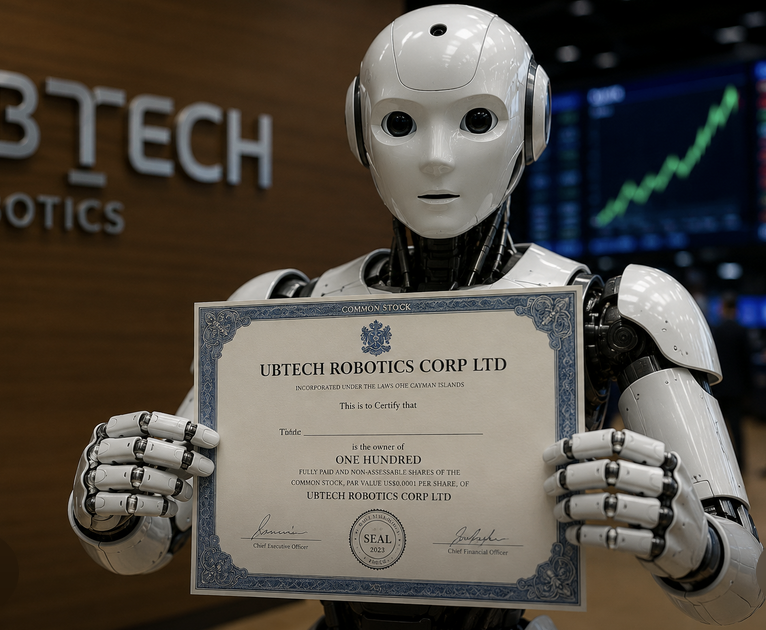
UBTECH Robotics Corp. Ltd. was established in March 2012 and is headquartered in Shenzhen, China. The company describes itself as a developer of humanoid and smart-service robots, with technology covering the hardware, software and artificial-intelligence systems required to operate humanoid robots. Unlike Unitree, whose shares trade on China’s Shanghai Stock Exchange, UBTECH is listed on the Main Board of the Hong Kong Stock Exchange under the ticker 9880.HK. It began trading on December 29, 2023, making it the first humanoid-robot company listed on the main board of the Hong Kong exchange. Its IPO price was HK$90 per share, giving the company an initial market capitalization of approximately HK$37.6 billion. 

For investors looking for a publicly traded company with substantial direct exposure to humanoid robotics, UBTECH is therefore one of the most interesting stocks to investigate.

UBTECH: From Service Robots to Humanoids

UBTECH (UBTRF) did not begin with the industrial humanoids that are attracting so much attention today.

The company originally developed a broad range of service robots, including robots designed for education, commercial applications, customer service and other human-interaction environments. Its long-term strategy was to develop what it calls a full-stack robotics technology platform—essentially controlling the hardware, software, artificial intelligence and robotic-control technologies necessary to build and operate robots.

That foundation eventually led the company into humanoid robotics.

UBTECH’s Walker family became the centerpiece of this effort. The company has progressively developed more sophisticated versions of Walker, with the robots moving from demonstrations and research toward actual industrial applications.

This transition is particularly important from an investment standpoint.

A robot that can walk across a stage is impressive. A robot that can spend thousands of hours performing useful work inside a factory is potentially a business.

UBTECH is attempting to make that transition.

Walker: UBTECH’s Humanoid Robot Family

UBTECH’s best-known humanoid platform is Walker.

The company has developed several generations and versions of Walker for different applications. More recently, its attention has shifted strongly toward industrial manufacturing.

The company’s Walker S series is designed to operate in industrial environments, particularly factories and automotive manufacturing facilities.

In 2024, UBTECH reported that its Walker S industrial humanoids had begun training in multiple automobile factories. In 2025, the company introduced Walker S2, its next-generation industrial humanoid, and began mass production and deliveries. 

Walker S2 incorporates an interesting feature that illustrates how UBTECH is thinking about commercial deployment: a hot-swappable autonomous battery system.

Rather than having the robot stop working for long periods while its battery recharges, the system is designed to allow the robot to change batteries and return to work. UBTECH says the system is intended to support continuous operation in industrial environments. 

That may sound like a relatively minor engineering feature, but it could be extremely important commercially.

A factory operator doesn’t necessarily care whether a humanoid robot has the most sophisticated artificial intelligence in the world. The operator wants to know:

How many hours can the robot work? How reliable is it? How much does it cost? And how quickly does it pay for itself?

UBTECH’s development of Walker S2 suggests the company is increasingly focused on those questions.

A Dramatic Increase in Humanoid Revenue

Perhaps the most important development for investors appears in UBTECH’s 2025 annual report.

The company’s total revenue increased from approximately RMB 1.305 billion in 2024 to RMB 2.001 billion in 2025, an increase of 53.3%.

But the really remarkable number was humanoid robotics revenue.

Revenue from full-size embodied intelligent humanoid robot products and services increased from just RMB 35.6 million in 2024 to RMB 820.6 million in 2025.

That’s an increase of approximately 2,204%.

More importantly, humanoid robots became UBTECH’s largest source of revenue in 2025. 

That is an important distinction between UBTECH and many of the larger publicly traded companies promoting humanoid robots.

For Tesla, Optimus is potentially enormous—but Tesla’s current business is dominated by automobiles, energy and other activities.

For Nvidia, robotics could become a major source of demand for its chips and computing platforms—but Nvidia isn’t a robot manufacturer.

For UBTECH, humanoid robotics is becoming the core business itself.

The Company Is Not Yet Profitable

There is, however, an important caveat for investors.

UBTECH remains loss-making.

The company’s 2025 net loss was approximately RMB 789.8 million, although that represented a significant improvement from its approximately RMB 1.160 billion loss in 2024. At the same time, gross profit increased to RMB 753.8 million, while the gross margin improved from 28.7% to 37.7%. 

This is typical of a technology company attempting to commercialize an entirely new product category.

UBTECH is spending heavily on research, development, manufacturing capacity and commercialization while the humanoid market is still in its early stages.

The investment question is therefore not simply whether UBTECH can sell humanoid robots.

It is whether the company’s rapidly increasing revenue can eventually grow faster than its research, manufacturing and operating expenses, allowing the company to become sustainably profitable.

The Industrial Opportunity

UBTECH’s focus on manufacturing may give it an important advantage.

Factories are relatively structured environments. Robots don’t necessarily have to understand everything happening in the world. They need to perform specific tasks repeatedly and reliably.

UBTECH has been working with automobile manufacturers and other industrial companies to train its humanoids for manufacturing environments. Its 2025 annual report describes the year as a turning point in the industry, as humanoid robots began moving from demonstrations toward practical manufacturing applications. 

The company also introduced increasingly sophisticated dexterous hands and other components designed to allow robots to manipulate objects.

This is a critical technological challenge.

Walking is only one part of being humanoid.

A useful factory robot must be able to see an object, identify it, reach for it, grasp it, manipulate it, perform the required operation and respond appropriately if something unexpected happens.

UBTECH is attempting to build the entire system.

UBTECH’s Broader Robotics Business

UBTECH isn’t exclusively a humanoid company.

It continues to develop other smart-service robotics products and applications involving areas such as AI education, logistics, elderly care and business services. The company also operates consumer-oriented brands and products. 

Consequently, I would describe UBTECH as a near-pure-play humanoid robotics investment, rather than a company whose only product is humanoid robots.

But the distinction is becoming less significant as humanoid robotics becomes an increasingly large portion of the company’s revenue.

The 2025 results are particularly revealing: humanoid products and services generated RMB 820.6 million of the company’s RMB 2.001 billion in total revenue. 

In other words, humanoid robotics accounted for roughly 41% of total revenue in 2025.

That is a remarkable change from only a year earlier.

UBTECH vs. Unitree

UBTECH and Unitree make an interesting comparison for investors.

Unitree is younger, having been founded in 2016, and became publicly traded on the Shanghai Stock Exchange in August 2026. It is particularly well known for its quadruped robots and relatively affordable humanoids.

UBTECH, founded in 2012, has been publicly traded since 2023 and has spent years developing humanoid and service-robot technology.

The companies also have different approaches to the market.

Unitree has developed a reputation for relatively low-cost, highly mobile robots and has achieved considerable international visibility.

UBTECH has increasingly emphasized industrial humanoids, particularly robots designed to work in factories.

That makes the two companies interesting potential competitors—but also potentially complementary investments for someone attempting to understand the emerging robotics industry.

An Important Stock-Market Advantage

There is one major advantage UBTECH has over Unitree for many international investors:

UBTECH is already publicly traded in Hong Kong.

Its ticker is 9880.HK, however it can be bought Over-the-Counter in the US with the symbol UBTRF.

Unitree’s Shanghai listing is much less accessible to the typical American investor. UBTECH’s Hong Kong listing is more visible internationally and can be followed through conventional financial-market data services.

However, that doesn’t mean UBTECH is a U.S.-listed stock. An American investor should check whether his or her brokerage permits trading Hong Kong-listed securities before considering the shares.

The Investment Case

UBTECH presents an intriguing combination of rapid revenue growth, technological development and enormous potential market opportunity.

The strongest argument for the company is that humanoid robotics has moved beyond being simply a research project. UBTECH is already generating meaningful revenue from full-size humanoids, has begun mass production of Walker S2 and is working with industrial customers.

The biggest argument against the stock is that the industry remains extremely young and UBTECH is still losing money.

There is also intense competition.

Unitree, AgiBot, Tesla, Figure AI, Apptronik, 1X, Boston Dynamics and numerous other companies are racing to develop commercially viable humanoids.

And there is no guarantee that today’s leaders will remain the leaders five or ten years from now.

Bottom Line About UBTECH

For investors researching pure-play or near-pure-play humanoid robot stocks, UBTECH deserves a prominent place on the list.

It has an established history dating back to 2012, a publicly traded stock (9880.HK), a substantial proprietary robotics technology platform, and—most importantly—rapidly increasing revenue from actual humanoid robots.

The company’s 2025 results provide perhaps the strongest evidence yet that UBTECH is moving from being a robotics-development company toward becoming a commercial humanoid-robot manufacturer.

The most encouraging figure may be the jump in humanoid revenue from RMB 35.6 million to RMB 820.6 million in one year. The most important warning sign is that the company still recorded a RMB 789.8 million net loss.

For investors, that creates the central question surrounding UBTECH:

Can the company turn the spectacular growth of its humanoid-robot business into sustainable profitability?

If it can, UBTECH could become one of the most important publicly traded pure-play investments in the humanoid-robot revolution.

Agility Robotics: A Potential U.S. Pure Play

The situation is beginning to change in the United States.

One of the most interesting companies to watch is Agility Robotics (AGLT), the developer of the humanoid robot Digit.

Agility is pursuing a very different route to the public markets. Rather than conducting a conventional IPO, the company announced in June 2026 that it would merge with Churchill Capital Corp XI (CCXI), a special purpose acquisition company, commonly known as a SPAC.

The transaction values Agility at approximately $2.5 billion and is expected to provide more than $600 million of gross proceeds. The proposed combined company is expected to trade on Nasdaq under the ticker AGLT.

What Is a SPAC?

A SPAC is essentially a publicly traded shell company created to raise money and subsequently acquire or merge with a private company.

Instead of Agility going through the traditional IPO process, Churchill Capital Corp XI provides the publicly traded vehicle through which Agility can become a public company.

The process is generally:

Private Agility Robotics → merger with Churchill Capital Corp XI → public Agility Robotics → expected ticker AGLT

As of August 2026, the transaction has not yet completed. The companies have stated that they expect the transaction to close during 2026, subject to shareholder approval, SEC review, regulatory approvals and other customary closing conditions.

Until the transaction closes, investors should not treat AGLT as an already-trading stock.

Agility’s Digit Robot

Agility’s flagship product is Digit, a bipedal humanoid robot designed primarily for industrial and logistics applications.

This is an important distinction between Agility and some of the companies pursuing humanoids for the consumer market.

Agility is focusing heavily on environments such as warehouses and manufacturing facilities, where robots could perform repetitive physical tasks that currently require human workers.

The company’s strategy is therefore relatively straightforward: build a humanoid robot capable of operating in environments designed for humans without requiring those environments to be completely redesigned.

That could ultimately be one of the most valuable characteristics of humanoid robots.

A factory or warehouse is already designed around human workers. A robot that can walk through the same doors, navigate the same aisles, reach the same shelves and manipulate the same equipment potentially can be introduced without rebuilding the entire facility.

Agility has reported more than 65,000 operating hours for Digit at customer sites and has announced more than $300 million in multi-year orders for its next-generation Digit v5 robot.

Unitree vs. Agility

The two companies represent interestingly different investment opportunities.

Unitree is already public, but its shares trade in China. It has a broad robotics portfolio, a substantial existing business and a particularly strong emphasis on relatively affordable robots.

Agility, by contrast, is still private until its SPAC transaction closes, but it could become one of the first U.S.-listed pure-play humanoid robotics companies.

For an American investor, the Agility transaction could therefore be especially significant.

If the merger is completed and AGLT begins trading on Nasdaq, investors will have something that has been difficult to find: a U.S.-listed company whose primary investment story is humanoid robotics.

The Larger Humanoid-Robot Investment Universe

Unitree and Agility are only part of the story.

Other important humanoid developers include Figure AI, Apptronik and 1X Technologies. These companies have attracted substantial investment and generated considerable interest, but they remain private companies.

There are also several large public companies with major humanoid projects:

  • Tesla — developing Optimus
  • Hyundai Motor — owns Boston Dynamics, developer of Atlas
  • Amazon — has invested in and tested humanoid robotics
  • XPeng — developing humanoid robots in addition to electric vehicles
  • Nvidia — provides critical AI computing and robotics technology

These companies offer investors exposure to robotics, but they are not pure plays. A shareholder purchasing Tesla, for example, is buying an automobile, energy, artificial-intelligence and technology company—not simply a humanoid robotics company.

That distinction matters.

Why Humanoid Robots Could Become a Major Investment Theme

The investment case for humanoid robots rests on a relatively simple proposition.

The world has millions of jobs involving physical tasks that are repetitive, dangerous, physically demanding or difficult to fill. If robots can eventually perform some of those jobs economically, the potential market could be enormous.

The ultimate goal is not necessarily to build robots that look human merely for aesthetic reasons. The attraction of the humanoid form is that the world itself is designed for humans.

Humanoid robots could potentially work in factories, warehouses, hospitals, construction sites, retail stores, homes and other environments without requiring completely new infrastructure.

But there are substantial risks.

Humanoid robots remain expensive and technically challenging. Batteries, actuators, sensors, artificial intelligence, dexterous hands and reliable autonomous movement all have to work together. Demonstrations can look spectacular while commercial deployment remains difficult.

Investors should therefore distinguish between a robot that can perform an impressive demonstration and a robot that can perform useful work reliably, safely and profitably for thousands of hours.

The Bottom Line for Investors

Humanoid robotics may eventually become one of the most important new technology industries of the 2020s and 2030s. But the public investment opportunities remain limited.

Unitree Robotics is the pioneer to watch. Its August 2026 Shanghai IPO transformed it into the world’s most visible publicly traded humanoid-robot company, but its shares are not listed on a U.S. exchange. Its extraordinary first-day performance also demonstrates how much enthusiasm—and potentially speculation—surrounds the industry.

Agility Robotics could provide the next major opportunity for U.S. investors. Its proposed merger with Churchill Capital Corp XI would bring a major humanoid developer to Nasdaq under the anticipated ticker AGLT. If completed, it could give American investors one of the first direct U.S. stock-market vehicles for investing specifically in humanoid robotics.

The emergence of Unitree as a publicly traded company and Agility’s planned SPAC transaction could mark the beginning of a new stage in robotics investing: the transition of humanoid robots from venture-capital investments into publicly traded securities.

For investors, however, the most important question may not be which robot looks the most impressive. It may be which company can manufacture humanoid robots at scale, sell them at a price customers can afford, generate recurring revenue and ultimately earn a profit.

That is where the real investment opportunity—and the real investment risk—will be found.

Disclosure: Author owns some of the mentioned stocks in the article, including AMZN, TSLA, and CCXI. No investment recommendations are expressed or implied

How to Buy Shares of Anthropic Before It Goes Public

by Fred Fuld III

The word “Anthropic” comes from the Greek word anthrōpos which means “human” or “humanity.”

In physics and philosophy, you might hear of the “anthropic principle”—the idea that observations of the universe must be compatible with the conscious life that observes it.

For the company, the founders chose the name as a literal statement of intent: to keep artificial intelligence centered on, aligned with, and safe for humanity. It acts as a daily reminder of their core mission, ensuring that as models grow exponentially more powerful, they remain fundamentally beneficial to human beings.

A Short History of Anthropic


1. The Great OpenAI Schism (2020)

In 2020, Dario Amodei was the Vice President of Research at OpenAI, leading the team that built groundbreaking models like GPT-2 and GPT-3. His sister, Daniela Amodei, was OpenAI’s Vice President of Safety and Policy.

As OpenAI shifted from a pure non-profit to a “capped-profit” structure and signed a massive commercial partnership with Microsoft, the Amodeis and a group of roughly five to ten top OpenAI researchers grew deeply concerned. They felt that commercial pressures were forcing OpenAI to rush powerful models to market before fully understanding how to control them—a dilemma known as the “AI alignment problem.”

2. The Launch (2021)

Unable to resolve these strategic differences, the group left OpenAI. In 2021, they founded Anthropic PBC as a Public Benefit Corporation. This specific legal structure frees them from the traditional corporate obligation to maximize shareholder profit at all costs, legally protecting their right to prioritize safety over speed.

3. Creating “Constitutional AI” (2022)

To build a safer AI, Anthropic pioneered a technique called Constitutional AI. Instead of relying entirely on human reinforcement (where humans manually read and flag thousands of toxic AI responses), they gave their AI a written “constitution”—a set of principles borrowed from documents like the Universal Declaration of Human Rights and Apple’s terms of service. They then trained the AI to critique and correct its own behavior based on those rules.

4. Claude and the Trillion-Dollar Backing (2023–Present)

In early 2023, Anthropic released its flagship chatbot, Claude, to rival ChatGPT. Claude quickly developed a reputation in the industry for possessing a massive “context window” (the amount of text it can process at once) and exhibiting a lower tendency to hallucinate.

Recognizing Anthropic as the premier alternative to OpenAI, tech giants rushed to back them. Amazon and Alphabet poured billions into the company, transforming a small group of worried researchers into a massive corporate ecosystem valued at hundreds of billions of dollars.

Anthropic is currently a private company, meaning it does not have shares available for direct purchase on public stock exchanges. However, several publicly traded companies hold significant stakes in it as investors.

Key Publicly Traded Investors

The three primary publicly traded companies with major investments in Anthropic are:

  • Amazon (AMZN): Amazon has invested billions of dollars in Anthropic. A significant portion of this investment involves providing cloud computing infrastructure via Amazon Web Services (AWS) and access to its custom AI chips. Estimates suggest Amazon holds a substantial stake, often cited in the range of 18%.
  • Alphabet (GOOG / GOOGL): Google’s parent company, Alphabet, is also a major investor. Like Amazon, Alphabet provides Anthropic with cloud computing resources (Google Cloud) and access to its specialized AI hardware. Alphabet’s stake is estimated at approximately 14%.
  • Zoom Video Communications (ZM) owns a stake in Anthropic. While tech giants like Amazon and Google get most of the attention for their multi-billion-dollar investments, Zoom made a highly successful early-stage bet on the AI startup that has quietly turned into a massive windfall.

How Much Did Zoom Invest?

Through its investment arm, Zoom Ventures, the company made an initial strategic investment of approximately $51 million in Anthropic in May 2023. At the time, the deal was primarily positioned as a partnership to integrate Anthropic’s Claude AI models directly into Zoom’s software architecture. Zoom later followed this up with an additional private investment of about $46 million.

How Much is Zoom’s Stake Worth?

In a regulatory filing, Zoom officially disclosed that its minority stake in Anthropic was valued at $1.27 billion, representing an unrealized gain of over $1 billion from its initial investment.

However, because Anthropic’s private valuation has continued to skyrocket, Wall Street analysts view this as a moving target:

  • The Baseline Valuation: Zoom’s $1.27 billion valuation mark on its balance sheet was calculated from a prior Anthropic fundraising round that valued the AI startup at $380 billion.
  • The Current Trajectory: With Anthropic continuously raising capital—including a massive multi-billion-dollar round pushing its valuation toward the $900 billion to $1 trillion range—analysts at firms like Baird estimate that Zoom’s stake, even after accounting for dilution, is actually worth anywhere from $2 billion to $4 billion.

Why This Matters for Investors

While a $2 billion to $4 billion stake is relatively small on the balance sheets of trillion-dollar mega-caps like Google or Amazon, it is incredibly significant for a company of Zoom’s size.

With Zoom’s total market capitalization hovering around $27 billion (and roughly $7.8 billion of that sitting in pure cash), its Anthropic holding represents a massive percentage of its overall corporate value. Because retail investors cannot buy private shares of Anthropic directly, many in the stock market are treating Zoom as a unique, highly reactive “proxy stock” to gain indirect exposure to Anthropic’s pre-IPO growth.

Other Ways to Gain Exposure

Because Anthropic is not yet public, investors looking for exposure to the company have historically relied on a few indirect methods:

  • Publicly Traded Investors: As noted above, buying shares in Amazon or Alphabet is the most common way for public market investors to gain indirect exposure to Anthropic’s growth.
  • Investment Funds/ETFs: Some closed-end funds and investment trusts, such as the Baillie Gifford US Growth Trust, have gained exposure to Anthropic by investing in it while it remains private.
  • Pre-IPO Platforms: There are specialized, niche platforms that allow accredited or institutional investors to purchase private shares of companies before they go public. Additionally, some derivatives platforms (such as Kraken, in certain regions) have offered “pre-IPO perpetual” contracts, which allow traders to speculate on a company’s valuation before it officially lists.

IPO Status

Anthropic is widely expected to go public in the near future. While it has not yet completed an IPO, it is considered one of the most highly anticipated upcoming equity offerings alongside companies like OpenAI. Please note that market conditions and regulatory environments can influence the timing of these filings.

Disclosure: Author owns AMZN. No investment recommendations are expressed or implied.

Recent Stock Market Industry Trends: Not Just AI

by Fred Fuld III

Recent weeks have been characterized by intense market activity, but this activity is not uniform. The most prominent and influential sectors have been Information Technology and Communication Services, where performance is being driven by the relentless advancement of generative AI and strong growth in the digital engagement economy. These sectors, which represent a significant portion of the S&P 500, have been the primary engines of the market’s recent rally.

However, the term “active” also encompasses periods of extreme volatility and weakness. This is most acutely demonstrated in the Healthcare sector, which has been highly active due to a dramatic bifurcation in performance. A major sell-off in the health insurance sub-industry, triggered by fundamental business challenges and disappointing earnings, stands in stark contrast to robust growth and investor confidence in pharmaceuticals and biopharma. The broader market is navigating a complex macroeconomic landscape. While optimism over strong corporate earnings and the potential for a Federal Reserve rate cut provides a powerful tailwind, this is tempered by persistent risks from rising bond yields and escalating geopolitical tensions over tariffs. This dynamic creates a push-pull effect, demanding a highly selective and data-driven investment approach from market participants.

The Macroeconomic Backdrop: A Push-Pull Market Environment

To properly understand the recent trends in specific industries, it is essential to first analyze the broader macroeconomic context. The market has been operating in a complex environment defined by a combination of positive catalysts and persistent risks.

The overall sentiment has been cautiously optimistic, leading to positive performance in the major US stock indexes. The S&P 500 recently rose 0.8% in a single day, leaving it just shy of a new record set the previous week. The Nasdaq composite, which is heavily weighted toward technology and growth companies, added 1% to reach a new record high.Over a trailing one-month period, the S&P 500 has climbed 2.01% and is up 19.56% year-over-year. The Nasdaq has also shown significant strength, rising 3.9% over the past week and 11.1% over the last four weeks. The fact that the Nasdaq Composite is reaching new records while the S&P 500 and Dow Jones Industrial Average are showing more modest gains suggests that the current market rally is not a broad-based, all-boats-rising tide. Instead, it indicates that capital is disproportionately flowing into the technology and communication services sectors, which are the primary constituents of the Nasdaq. This targeted rally supports the central thesis that these specific sectors are highly active and influential.

The market is also contending with a series of significant economic drivers and risks. A major source of optimism stems from the prospect of potential interest rate cuts by the Federal Reserve later in 2025. This sentiment was strengthened following a weaker-than-expected US jobs report, which firmed up expectations for a rate cut at the Fed’s policy meeting in September. The possibility of lower interest rates is generally seen as a positive for equities, as it can reduce borrowing costs and stimulate economic activity. However, this positive force is being counteracted by persistent risks from rising bond yields. A rise in the “term premium”—the additional compensation lenders demand for longer-term loans—has been putting upward pressure on bond yields, which in turn pressures stock price-earnings (P/E) ratios and stock prices. This dynamic is a core reason why some analysts believe the market could be confined to a “trading range” for the remainder of 2025, as this push-pull effect creates natural upper and lower boundaries.

Another significant geopolitical headwind is the return of “hawkish tariff talk”. Investors are concerned that new tariff measures could harm corporate margins and disrupt global trade. This is not a theoretical risk; the decision by the US to raise tariffs on Indian exports to 50% caused a significant sell-off in export-oriented sectors and led to Foreign Institutional Investors (FIIs) pulling billions of dollars out of Indian equities. The market is also operating with major indices near record levels, which places a high burden on companies to deliver exceptional performance to justify their current valuations. With the market not priced for an adverse outcome, any negative news or macroeconomic surprises could trigger significant volatility. This environment underscores the need for selective investing, as only companies with strong fundamentals and innovative growth drivers can sustain investor confidence.

To provide a foundational, data-rich overview of the market’s structure, the following table details the weighting and recent performance of the sectors within the S&P 500.

SectorWeighting in S&P 500 (%)Trailing six-month performance (%)Trailing 12-month performance (%)
Information Technology31.6-0.414.6
Financials14.30.126.1
Consumer Discretionary10.6-3.721.7
Communication Services9.67.320.9
Health Care9.6-9.1-4.7
Industrials8.70.218.9
Consumer Staples5.93.115.8
Energy3.0-13.0-7.3
Real Estate2.1-5.515.9
Utilities2.50.418.2
S&P 500 Index-1.314.4
Data from Schwab, as of July 18, 2025 

The Engines of Growth: Technology and Communication Services

The most active and influential sectors in the market over the last few weeks have been Information Technology and Communication Services. Their outperformance has been driven by a confluence of powerful trends, most notably the generative AI revolution and the continued expansion of the digital engagement economy.

Information Technology: The Generative AI Revolution

The Information Technology sector, with an enormous 34.0% weighting in the S&P 500, has been the single largest driver of overall market performance. The central catalyst for this activity is the ongoing and accelerating generative AI boom. This is not merely a passing trend but a transformative force that is already leading to billions of dollars in productivity gains as companies leverage AI assistants to help human developers write and test code. The demand for computing power to support these workloads is exponentially increasing, capturing the attention of both management teams and the public.

The recent Q2 2025 earnings reports from major tech companies provide concrete evidence of how this trend is translating into tangible financial results. Shares of Meta Platforms (META) jumped 11% to an all-time high following a strong report, with CEO Mark Zuckerberg crediting AI for unlocking greater efficiency and gains in their ad system. Amazon’s (AMZN) revenue grew 13% year-over-year, and its cloud services division (AWS) revenue increased 18%, both exceeding analyst projections. Microsoft (MSFT) also paced sector gains after releasing its earnings report. Even companies like Apple (AAPL), which are seen as less directly involved in AI infrastructure, are benefiting; its iPhone sales climbed 13%, and its total number of active devices reached an all-time high, indicating strong consumer engagement with the digital ecosystem.

The AI story extends far beyond the final software or platform product. It has created a complex value chain that is driving activity in hardware and infrastructure. The semiconductor industry, which is the foundational layer for AI, is projected for double-digit revenue growth in 2025, primarily driven by the surging demand for gen AI chips such as CPUs, GPUs, and data center communications chips. This trend is benefiting a wide range of companies, from market giants to specialized players.

For example, Advanced Micro Devices (AMD) ranked among the best-performing stocks in July 2025, and some analysts see Micron Technology as an undervalued stock to watch, noting that it is the “preferred memory provider” for Nvidia’s latest AI accelerators. The fact that investors are actively pursuing companies in the hardware and memory space demonstrates a thorough understanding of the AI value chain. The demand for compute-intensive workloads is creating new challenges for global infrastructure, from data center power constraints to supply chain delays, which implies that the investment theme will continue to expand into a broader range of infrastructure-related companies.

Communication Services: The Resurgence of Digital Engagement

The Communication Services sector, with a substantial 9.6% weighting in the S&P 500, has also been a highly active area for investors, exhibiting a robust 20.9% performance over the trailing 12 months. This sector relies heavily on advertising and subscription-based revenue, which tends to rise when the economy is expanding. The recent stock activity and corporate results provide a clear picture of this trend in action.

A compelling case study is the performance of Roblox (RBLX), an online gaming and game creation platform. Its stock was one of the best performers in July 2025, with shares soaring by 19.66% in pre-market trading after a strong Q2 earnings report. The exceptional results were driven by significant growth in key metrics: revenue was up 21% year-over-year, bookings increased by an impressive 51%, and Daily Active Users (DAUs) grew by 41% to over 111 million. This growth was fueled by new, viral content, such as the game “Grow a Garden,” which was launched in March 2025 and set a world record for concurrent users in Q2. The fact that DAUs aged 13 and over now account for 64% of total users and 66% of all hours played suggests a maturing user base with significant spending power, signaling strength in the broader digital economy.

The sector’s activity is not limited to gaming. Comcast, a telecommunications and entertainment giant, also saw its stock rise more than 2% after beating earnings estimates. The company’s Q2 results were mixed but showcased strategic strengths; while it lost video and residential voice customers, it saw revenue growth in its domestic broadband and wireless divisions. The company also benefited from the successful opening of its Epic Universe theme park, which led to a 6% growth in its Content and Experiences segment. However, not all companies in the sector fared as well, with Charter Communications being listed as one of the worst-performing stocks of July 2025. This divergence highlights that even within a highly active sector, a selective approach is crucial.

The Paradox of Activity: Healthcare’s Bifurcated Market

The Healthcare sector provides a critical, nuanced perspective on market “activity.” While the sector has a significant weighting in the S&P 500, its recent performance is a study in contradiction. Instead of moving in a single direction, capital flows have been dramatically bifurcated, with investors punishing one sub-industry while rewarding others based on their business models and innovation.

The most dramatic recent market activity in Healthcare has been a major sell-off in the health insurance sub-industry. A cluster of major companies, including Centene and Molina Healthcare, ranked among the worst-performing stocks of July 2025. The reason for the sell-off was not just market sentiment but a series of fundamental business problems. Centene, for example, saw its stock plummet after it pulled its full-year 2025 earnings guidance. The company revealed that enrollment numbers in its health insurance marketplaces were lower than expected and that the enrollees were generally less healthy, leading to a stunning $1.8 billion shortfall in its risk-adjustment program. This is a systemic issue within the managed healthcare industry: the challenge of managing costs in an environment of rising utilization and higher-than-expected patient morbidity. Similarly, Molina Healthcare reported a year-over-year decrease in adjusted net income and a higher Medical Care Ratio (MCR) for its Marketplace business, indicating that the costs of providing care are rising faster than revenue. The fact that this problem is being cited across the sector, with other insurers like UnitedHealth Group also suspending their guidance, demonstrates that this is not an isolated event but a deep-seated challenge facing the business model itself.

In stark contrast, other parts of the Healthcare sector are thriving. A list of “best healthcare stocks to buy” is dominated by companies in drug manufacturers, medical devices, and diagnostics & research.  These companies are being rewarded for having strong “economic moats,” which are competitive advantages that protect their long-term profitability. For example, Novo Nordisk (NVO) is highlighted for its dominance in the diabetes and obesity treatment markets, with its innovative GLP-1 therapies providing a strong barrier against competition. Merck is also noted for its strong drug pipeline and high-margin product lineup. This flight to quality and innovation is further evidenced by a list of high-growth technology companies that includes several biopharmaceutical firms, suggesting that investor enthusiasm for technology extends to its application in drug discovery and development. This bifurcated flow of capital is confirmed by the prominence of Pharmaceutical ETFs, which have significant weightings in companies like Eli Lilly, AbbVie, and Johnson & Johnson. The stark difference in performance suggests that investors are actively punishing companies with strained business models while rewarding those with strong, innovation-driven competitive advantages.

The following tables visually represent the divergence in performance within the Healthcare sector and across other industries.

Top Performers (July 2025)SectorUnderperformers (July 2025)Sector
Comfort Systems USA (FIX)IndustrialsCentene (CNC)Healthcare
Roblox (RBLX)Communication ServicesMolina Healthcare (MOH)Healthcare
GE Vernova (GEV)IndustrialsCharter Communications (CHTR)Communication Services
PTC (PTC)TechnologyAlign Technology (ALGN)Healthcare
Advanced Micro Devices (AMD)TechnologyLiberty Broadband (LBRDA)Communication Services
Data from Morningstar, as of August 1, 2025

Conclusion: Implications for Investors and Forward Outlook

The most active industries for stock investors in the last few weeks have been Information Technology and Communication Services, driven by a powerful and concentrated rally around generative AI and digital engagement platforms. These sectors are providing the primary momentum for the broader market, with strong corporate earnings justifying high valuations and fueling investor optimism. However, the term “active” is also defined by a significant and telling divergence, most evident in the Healthcare sector, where investors are fleeing from managed care companies facing systemic cost issues and re-allocating capital toward innovative, moat-protected biopharma and medical device companies.

For investors, this bifurcated market presents a critical lesson: selectivity is paramount. A broad, passive approach to a sector like Healthcare would have been disastrous in July, while a highly selective approach could have yielded significant returns. The outsized influence of a few mega-cap technology stocks presents a concentrated opportunity, but also a risk if those companies fail to deliver. This is reinforced by the broader macroeconomic picture, which suggests a potentially “rangebound” market for the remainder of 2025. This environment highlights the value of diversification, not only across sectors but also into other asset classes like international stocks and precious metals.

The forward trajectory of these active industries will likely be determined by three key factors. First, the pace of AI innovation and adoption will continue to be a primary driver. The market will be watching to see if demand for AI hardware and software can continue to drive earnings, or if scaling challenges and new competitors will temper growth.Second, the market’s direction will be dictated by the delicate balance between corporate earnings and macro policy. Companies must continue to deliver strong results to justify their high valuations, especially in the face of rising bond yields and geopolitical tariff risks. Finally, the Healthcare sector’s path forward depends on how the health insurance sub-industry responds to its fundamental cost challenges, and whether the pharmaceutical sub-industry can continue its innovation-driven growth, which has proven to be a shield against broader market pressures.

Disclosure: Author owns several of the above mentioned stocks including AAPL, AMZN, and MSFT.

Now the Counterfeiters are Making Fake Junk Coins

by Fred Fuld III

When I started looking into silver as an investment a few years ago, not only did I look at silver mining stocks and iShares Silver Trust ETF (SLV), I also started buying silver coins.

I was aware of the counterfeit coins that were floating around, primarily the silver rounds and the uncirculated silver dollars. Because of that, I considered buying slabbed coins (the ones that are graded and encapsulated in plastic), but they are pretty expensive and sell for much more than the silver content, so I went for the low quality silver coins, figuring no one would bother counterfeiting those.

I was wrong.

You can buy coins on such sites as eBay (EBAY), Etsy (ETSY), Amazon (AMZN), Facebook (META), Whatnot, Craigslist, and many other eCommerce sites. Certain sellers on some of these major selling sites are offering cull coins below silver melt prices. These aren’t auction start prices, these are actual “for sale” prices.

Let me explain what a cull coin is. A “cull coin” refers to any coin that is considered to be in poor condition or has flaws, making it undesirable for collectors, but potentially attractive for investors seeking, in this case, silver content. The cull coin may have a hole, may be cleaned (remember, never clean an old coin – it will reduce the value substantially), may be bent, or may be heavily scratched.

But let’s get back to prices. Why would someone sell a coin for five or ten dollars less than competitors? Why would they sell for less than the value of the silver content? Why? Because they are fake.

What I can’t understand is why are the counterfeiters making fakes of cheap coins? I can understand making fake uncirculated coins because of the higher value, but low quality junk? It’s hard to believe, but I guess if there is a market for something, someone will create a fake.

In order to avoid getting stuck with any of these fakes, here’s what you need to check:

• Is the coin selling for far less than similar coins?

• Does the seller have very little feedback?

• Does the seller have significant negative feedback?

• Did the seller recently create an account?

• Does the seller copy pictures from other sellers?

If any of the above are true, be careful.

The best thing to do is to buy from sellers who have been selling for years and have excellent feedback.

Silver Coins and Authenticity

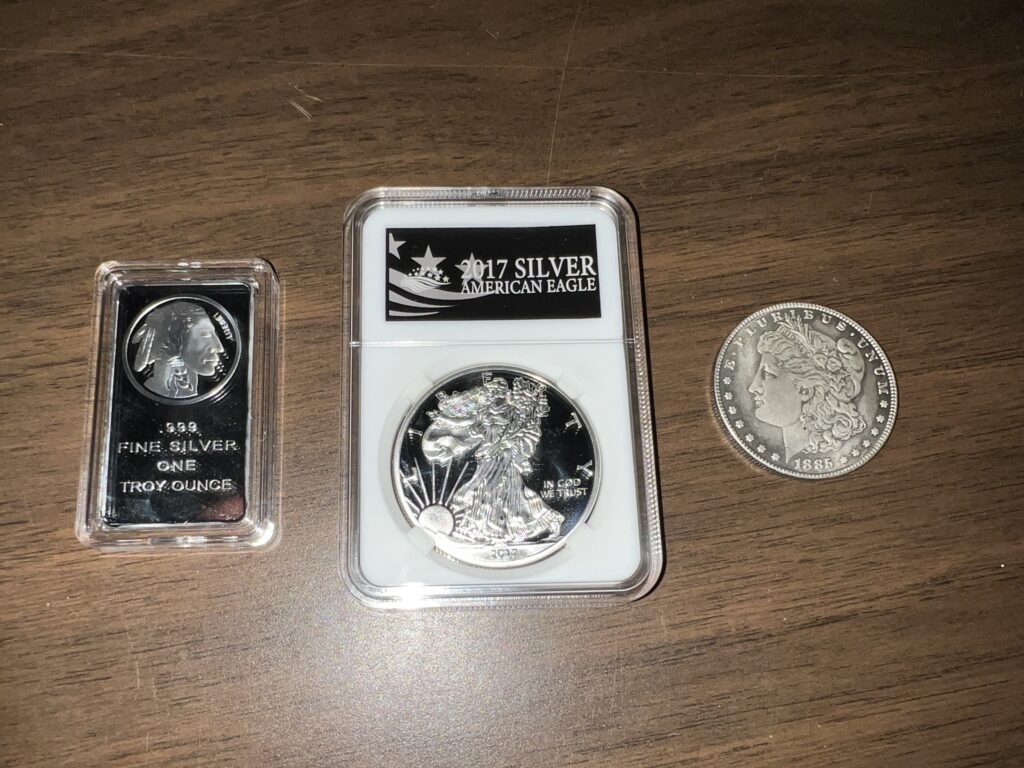
All three of the above items are FAKE!


Be careful about buying silver coins, as there are many fakes being distributed. These are not just the coins with numismatic value but also the so-called junk silver coins and even the bullion coins (silver rounds). 

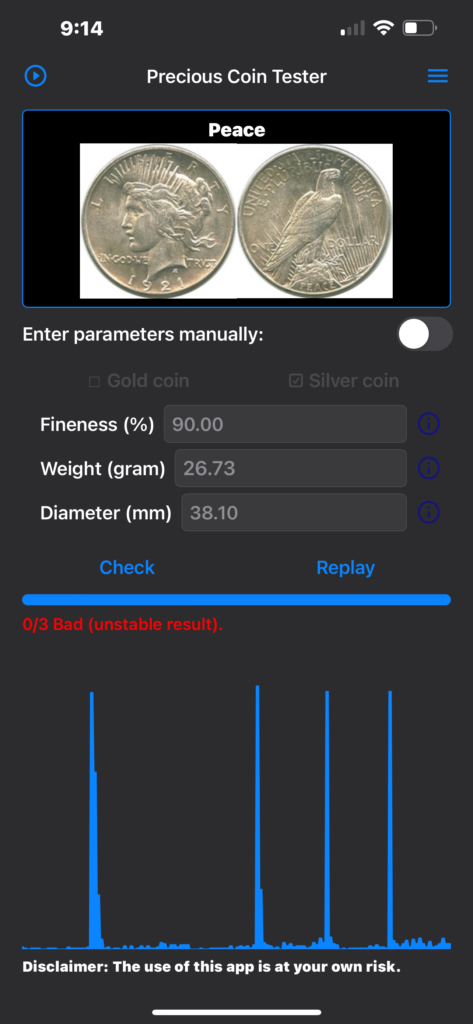
Fortunately, there are several ways of checking whether a coin is genuine or not. One simple way is to use a phone app called CoinTester. It measures the sound of the ping when the coin is hit with an object, like a pencil.

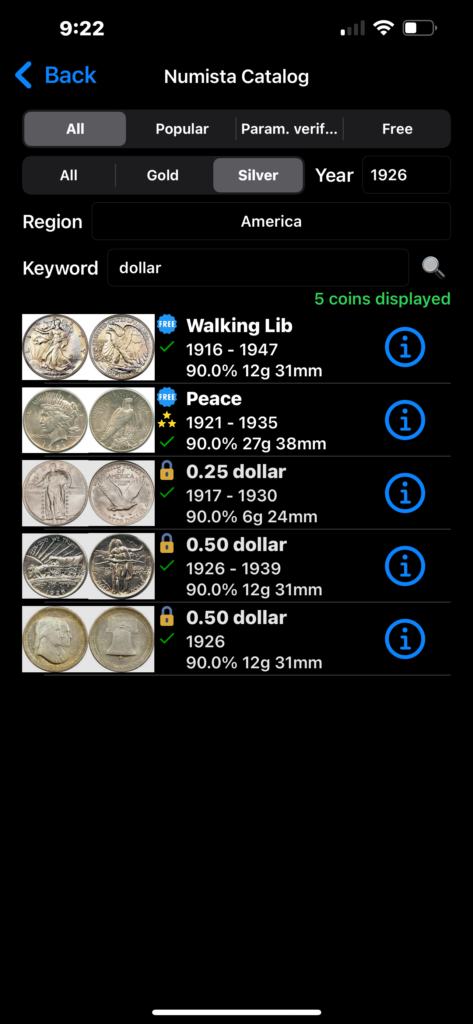
First, you choose the type of coin. (Note: If you are checking a silver dollar, for Keyword, just type Dollar, not Silver Dollar.) You place the coin on your fingertip, tap the word Check on the app, then hit the coin a few times with something that won’t damage the coin (I use the wooden part of a pencil.) If is shows a 0 or 1 out of 3, it means the coin is a fake. If it shows a 2 or a 3 out of three, the coin is real.

Just remember that all tests for coins aren’t foolproof. The best approach is to buy from a very reputable coin dealer.

Many numismatic coins are slabbed. In numismatics (the study or collection of coins), “slabbed” refers to the process of encapsulating a coin in a hard plastic holder, often called a slab. These slabs are usually sealed and graded by a professional coin grading service. The purpose of slabbing coins is to protect them from damage and to provide an objective assessment of their condition and authenticity.

When a coin is slabbed, it is typically accompanied by a label indicating its grade, which is determined based on factors such as wear, luster, strike quality, and any imperfections. This grading process helps collectors and investors assess the value of the coin and provides assurance about its authenticity and condition.

Slabbed coins are often considered more desirable for collectors and investors because they come with a trusted third-party evaluation, reducing the risk of buying counterfeit or over-graded coins.

So if you decide to add silver coins to your investment portfolio, buy with caution.

Disclosure: Author owns EBAY, AMZN, and has a long option position in SLV.

How to Invest in the Halloween Season

by Fred Fuld III

Halloween, celebrated on October 31st, has roots that stretch back thousands of years to ancient Celtic traditions. The holiday is believed to have originated with the festival of Samhain, a pagan celebration marking the end of the harvest season and the beginning of winter, or the “darker half” of the year. Samhain was a time when the Celts believed the veil between the world of the living and the dead was at its thinnest, allowing spirits to roam freely. To ward off malevolent spirits, the Celts would light bonfires and wear costumes made of animal heads and skins, blending into the supernatural atmosphere.

When Christianity spread across Celtic lands, the festival of Samhain gradually merged with Christian traditions. By the 9th century, the Catholic Church designated November 1st as All Saints’ Day, a time to honor saints and martyrs, and the night before became known as All Hallows’ Eve. Over time, this evolved into Halloween. As European immigrants brought these traditions to North America, they blended with Native American and other cultural influences, shaping the modern version of the holiday. Halloween in the U.S. became widely celebrated in the late 19th and early 20th centuries, growing into the festive night of costumes, trick-or-treating, and spooky decorations we know today.

Halloween will be here shortly, and will be a boon for the candy manufacturers. The motion picture companies that produce horror movie also benefit.

Hershey Foods (HSY): Founded in 1894 by Milton S. Hershey, Hershey Foods is one of the largest and most iconic chocolate manufacturers in the world. Headquartered in Hershey, Pennsylvania, the company is best known for its classic chocolate bars, Hershey’s Kisses, and Reese’s Peanut Butter Cups. Over the years, Hershey has expanded its portfolio to include a wide range of snacks, including popcorn and pretzels, and is a global player in the confectionery industry, operating in more than 60 countries. The company also places a strong emphasis on corporate social responsibility, particularly in sustainable cocoa farming.

The stock has a trailing price to earnings ratio of 20.5, a forward P/E ratio of 20, and  pays a dividend yield of 2.9%.

Tootsie Roll Industries (TR): Tootsie Roll Industries, founded in 1896, is a renowned American confectionery company famous for producing iconic treats like Tootsie Rolls, Tootsie Pops, Dots, and Junior Mints. Headquartered in Chicago, the company has a long legacy of producing nostalgic candy that remains popular across generations. Tootsie Roll Industries prides itself on a stable, family-run business model, with a focus on maintaining classic recipes and product consistency while innovating with new treats and flavors.

The stock has a P/E of 22.8 and pays a yield of 1.19%. Earnings per share this year jumped 20.7%.

Mondelez International (MDLZ): Mondelez International, founded in 2012 as a spin-off from Kraft Foods, is a multinational snack and confectionery giant. Headquartered in Chicago, the company owns a portfolio of globally recognized brands, including Oreo, Cadbury, Toblerone, and Trident. Mondelez operates in more than 150 countries, with a strong focus on the snack food market, particularly in the categories of biscuits, chocolate, gum, and candy. Sustainability and environmental responsibility are key pillars of the company’s strategy, with initiatives aimed at reducing packaging waste and sourcing sustainable ingredients like cocoa.

Its candy brands include Sour Patch, Swedish Fish, Cadbury, and Toblerone. The trailing P/E is 24.7 and the forward P/E is 20. The yield is a tasty 2.5%.

Watching horror movies is another popular event on Halloween.

Netflix (NFLX): Founded in 1997 as a DVD rental-by-mail service, Netflix has since evolved into the world’s leading streaming entertainment platform. Headquartered in Los Gatos, California, the company has revolutionized the way people consume media, with over 230 million subscribers globally. Netflix is known for its vast library of TV shows, films, and documentaries, and has become a dominant force in content creation, producing award-winning original series like Stranger ThingsThe Crown, and The Witcher. The company continues to innovate in the streaming space, expanding its international content and experimenting with interactive media.

This high flying stock has an extensive selection of scary movies in its collection of titles. The stock trades as 42.9 times trailing earnings and 32.3 times forward earnings. Earnings per share skyrocketed by 62.9% this year. It does not pay a dividend.

Lionsgate Studios (LION): The stock, commonly known as Lionsgate, is a Canadian-American entertainment company founded in 1997. Headquartered in Santa Monica, California, it is best known for producing and distributing films and television series across a wide range of genres. Lionsgate has gained significant recognition for successful franchises such as The Hunger GamesJohn Wick, and Saw, as well as its television arm, which includes popular shows like Orange is the New Black. With a focus on independent production and distribution, Lionsgate has established itself as a major player in both film and TV industries.

The company is a major producer of scary movies, which has made such films as American Psycho, Ginger Snaps, Route 666, The Devil’s Rejects, House of the Dead 2, Saw VI, See No Evil, Hostel: Part II, My Bloody Valentine 3D and many others. Lionsgate currently has generated negative earnings.

Then of course, Amazon (AMZN) has plenty of Halloween costumes. Amazon has a trailing PE of 45 and a forward PE of 32.

Hopefully, your Halloween stocks will bring you treats.

Disclosure: Author owns AMZN.

Stocks Owned by the Top 5 Billionaires

Forbes’ 2024 list of the world’s richest people highlights top figures from different fields. Leading the list is Bernard Arnault & family, who hold the title of the wealthiest individual globally with a net worth of $213.5 billion. Jeff Bezos and Elon Musk follow closely behind, with fortunes of $197 billion and $191 billion, respectively. Mark Zuckerberg and Larry Ellison complete the top five, boasting significant wealth from their own ventures. Below are the stocks associated with each of them.

  1. Bernard Arnault & Family- $213.5 Billion 

Louis Vuitton, part of LVMH, also known as Moët Hennessy Louis Vuitton (LVMUY), is a famous luxury brand known for its high status, top-notch quality, and expert craftsmanship. Investors like it for its strong reputation and its position as a top luxury fashion brand worldwide. LVMH also shows steady sales growth in many places and is making more profit, showing it’s strong and could keep doing well. Investors like Louis Vuitton for its creativity by always coming up with new ideas. Buying Louis Vuitton stock means believing in the brand’s lasting popularity, its money stability, and its chances to grow more in the luxury market.

  • Jeff Bezos – $197.6 Billion

Investors find Amazon stock (AMZN) attractive because of its strong presence in online shopping, cloud services, and other industries. Amazon’s constant innovation, wide-reaching customer base, and well-known brand make its stock very appealing for investors. Its stable income from different sources like Amazon Web Services (AWS) and online sales suits are very appealing for both short-term and long-term investors. Positive feelings about Amazon’s financial performance, such as its cash flow and market position, add to the reasons why stock is so popular. Overall, Amazon’s reputation for growth and resilience continues to drive investor interest and support.

  • Elon Musk – $191.1 Billion

Tesla (TSLA) stands out as a top player in the electric vehicle (EV) scene, known for its creative tech and game-changing strides in eco-friendly travel. This draws in investors who see the promise of electric cars and believe in Tesla’s role in shaping the car industry of tomorrow. Plus, Tesla’s CEO, Elon Musk, is quite a character, and his big ideas earn him trust from investors. Musk dreams of making cars drive themselves and expanding Tesla’s energy-saving solutions, which excites his followers looking for big investment chances. Tesla’s got a solid fan base too, making it more than just a car company; it’s a symbol of moving forward and doing things differently.

  • Mark Zuckerberg – $155.7 Billion

Meta (META), previously Facebook, is a top social media platform with over 3 billion users worldwide, making it a great choice for investors looking to tap into the digital advertising market. Meta’s move into virtual reality (VR) and augmented reality (AR) tech, like the Oculus VR headset, shows its commitment to growing its revenue sources and staying ahead in technology. Investors also see potential in Meta’s ability to benefit from the recovering advertising market, thanks to its successful ad campaigns and efforts to keep users engaged. Overall, Meta’s long-term strategy, huge user base, and innovative tech projects make its stock an attractive option for many investors.

  • Larry Ellison – $148.5 Billion

Oracle (ORCL) is a big tech company known for its computer software and services, like databases and cloud computing. Investors like Oracle because it’s well-known for providing reliable tech solutions, which makes it a popular choice for people looking to invest in the tech industry. Oracle also grows by buying other companies, like Cerner Corporation, showing it wants to offer more and stay competitive. Plus, Oracle is doing well in cloud computing and has big clients like Zoom Video Communications, which makes investors feel good about its future growth. In general, investors buy Oracle stock because they trust it to keep coming up with new ideas, follow market trends, and make money for its shareholders in the long run.

CompanyCompany SymbolPrice to BookPEGPEPrice to SalesForward PEYield
LVMH Moët Hennessy – Louis Vuitton, Société EuropéenneLVMUY6.482.6226.084.5923.871.65%
Amazon.com, Inc.AMZN9.262.2461.943.2842.55NA
Tesla, Inc.TSLA8.342.7543.046.262.11NA
Meta Platforms, Inc.META7.521.0325.518.1922.520.45%
Oracle CorporationORCL57.291.330.936.2818.731.37%

Could some of these stocks make you a billionaire?

Stay ahead of the game and subscribe to our newsletter now to unlock the hottest investment opportunities!

Subscribe Here

Disclosure: Author owns AMZN.

What is Trending on Amazon

by Fred Fuld III

Have you ever wondered what the hot items are on Amazon (AMZN) that people are ordering? The following is a list of the latest trending items.

By the way, Amazon reports earnings on April 27.

Nintendo Switch – OLED Model – The Legend of Zelda: Tears of the Kingdom Edition

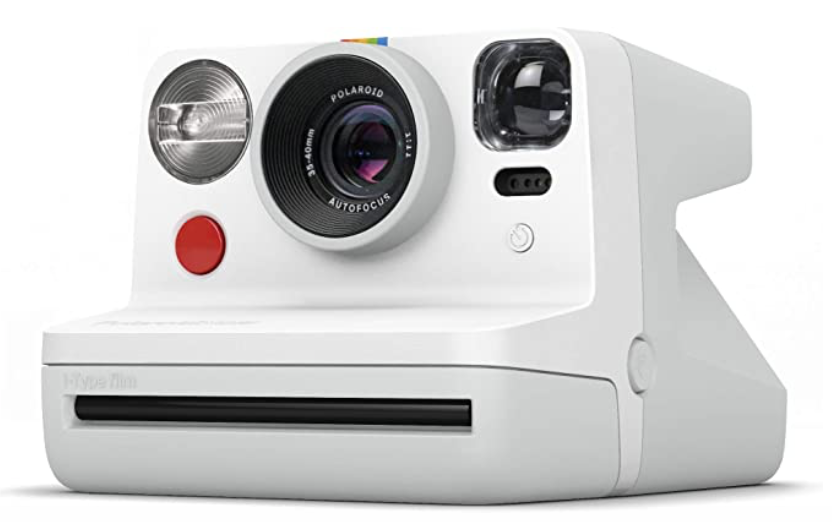
Polaroid Originals Now I-Type Instant Camera

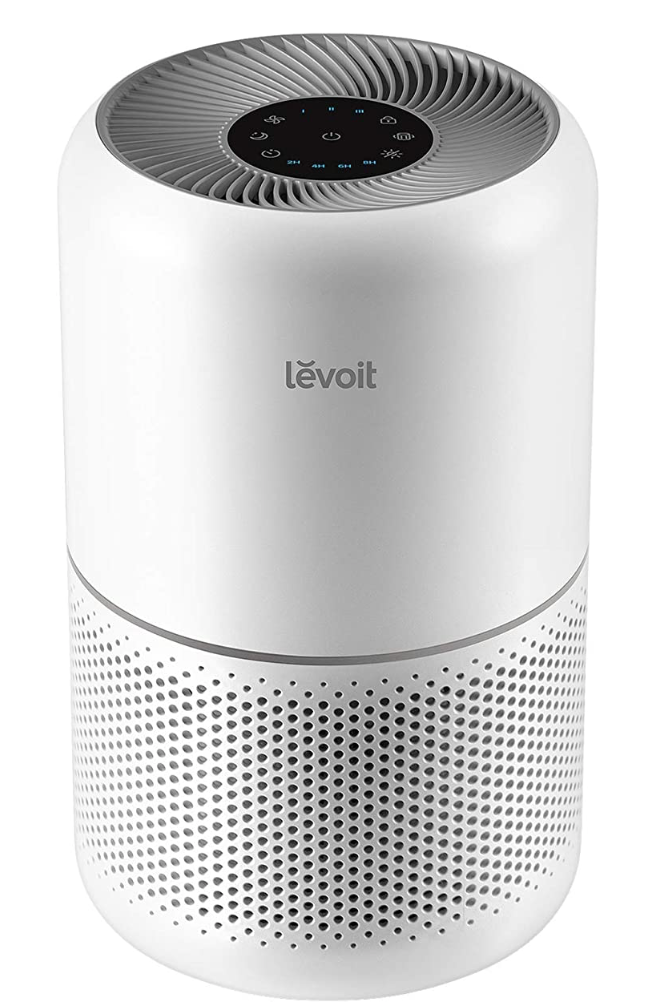
LEVOIT Air Purifier

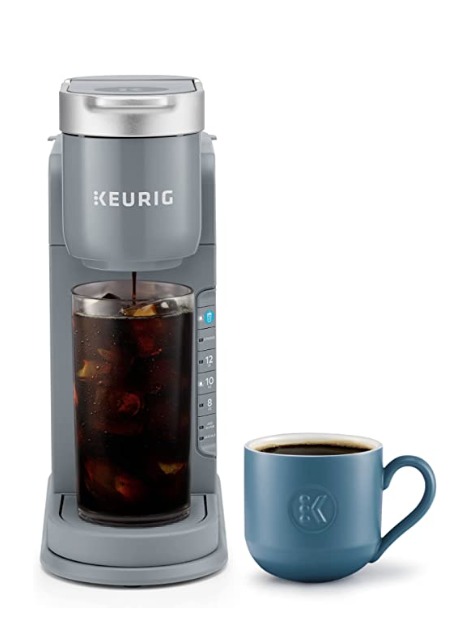
Keurig K-Iced Coffee Maker

Gotland 8 Piece Outdoor Patio Furniture Set with Gas Fire Pit

AND FOR MOTHER’S DAY:

Breville Smart Oven Air Fryer Pro

Salt, Fat, Acid, Heat: Mastering the Elements of Good Cooking

Disclosure: Author owns AMZN stock. This article contains Amazon affiliate links whereby I would receive a small commission on any sale through those links at no additional cost to you.

Top 5 Pure Play AI Stocks

By Fred Fuld III

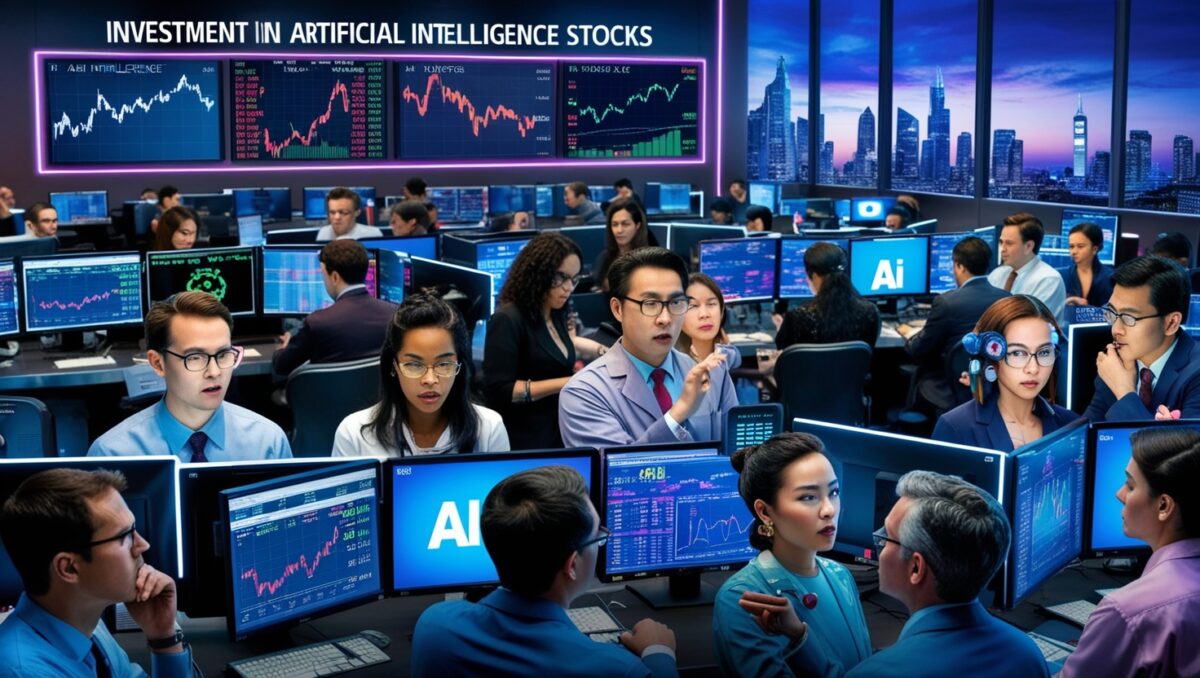
You’ve seen it on TV, you’ve read about it on news websites. Artificial Intelligence, commonly referred to as AI, is now the hottest industry. Stocks that are involved in this industry are taking off.

I originally wrote about a form of artificial intelligence back in October of 2021 in an article called The Future of Artificial Intelligence: Can You Invest In It Now?

So you may be wondering what companies are the purest plays.

WHAT AI IS

Artificial Intelligence, or AI for short, refers to the ability of machines to perform tasks that typically require human intelligence, such as learning, reasoning, problem solving, and decision-making. AI algorithms are designed to analyze data, recognize patterns, and make predictions or recommendations based on that analysis.

In other words, AI is a way to teach machines to perform tasks that would normally require human intelligence, and to improve their performance over time based on the data they analyze. This technology has the potential to revolutionize many aspects of our lives, from healthcare to transportation to entertainment. AI is even being used to write articles and books.

WHAT CHAT AI IS

One of the most popular types of AI services is Chat AI. 

Chat AI refers to the use of artificial intelligence technologies, such as natural language processing (NLP) and machine learning, to enable machines to communicate with humans via chat interfaces, such as chatbots or virtual assistants.

Chat AI is used in a variety of settings, such as customer service, where chatbots can be used to answer frequently asked questions, provide information, or help customers troubleshoot issues. Chat AI can also be used in healthcare to provide personalized support and advice, in education to assist with learning, and in business to streamline operations and improve customer engagement.

The key advantage of Chat AI is that it enables organizations to provide 24/7 support to their customers, without the need for human intervention. Additionally, Chat AI can help organizations save costs by automating routine tasks and reducing the need for human labor.

To enable effective Chat AI, developers must ensure that the algorithms are capable of understanding and interpreting natural language, as well as providing appropriate responses to user queries. This requires a combination of NLP and machine learning techniques, as well as ongoing training and improvement of the chat AI system.

Overall, Chat AI is an increasingly popular technology that has the potential to transform the way we interact with machines and automate routine tasks in various industries.

CREATING IMAGES WITH AI

Yes, artificial intelligence is now being used to create images, such as book covers, logos, album covers, and many other purposes. You just need to type in a simple description, and a picture will automatically be created. One of the most popular AI image services is called DALL-E.

DALL-E is an artificial intelligence system developed by OpenAI that is capable of generating images from textual descriptions. The name “DALL-E” is a combination of the artist Salvador Dali and the Pixar character Wall-E.

The DALL-E system uses a combination of machine learning techniques, including natural language processing and computer vision, to interpret textual descriptions and generate corresponding images. It is capable of creating images of objects and scenes that do not exist in the real world, such as a teapot made of giraffe or a snail-shaped harp.

THE BIG PLAYERS

The DALL-E system was trained on a dataset of text-image pairs, which enabled it to learn the relationship between textual descriptions and their corresponding visual representations. The system was trained on a massive amount of data, including images from the internet and text descriptions from a variety of sources.

The potential applications of DALL-E are numerous, including in the fields of art, design, and advertising. It has the potential to streamline the creative process and help artists and designers bring their ideas to life more quickly and easily. However, there are also concerns about the potential misuse of this technology, such as the creation of fake images or the propagation of harmful stereotypes.

First, let’s get the large stocks out of the way. There are many companies involved in AI, ranging from startups to large corporations. However, some of the biggest companies involved in AI are:

Google (GOOG) (GOOGL) is known for its search engine, but it’s also heavily invested in AI, with products like Google Assistant, Google Photos, and Google Translate all utilizing machine learning.

Amazon (AMZN) is using AI in many areas, such as its recommendation engine, its Alexa voice assistant, and its Amazon Go stores, which use computer vision to enable a checkout-free shopping experience.

Microsoft (MSFT) has been investing heavily in AI and has developed several AI-powered products, including Cortana, Skype Translator, and Microsoft Cognitive Services.

IBM (IBM) has a long history of developing AI technologies, and its Watson platform is one of the most well-known examples of AI in action.

Meta/Facebook (META) uses AI in a variety of ways, including facial recognition technology for tagging photos and content moderation.

Apple (AAPL) has been incorporating AI into many of its products, including Siri and Face ID.

NVIDIA (NVDA) is a leading manufacturer of GPUs, which are essential for training and running AI models.

Baidu (BIDU) is a Chinese search engine that is heavily investing in AI, with projects ranging from self-driving cars to voice recognition.

Tesla (TSLA) is using AI in its autonomous driving technology and is working to develop a fully self-driving car.

Alibaba (BABA), the Chinese e-commerce company, is investing in AI to improve its recommendation engine and other areas of its business.

THE PURE PLAYS

Now let’s get to the purer plays in artificial intelligence.

C3.AI

C3.ai, Inc. (AI) is a software company, located in Redwood City, California, that provides enterprise AI solutions for a variety of industries, including energy, healthcare, and finance. The company was founded in 2009 by Dr. Thomas M. Siebel, who is also the CEO of the company.

Before founding C3.ai, Dr. Siebel was the founder and CEO of Siebel Systems, a leading enterprise software company that was acquired by Oracle Corporation in 2006. After the acquisition, Dr. Siebel focused on developing AI-based solutions for the enterprise market and founded C3.ai.

Initially, C3.ai focused on developing predictive maintenance and energy management solutions for the energy industry. The company’s first product, C3 Energy Management, was designed to help utilities optimize their energy generation and distribution systems using machine learning algorithms.

Over time, C3.ai expanded its focus to other industries, including healthcare, financial services, and manufacturing. The company’s current product offerings include C3 AI Suite, which is a platform that enables organizations to develop and deploy AI applications, and C3.ai Ex Machina, which is an AI-powered data science platform for data scientists and developers.

C3.ai has received funding from several prominent investors, including Breyer Capital, TPG Growth, and the Rise Fund. In December 2020, the company went public on the New York Stock Exchange under the ticker symbol “AI,” raising $651 million in its initial public offering.

The stock has a market capitalization of $2.45 billion. This debt-free company has $6.76 in cash per share.

SOUNDHOUND AI

SoundHound AI, Inc. (SOUN) is a Silicon Valley-based technology company that specializes in developing sound recognition and voice-enabled AI solutions. The company was founded in 2005 by Dr. Keyvan Mohajer, who is also the CEO of the company.

Initially, the company started as a music recognition app called “Midomi,” which allowed users to hum or sing a song, and the app would identify the song. Later on, the company expanded its focus to voice-enabled AI technology and changed its name to SoundHound Inc.

In 2015, SoundHound Inc. launched its flagship product, Hound, which is an AI-powered voice assistant. Hound uses a natural language processing (NLP) technology that enables users to speak complex and specific queries in a conversational manner. The Hound voice assistant is available as a mobile app and can be integrated into other devices and applications.

In addition to Hound, SoundHound AI, Inc. also offers a suite of AI-based products and services, including sound recognition technologies for speech-to-text and music identification, and voice-enabled AI solutions for automotive, hospitality, and other industries.

The company has received funding from several prominent investors, including NVIDIA, Samsung, and Tencent Holdings. By 2021, SoundHound AI, Inc. had raised over $250 million in funding.

SoundHound has a market cap of $580 million. The company is debt-free and quarterly sales increased by over 79% year-over-year.

BIGBEAR.AI

BigBear.ai Holdings, Inc. (BBAI) is a technology company that develops and provides artificial intelligence (AI) solutions for defense and intelligence organizations, as well as for commercial customers. The company was founded in 2018 and is headquartered in Reston, Virginia.

BigBear.ai’s technology solutions use AI and machine learning to help customers make sense of large and complex data sets, as well as to automate decision-making processes. The company’s AI-driven solutions are designed to improve situational awareness, increase operational efficiency, and support decision-making across a range of industries and applications.

The company’s solutions cover a range of capabilities, including computer vision, natural language processing, and data analytics. BigBear.ai’s solutions are used in a variety of applications, such as intelligence analysis, threat detection, predictive maintenance, and supply chain optimization.

BigBear.ai has a broad customer base that includes government agencies and commercial customers in various industries. The company has received funding from several venture capital firms, including Riverside Partners, Chart National, and Blu Venture Investors.

In 2021, BigBear.ai announced that it had entered into a definitive agreement to merge with GigCapital4, a special purpose acquisition company (SPAC), in a deal that valued the combined company at $1.57 billion. The merger was completed in August 2021, and the combined company is now publicly traded on the NASDAQ under the ticker symbol “BBAI” as “BigBear.ai”.

This debt-free company has a market cap of $458 million. 

T STAMP

T Stamp Inc. (IDAI) is an identity authentication software company that uses artificial intelligence (AI) to develop solutions for government, enterprise partners, and peer-to-peer markets in the United States, the United Kingdom, and Malta.

T Stamp’s AI-powered solutions leverage biometric science, cryptography, and data mining to deliver identity and trust predictions, protect sensitive user information, and extend the reach of digital services through global accessibility. The company’s solutions include converting biometric and other identifying data into an Irreversibly Transformed Identity Token that serves as a secure tokenized identity. T Stamp also offers solutions for privacy and data protection, document validation, identity verification, geolocation, duplicate detection, and biometric capture.

T Stamp’s solutions serve a variety of industries, including banking/fintech, humanitarian and development services, KYC/AML compliance, government and law enforcement, P2P transactions, social media, and sharing economy, and real estate, travel, and healthcare. The company was incorporated in 2016 and is headquartered in Atlanta, Georgia.

Overall, T Stamp’s mission is to provide secure and scalable identity authentication solutions that leverage AI and advanced technologies to protect user privacy and combat identity fraud.

This is a microcap stock with an extremely low market cap of $18 million, and should therefore be considered extremely speculative. 

MARPAI

Marpai, Inc. (MRAI) is a software company that specializes in developing and deploying artificial intelligence (AI) systems for the enterprise market. The company was founded in 2016 by a team of experienced entrepreneurs and AI researchers, including CEO and Co-founder Mark Sears.

Marpai’s platform, called “Cortex,” is designed to help businesses leverage AI to automate processes, extract insights from data, and improve decision-making. Cortex uses advanced machine learning algorithms to analyze large amounts of data and provide actionable insights to users.

The company has received funding from prominent venture capital firms, including Bain Capital Ventures, Crosslink Capital, and SVB Capital, among others. In May 2021, Marpai announced that it had raised $30 million in a Series A funding round led by M12, Microsoft’s venture fund, with participation from other investors.

Marpai has a range of customers across different industries, including finance, healthcare, and retail. The company’s solutions are used for a variety of applications, such as fraud detection, customer service automation, and supply chain optimization.

Overall, Marpai’s mission is to democratize AI and make it more accessible to businesses of all sizes, by providing a scalable and user-friendly platform for deploying AI solutions.

The stock is debt-free and quarterly revenue growth year-over-year was 28.8%. This is another microcap stock with an extremely low market cap of $40 million, and should therefore also be considered extremely speculative.

AI SUMMARY

According to Fortune Business Insights, “The Artificial Intelligence market is projected to grow from $387.45 billion in 2022 to $1394.30 billion by 2029, at a CAGR of 20.1%.”

Just remember, that there are many ups and downs in new industries, and all the pure play stocks in this list should be considered speculative. Remember, no recommendations are expressed or implied. 

If you want to learn more about artificial intelligence, you should get the book Artificial Intelligence: What AI Is and How You Can Use It to Make Your Life Easier: A Guide to AI for Beginners, available in both paperback and Kindle.

Disclosure: Author didn’t own any of the above at the time the article was written, although may be making purchases in the near future. This article contains Amazon affiliate links whereby I would receive a small commission on any sale through those links at no additional cost to you. 

Happy Halloween Stocks

by Fred Fuld III

It’s Halloween today, a boon for the candy manufacturers. The companies that produce horror movie also benefit. It’s hard to believe it’s that time of year. Pretty soon it will be Thanksgiving.

The biggest beneficiaries of the Halloween season are the candy makers.

Hershey Foods (HSY), one of the biggest chocolate and candy companies in the world, with two of its most popular products being Hershey Kisses and Hershey Bars, along with Reese’s. The stock has a trailing price to earnings ratio of 33.5, a forward P/E ratio of 27, and  pays a dividend yield of 1.7%. Next year’s annual earnings per share are anticipated to be up 8.36%.

Tootsie Roll Industries (TR) has an assortment of candy kids, such as Tootsie Rolls, Tootsie Roll Pops, Caramel Apple Pops, Charms, Blow-Pops, Blue Razz, Zip-A-Dee Pops, Cella’s, Mason Dots, Mason Crows, Junior Mint, Sugar Daddys, and Sugar Babies. The stock has a P/E of 40.5 and pays a yield of 0.89%. Earnings per share this year were up 12.5%.

Mondelez International (MDLZ) is a multinational producer of candy, along with food and beverages. Its brands include Sour Patch, Swedish Fish, Cadbury, and Toblerone. The trailing P/E is 22 and the forward P/E is 20. The yield is a tasty 2.5%.

Watching scary movies is another popular event on Halloween. Netflix (NFLX), the huge provider of videos in the US, has an extensive selection of scary movies in its collection of titles. The stock trades as 27.9 times trailing earnings and 28.1 times forward earnings. It does not pay a dividend.

A major producer of scary movies is Lions Gate Entertainment (LGF-A), which has made such films as American Psycho, Ginger Snaps, Route 666, The Devil’s Rejects, House of the Dead 2, Saw VI, See No Evil, Hostel: Part II, My Bloody Valentine 3D and many others. Lionsgate currently has generated negative earnings but has a forward price to earnings ratio of 227.

Then of course, Amazon (AMZN) has plenty of Halloween costumes. Amazon has a trailing PE of 93 and a forward PE of 56.

Hopefully, your Halloween portfolio will bring you treats.

Disclosure: Author didn’t own any of the above at the time the article was written.

MAGA is the New FAANG

Do you remember what the FAANG stocks are, or were? MAGA is the New FAANG.

by Fred Fuld III

Do you remember what the FAANG stocks are, or were?

Facebook (FB) (META), Amazon (AMZN), Apple (AAPL), Netflix (NFLX), and Google (GOOG) (GOOGL).

Jim Cramer created the FANG acronym back in 2013 for Facebook, Amazon, Netflix, and Google, because he said that these tech stocks were “totally dominant in their markets“.

However, in 2017, he added Apple due to its growth, adding an extra A to the acronym, changing it to FAANG.

Yet, several changes have taken place since then. First, Facebook has changed its name to Meta,along with its symbol, so the letter M has to be used in the acronym.

Second, Netflix is not really a tech stock. It is actually considered an entertainment company in the communications services sector. Plus, many investors no longer consider it a growth stock if you look at the return over the last few years.

Just in the last twelve months, Netflix has dropped over 61%. If you had bought the stock at the beginning of 2018 and held it, you would have barely broken even. If you had bought in in 2019, 2020, or 2021, and held it, you would have a good size loss.

Finally, even though Google changed its name to Alphabet, nobody calls it that, and the company is still keeping the same stock ticker symbols beginning with the letter G.

So that gives us Meta, Amazon, Google, and Apple as the leading tech stocks.

Or to abbreviate it, MAGA.

Now that should be easy to remember.

Disclosure: Author owns MSFT, AAPL and AMZN.

MORE POPULAR STOCK LISTS OF INTEREST

Top 10 Short Squeeze Plays

Stocks Going Ex Dividend

Business Development Companies Paying Over 10%