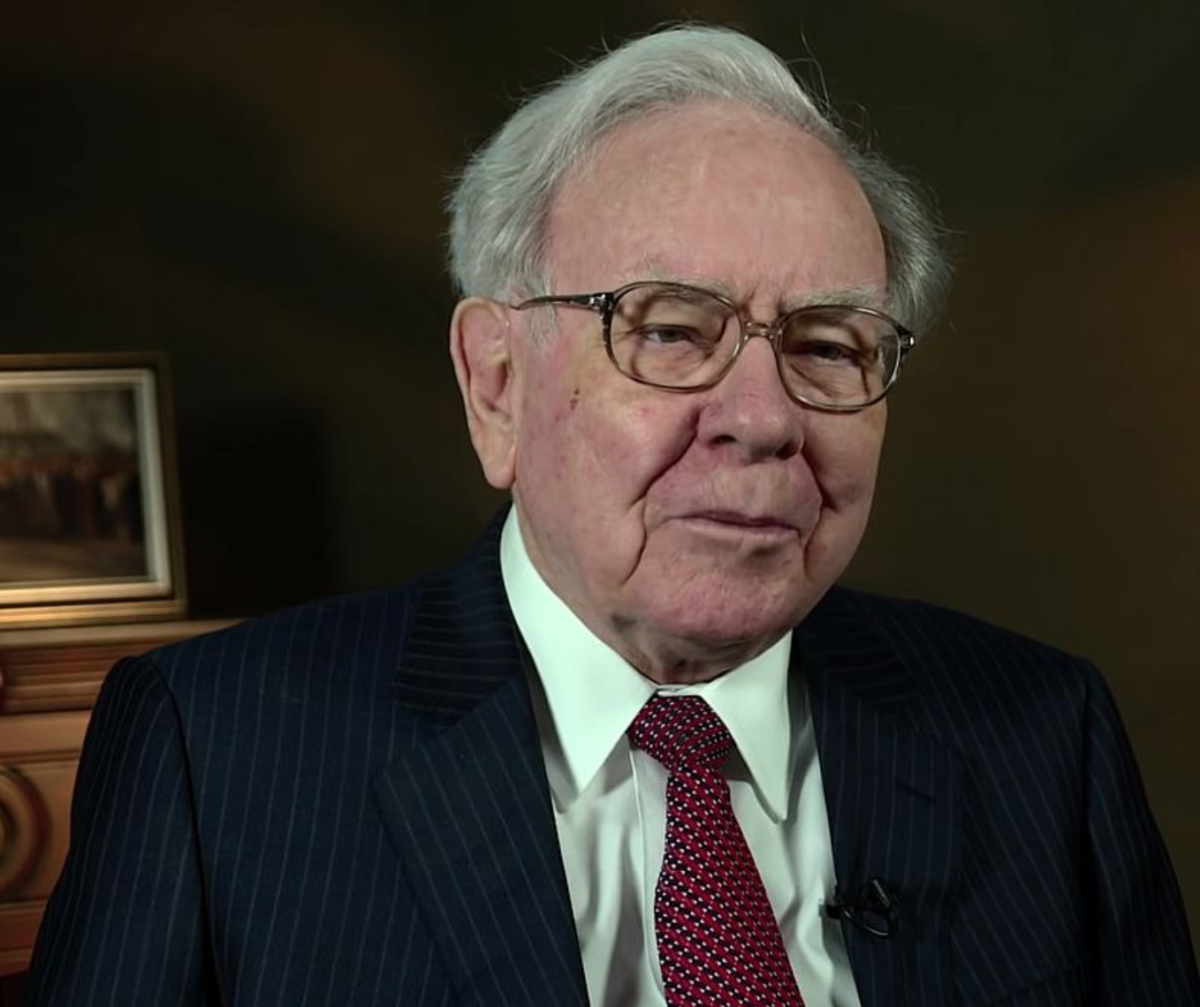
Warren Buffett’s Berkshire Hathaway’s Recent Investments

by Nkem Iregbulem

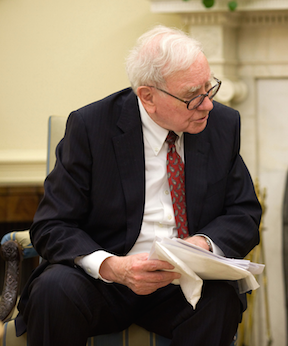
As the third-wealthiest person in the world, Warren Buffett is widely regarded as an investment guru. His investment philosophy is based on the concept of value investing. He is the chairman, CEO, and largest shareholder of Berkshire Hathaway, the world’s 10th largest company by revenue. As of 2018, Buffett is estimated to be worth over $80 billion. He is not only an investor but also a dedicated philanthropist. In fact, he has promised to give 99% of his fortune to charitable causes.

Due to his success, Buffett’s stock purchases are closely followed by many other investors. Buffett’s Berkshire Hathaway recently purchased the stocks of JP Morgan Chase (JPM), Oracle (ORCL), PNC Financial Services Group (PNC), and Travelers Companies (TRV). His company also added to its position in Bank of America (BAC) and Apple (AAPL). These stocks can all be found on the New York Stock Exchange, except for AAPL, which is traded on the NASDAQ exchange.

With more than $2.5 trillion in assets, JP Morgan Chase is one of the largest financial institutions in the United States. The company is segmented into consumer and community banking, commercial banking, corporate and investment banking, and asset and wealth management. The company was founded in 1871 and is headquartered in New York, but it operates both within and outside of the United States. JP Morgan Chase has a market cap of $360.6B and pays a dividend yield of 2.89%. It trades at 13.70 times trailing earnings and at 11.07 times forward earnings. The stock has a price-to-sales ratio of 3.60, putting it into the overpriced range. It also has price-to-book ratio of 1.59. With its revenue growing each fiscal year since 2015, the company enjoys a 3-year revenue growth rate of 1.56% and a 5-year revenue growth rate of 0.53%.

Founded in 1977 and based in California, Oracle is a computer technology company that sells databases, middleware, applications, hardware, and other enterprise IT solutions. Most of the its revenue comes from software licenses, support, and maintenance, but the company has recently started to shift towards cloud-based subscriptions. Oracle has a market cap of $183.1B and pays a dividend yield of 1.57%. It trades at 49.21 times trailing earnings and at 14.33 times forward earnings. The stock has a price-to-sales ratio of 5.04, so it is considered overpriced. It also has a price-to-book ratio of 4.81. Oracle has a 3-year revenue growth rate of 1.38% and a 5-year revenue growth rate of 1.39% and has seen its revenue increase each fiscal year since 2016.

PNC is a financial services company involved in retail banking, corporate and institutional banking, residential mortgage banking, and asset management. With nearly 2,600 branches in 19 states and D.C., the company stands as the eight-largest bank in the United States — measured by assets. The company was founded in 1845 and is based in Pennsylvania. PNC Financial Services Group has a market cap of $61.4B and pays a dividend yield of 2.86%. The company’s stock trades at 11.17 times trailing earnings and at 11.56 times forward earnings.

It falls into the overpriced range with a price-to-sales ratio of 3.70. The stock also has a price-to-book ratio of 1.30. The company boasts a 3-year revenue growth rate of 2.03% and a 5-year revenue growth rate of 1.03%.

The Travelers Companies is an insurance company that was founded in 1853 and is headquartered in New York. The company segments its business into commercial and personal insurance lines. Under its commercial operations, it provides coverage for primarily midsize businesses. Under its personal line, the company mostly serves car and homeowners. The Travelers Companies has a market cap of $33.8B and pays a dividend yield of 2.40%. It trades at 14.33 times trailing earnings and at 11.26 times forward earnings. The company’s stock has a normal price-to-sales ratio of 1.17 and a price-to-book ratio of 1.51. The company enjoys a 3-year revenue growth rate of 2.08% and a slightly better 5-year revenue growth rate of 2.34% as its revenue has been increasing each fiscal year since 2015.

With over $2 trillion in assets, Bank of America is one of the largest and most well-known financial institutions in the United States. The company’s business operations can be segmented into consumer banking, global wealth and investment management, global markets, and global banking. Its lines of business include home mortgage lending, credit and debit cards, investment banking, brokerage services, small-business services, and many others. Headquartered in North Carolina and founded in 1998, Bank of America has a market cap of $267.5B and pays a dividend yield  of 2.19%. The stock trades at 12.98 times trailing earnings and at 9.51 times forward earnings. It has a price-to-sales ratio of 3.20, so the stock falls into the overpriced category. It also has a price-to-book ratio of 1.12. The company has a 3-year revenue growth rate of 0.56% and a 5-year revenue growth rate of 1.46%. Its revenue has been increasing each fiscal year since 2015.

Apple is a large and familiar technology company that was founded in 1976 and is headquartered in California. It designs and sells computer software, online services, and consumer electronics. Its product line of electronics include smartphones, tablets, computers, and smartwatches. The company also provides services such as Apple Music, a music streaming service, and Apple Pay, a mobile payment service. Apple has a market cap of $741.37B and pays a dividend yield of 1.87%. The stock trades at 13.12 times trailing earnings and 11.96 times forward earnings. It has a price-to-sales ratio of 2.94, making it slightly overpriced. The company’s stock also has a price-to-book ratio of 6.92. With its revenue increasing each year over the past few years, the company boasts a 3-year revenue growth rate of 4.35% and an even higher 5-year revenue growth rate of 9.22%. Most of this revenue comes from Apple’s iPhone sales.

Hopefully, one of the richest men in the world can give you some profitable investment ideas.

Disclosure: Author didn’t own any of the above at the time the article was written. 
Kevin Costner Starred in ‘Ancient’ Apple Ad: Wall Street Video of the Week

Does any one remember what a Lisa Computer was? Has anyone ever touched one? (I did, for a couple hours many years ago.) This was one of the first follies of Steve Jobs. Talk about a clunky, unattractive computer. Anyway, when Apple (AAPL) ran a Lisa television commercial long ago, guess who the star was? Kevin Costner, star of Field of Dreams, Dances With Wolves, Bull Durham, JFK, and many other movies.

Apple is Now Officially a Trillion Dollar Company

by Fred Fuld III

It’s official. At the time I am writing this, Apple (AAPL) is trading at 206.87. The company has 4,842,917,000 shares issued and outstanding, according to the latest Form 10-Q filed with the Securities and Exchange Commission.

If you multiply these two numbers, you get a market capitalization of $1,001,854,239,790. That’s over a trillion dollars.

This makes Apple the first American company to reach the trillion dollar level.

Apple is actually the second stock to reach a trillion dollar valuation. The first was PetroChina (PTR), that hit that level in 2007.

Disclosure: Author owns AAPL.

Companies Reporting Earnings This Week

by Fred Fuld III

Many traders like to look at upcoming earning announcements to plan their trades. A substantial amount of money can be made trading on earnings, but a significant amount of money can be lost. (Remember Facebook (FB) last week?)

Some of the most heavily traded stocks that are reporting include Apple (AAPL), Tesla (TSLA), Wynn (WYNN), MGM (MGM), and CBS (CBS). Here is a list of the popular stocks that are reporting earnings:

Monday Pre-Market

  • CAT
  • EXP
  • FDC
  • L
  • STX

Monday After-Market

  • ATHN
  • DENN
  • NTRI
  • RIG

Tuesday Pre-Market

  • BP
  • JCI
  • LL
  • PG
  • PFE
  • RL

Tuesday After-Market

  • AAPL
  • APC
  • BIDU
  • CAKE
  • H
  • P
  • QYLS

Wednesday Pre-Market

  • ADP
  • GRMN
  • HUM
  • SODA

Wednesday After-Market

  • CRUS
  • CZR
  • FEYE
  • HLF
  • MET
  • MRO
  • PRU
  • RAIL
  • SQ
  • TRIP
  • TSLA
  • WYNN
  • X

Thursday Pre-Market

  • AET
  • AVP
  • CLX
  • DUK
  • ICE
  • MGM
  • W
  • YUM

Thursday After-Market

  • CBS
  • ED
  • TTWO
  • WU

Friday Pre-Market

  • CBOE
  • WELL

Can You Guess Warren Buffett’s Largest Stock Holding?

by Fred Fuld III

Warren Buffett, the head of Berkshire Hathaway (BRKA) (BRKB), is considered to be one of the top investors,  and is probably the most well known investor in the world. In addition, Buffett is a very interesting character.

Many investors like to copy Buffett’s investments, in order to match his superior returns.

So the first thing a copycat investor would do is to check and see what stock he owns more of than any other investment.  Can you guess what that stock is?

It is Apple Inc. (AAPL), the iPhone, iPad, Mac, and Apple Watch company. According the Berkshire Hathaway’s latest report to the SEC, Apple makes up 21.27% of the Berkshire Hathaway portfolio, a fairly large commitment. Buffett has 239 million shares worth over $40 billion.

The second largest shareholding is Wells Fargo (WFC), making up 12.66% of the Berkshire portfolio. In third place is Bank of America (BAC) at 10.78%.

Rounding out the top five shareholdings is Kraft Heinz (KHC) representing 10.74% of the portfolio and Coca-Cola (KO) at 9.19%.

To see all the stocks owned by Warren Buffett’s Berkshire Hathaway, so to the  Buffett Stock List.

Hopefully you can ride on Buffett’s coattails to investment success.


Disclosure: Author owns AAPL, BRKB, and BAC.

The Yummies are Causing the All-Time Stock Market Highs

Many have wondered why the stock market continues to make all-time highs, almost every day. This exceptional rise may be due to the Yummies, the Young Upwardly Mobile Millennials. Yes, the Millennials, also known as Generation Y. Many traits have been ascribed to this generation, but you don’t ever hear the members referred to as being invetor-oriented.

So let’s look at the facts. Legg Mason Global Asset Management, the 20th largest asset manager in the world, produced the 2017 Global Investment Survey, and the Summary of U.S. Results are very enlightening.

For example, did you know that Millennials invest more in non-cash investments than the Generation X or the Baby Boomers? As a matter of fact, 77% of Yummies apply their funds toward these assets, versus 75% for Gen x and 69% for Baby Boomers.

Let’s look at some definitions before continuing. Legg mason consideres Millennials to be between the ages of 18 and 35, Gen X at age 36 to 52, with Baby Boomers ranging from 53 to 71 years old.

Some other interesting factoids about the Yummies. They invest three times as much as Boomers in non-traditional investments. Plus, a far greater percentage of Yummies put their money into investment real estate than the Baby Boomers.

But what is most amazing is the fact that 11% of the Yummies invest in gold and precious metals versus only 7% of the Gen Xers and a measly 2% for the Baby Boomers.

When the respondents were asked which investment categories they believe offer the best opportunities over the next 12 months, 46% of the Yummies said domestic stocks, with Gen X and Boomers closely agreeing, both at 42%. International stocks came in second as an investment opportunity in the opinion of the Millennials.

Finally, 87% of Yummies have saivings, investments, or both but only 81% of Boomers have these assets, and just 75% of Millennials.

Many wonder why the FAANG stocks, Facebook (FB), Apple (AAPL), Amazon (AMZN), Netflix (NFLX), and Google (GOOG), continue to rise. So now you know. If you are wondering who is driving up the price of stocks and cryptocurrency, you need look no further than the Yummies.

by Fred Fuld III

Disclosure: Author owns AAPL and AMZN.

The Companies that will Benefit the Most from the New Tax Law

The new tax law has passed and is waiting for the signature of the president. This change will provide a huge economic benefit for many corporations, especially for those that keep money overseas, due to the repatriation tax holiday.

Although there will be benefits to having plants and facilities in other countries, it is expected that most companies will prefer to have most of their operations in the United States. Many U.S. citizens are now starting to benefit from the corporate tax cut such as the AT&T (T) $1,000 bonus for all employees.

From an investor standpoint, the fundamentals for certain companies should improve dramatically which should help the stock price. Here are some of the corporations with the biggest cash holdings overseas.

Apple (AAPL)  ~ $215 billion to $252 billion depending on what source you use and what day of the month it is

Microsoft (MSFT) ~ $128 billion

Cisco (CSCO) ~ $68 billion

Oracle (ORCL) ~ $48 billion to $54 billion

Alphabet / Google (GOOG) ~ $32 billion

Johnson & Johnson (JNJ) ~ $41 billion

Amgen (AMGN) ~ $36 billion

Watch the performance of these stocks during the new year. Speaking of new year, Happy New Year!!!

Warren Buffett has Been Buying Apple

Warren Buffett’s Berkshire Hathaway (BRK-A) (BRK-B) just filed its latest shareholdings with the SEC a few days ago, and shows some interesting data. Buffett has added to three new positions and reduced holdings in some stocks.

Most importantly, his shareholdings in Apple (AAPL) increased by almost four million shares during the third quarter of this year. Could that be the cause of the significant boost in the stock price or just a great call on the part of Buffett? Or both? After all, he made a great call on General Electric (GE) by dumping the stock earlier in the year.

Warren Buffett has also been adding to his positions in Monsanto (MON) and Synchrony Financial (SYF).

Reductions were made in the shareholdings of a few stocks. Berkshire sold over $17 million shares of IBM (IBM). Plus, he sold some Charter Communications (CHTR) stock and shares in Wells Fargo (WFC).

Warren Buffett has an outstanding track record, so reviewing his buys and sells may be helpful to you and your portfolio.

Wireless Charging: The Stocks in this Latest Hot Industry

Imagine that you have just landed from a flight and your cell phone is dead due to a used up battery charge. You walk through the airport and as you are strolling along, your phone is picking up radio frequencies that is charging your phone’s battery.

Or say you are walking down the street, the battery is dead in your cell phone, so you head into a coffee shop. A tiny chip in your phone picks up radio frequencies and converts them into energy to charge up your phone.

Think this is science fiction? Companies are already working on this technology now.

As an example, Energous Corp (WATT), a San Jose, California based company founded in 2012, has been working on just such a system. The company is developing WattUp, which allows for the wire-free distance charging of devices, including laptops, cellphones, and smart watches.

The stock took a dump today, dropping 5% to 14.74 per share, probably due to the fact that it was just announced yesterday that the Senior Vice President of Product Marketing sold 1615 shares on June 14. However, if you look closer, you would find that, first, this was an automatic sale, and second, he still has over 100,000 shares of the stock. So the sale represented only a small part of his position.

According to a report in the Weekly Register, 27 institutions have increased positions in the stock, with 21 new positions. The stock has a market cap of $303 million.

Investors should be aware that the company is generating significant negative earnings, and should therefore be considered very speculative.

Other wireless electricity stocks can be found by looking at the publicly traded members of the Wireless Power Consortium, of which over 200 businesses have joined. They utilize Qi wireless charging as an open standard.

Of course, you will find many of the large corporations, such as Apple (AAPL), AVID (AVID), Texas Instruments (TXN), and Verizon Wireless (VZ), are members.

Leggett & Platt (LEG), which is a producer of engineered products, has a division for developing wireless power transmitters for integration.

ON Semiconductor (ON) is also working on wireless power technology. This semiconductor company is based in Phoenix, Arizona.

Semtech Corporation (SMTC) a Camarillo, California which makes and sells analog and mixed-signal semiconductor products, is also developing wireless power technology products.

Altogether, there are about 20 publicly traded stocks that are part of the Consortium. Maybe one of these companies can charge up your portfolio.

Disclosure: Author owns WATT. 

Please note: some of these stocks are very low cap and should be considered very speculative.

Trivia: The iPhone Name was Originally Owned by Cisco, Not Apple

Here is a bit of financial trivia for you.  Linksys, a division of Cisco Systems Inc. (CSCO), released its iPhone on Monday, December 18, 2006, which was a phone that connects to a home wireless network for making phone calls through the Internet using the Skype service. Skype was originally owned by eBay Inc. (EBAY)at the time and is now owned by Microsoft (MSFT).

It had been anticipated that Apple Computer Corp. (AAPL) would be using the iPhone name back then, but it had been registered by Cisco in 2000. The iPhone trademark is now owned by Apple.

More info about the “first” iPhone release can be found here, an article from bizjournals back in 2006.