
Top 5 Pure Play AI Stocks

By Fred Fuld III

You’ve seen it on TV, you’ve read about it on news websites. Artificial Intelligence, commonly referred to as AI, is now the hottest industry. Stocks that are involved in this industry are taking off.

I originally wrote about a form of artificial intelligence back in October of 2021 in an article called The Future of Artificial Intelligence: Can You Invest In It Now?

So you may be wondering what companies are the purest plays.

WHAT AI IS

Artificial Intelligence, or AI for short, refers to the ability of machines to perform tasks that typically require human intelligence, such as learning, reasoning, problem solving, and decision-making. AI algorithms are designed to analyze data, recognize patterns, and make predictions or recommendations based on that analysis.

In other words, AI is a way to teach machines to perform tasks that would normally require human intelligence, and to improve their performance over time based on the data they analyze. This technology has the potential to revolutionize many aspects of our lives, from healthcare to transportation to entertainment. AI is even being used to write articles and books.

WHAT CHAT AI IS

One of the most popular types of AI services is Chat AI. 

Chat AI refers to the use of artificial intelligence technologies, such as natural language processing (NLP) and machine learning, to enable machines to communicate with humans via chat interfaces, such as chatbots or virtual assistants.

Chat AI is used in a variety of settings, such as customer service, where chatbots can be used to answer frequently asked questions, provide information, or help customers troubleshoot issues. Chat AI can also be used in healthcare to provide personalized support and advice, in education to assist with learning, and in business to streamline operations and improve customer engagement.

The key advantage of Chat AI is that it enables organizations to provide 24/7 support to their customers, without the need for human intervention. Additionally, Chat AI can help organizations save costs by automating routine tasks and reducing the need for human labor.

To enable effective Chat AI, developers must ensure that the algorithms are capable of understanding and interpreting natural language, as well as providing appropriate responses to user queries. This requires a combination of NLP and machine learning techniques, as well as ongoing training and improvement of the chat AI system.

Overall, Chat AI is an increasingly popular technology that has the potential to transform the way we interact with machines and automate routine tasks in various industries.

CREATING IMAGES WITH AI

Yes, artificial intelligence is now being used to create images, such as book covers, logos, album covers, and many other purposes. You just need to type in a simple description, and a picture will automatically be created. One of the most popular AI image services is called DALL-E.

DALL-E is an artificial intelligence system developed by OpenAI that is capable of generating images from textual descriptions. The name “DALL-E” is a combination of the artist Salvador Dali and the Pixar character Wall-E.

The DALL-E system uses a combination of machine learning techniques, including natural language processing and computer vision, to interpret textual descriptions and generate corresponding images. It is capable of creating images of objects and scenes that do not exist in the real world, such as a teapot made of giraffe or a snail-shaped harp.

THE BIG PLAYERS

The DALL-E system was trained on a dataset of text-image pairs, which enabled it to learn the relationship between textual descriptions and their corresponding visual representations. The system was trained on a massive amount of data, including images from the internet and text descriptions from a variety of sources.

The potential applications of DALL-E are numerous, including in the fields of art, design, and advertising. It has the potential to streamline the creative process and help artists and designers bring their ideas to life more quickly and easily. However, there are also concerns about the potential misuse of this technology, such as the creation of fake images or the propagation of harmful stereotypes.

First, let’s get the large stocks out of the way. There are many companies involved in AI, ranging from startups to large corporations. However, some of the biggest companies involved in AI are:

Google (GOOG) (GOOGL) is known for its search engine, but it’s also heavily invested in AI, with products like Google Assistant, Google Photos, and Google Translate all utilizing machine learning.

Amazon (AMZN) is using AI in many areas, such as its recommendation engine, its Alexa voice assistant, and its Amazon Go stores, which use computer vision to enable a checkout-free shopping experience.

Microsoft (MSFT) has been investing heavily in AI and has developed several AI-powered products, including Cortana, Skype Translator, and Microsoft Cognitive Services.

IBM (IBM) has a long history of developing AI technologies, and its Watson platform is one of the most well-known examples of AI in action.

Meta/Facebook (META) uses AI in a variety of ways, including facial recognition technology for tagging photos and content moderation.

Apple (AAPL) has been incorporating AI into many of its products, including Siri and Face ID.

NVIDIA (NVDA) is a leading manufacturer of GPUs, which are essential for training and running AI models.

Baidu (BIDU) is a Chinese search engine that is heavily investing in AI, with projects ranging from self-driving cars to voice recognition.

Tesla (TSLA) is using AI in its autonomous driving technology and is working to develop a fully self-driving car.

Alibaba (BABA), the Chinese e-commerce company, is investing in AI to improve its recommendation engine and other areas of its business.

THE PURE PLAYS

Now let’s get to the purer plays in artificial intelligence.

C3.AI

C3.ai, Inc. (AI) is a software company, located in Redwood City, California, that provides enterprise AI solutions for a variety of industries, including energy, healthcare, and finance. The company was founded in 2009 by Dr. Thomas M. Siebel, who is also the CEO of the company.

Before founding C3.ai, Dr. Siebel was the founder and CEO of Siebel Systems, a leading enterprise software company that was acquired by Oracle Corporation in 2006. After the acquisition, Dr. Siebel focused on developing AI-based solutions for the enterprise market and founded C3.ai.

Initially, C3.ai focused on developing predictive maintenance and energy management solutions for the energy industry. The company’s first product, C3 Energy Management, was designed to help utilities optimize their energy generation and distribution systems using machine learning algorithms.

Over time, C3.ai expanded its focus to other industries, including healthcare, financial services, and manufacturing. The company’s current product offerings include C3 AI Suite, which is a platform that enables organizations to develop and deploy AI applications, and C3.ai Ex Machina, which is an AI-powered data science platform for data scientists and developers.

C3.ai has received funding from several prominent investors, including Breyer Capital, TPG Growth, and the Rise Fund. In December 2020, the company went public on the New York Stock Exchange under the ticker symbol “AI,” raising $651 million in its initial public offering.

The stock has a market capitalization of $2.45 billion. This debt-free company has $6.76 in cash per share.

SOUNDHOUND AI

SoundHound AI, Inc. (SOUN) is a Silicon Valley-based technology company that specializes in developing sound recognition and voice-enabled AI solutions. The company was founded in 2005 by Dr. Keyvan Mohajer, who is also the CEO of the company.

Initially, the company started as a music recognition app called “Midomi,” which allowed users to hum or sing a song, and the app would identify the song. Later on, the company expanded its focus to voice-enabled AI technology and changed its name to SoundHound Inc.

In 2015, SoundHound Inc. launched its flagship product, Hound, which is an AI-powered voice assistant. Hound uses a natural language processing (NLP) technology that enables users to speak complex and specific queries in a conversational manner. The Hound voice assistant is available as a mobile app and can be integrated into other devices and applications.

In addition to Hound, SoundHound AI, Inc. also offers a suite of AI-based products and services, including sound recognition technologies for speech-to-text and music identification, and voice-enabled AI solutions for automotive, hospitality, and other industries.

The company has received funding from several prominent investors, including NVIDIA, Samsung, and Tencent Holdings. By 2021, SoundHound AI, Inc. had raised over $250 million in funding.

SoundHound has a market cap of $580 million. The company is debt-free and quarterly sales increased by over 79% year-over-year.

BIGBEAR.AI

BigBear.ai Holdings, Inc. (BBAI) is a technology company that develops and provides artificial intelligence (AI) solutions for defense and intelligence organizations, as well as for commercial customers. The company was founded in 2018 and is headquartered in Reston, Virginia.

BigBear.ai’s technology solutions use AI and machine learning to help customers make sense of large and complex data sets, as well as to automate decision-making processes. The company’s AI-driven solutions are designed to improve situational awareness, increase operational efficiency, and support decision-making across a range of industries and applications.

The company’s solutions cover a range of capabilities, including computer vision, natural language processing, and data analytics. BigBear.ai’s solutions are used in a variety of applications, such as intelligence analysis, threat detection, predictive maintenance, and supply chain optimization.

BigBear.ai has a broad customer base that includes government agencies and commercial customers in various industries. The company has received funding from several venture capital firms, including Riverside Partners, Chart National, and Blu Venture Investors.

In 2021, BigBear.ai announced that it had entered into a definitive agreement to merge with GigCapital4, a special purpose acquisition company (SPAC), in a deal that valued the combined company at $1.57 billion. The merger was completed in August 2021, and the combined company is now publicly traded on the NASDAQ under the ticker symbol “BBAI” as “BigBear.ai”.

This debt-free company has a market cap of $458 million. 

T STAMP

T Stamp Inc. (IDAI) is an identity authentication software company that uses artificial intelligence (AI) to develop solutions for government, enterprise partners, and peer-to-peer markets in the United States, the United Kingdom, and Malta.

T Stamp’s AI-powered solutions leverage biometric science, cryptography, and data mining to deliver identity and trust predictions, protect sensitive user information, and extend the reach of digital services through global accessibility. The company’s solutions include converting biometric and other identifying data into an Irreversibly Transformed Identity Token that serves as a secure tokenized identity. T Stamp also offers solutions for privacy and data protection, document validation, identity verification, geolocation, duplicate detection, and biometric capture.

T Stamp’s solutions serve a variety of industries, including banking/fintech, humanitarian and development services, KYC/AML compliance, government and law enforcement, P2P transactions, social media, and sharing economy, and real estate, travel, and healthcare. The company was incorporated in 2016 and is headquartered in Atlanta, Georgia.

Overall, T Stamp’s mission is to provide secure and scalable identity authentication solutions that leverage AI and advanced technologies to protect user privacy and combat identity fraud.

This is a microcap stock with an extremely low market cap of $18 million, and should therefore be considered extremely speculative. 

MARPAI

Marpai, Inc. (MRAI) is a software company that specializes in developing and deploying artificial intelligence (AI) systems for the enterprise market. The company was founded in 2016 by a team of experienced entrepreneurs and AI researchers, including CEO and Co-founder Mark Sears.

Marpai’s platform, called “Cortex,” is designed to help businesses leverage AI to automate processes, extract insights from data, and improve decision-making. Cortex uses advanced machine learning algorithms to analyze large amounts of data and provide actionable insights to users.

The company has received funding from prominent venture capital firms, including Bain Capital Ventures, Crosslink Capital, and SVB Capital, among others. In May 2021, Marpai announced that it had raised $30 million in a Series A funding round led by M12, Microsoft’s venture fund, with participation from other investors.

Marpai has a range of customers across different industries, including finance, healthcare, and retail. The company’s solutions are used for a variety of applications, such as fraud detection, customer service automation, and supply chain optimization.

Overall, Marpai’s mission is to democratize AI and make it more accessible to businesses of all sizes, by providing a scalable and user-friendly platform for deploying AI solutions.

The stock is debt-free and quarterly revenue growth year-over-year was 28.8%. This is another microcap stock with an extremely low market cap of $40 million, and should therefore also be considered extremely speculative.

AI SUMMARY

According to Fortune Business Insights, “The Artificial Intelligence market is projected to grow from $387.45 billion in 2022 to $1394.30 billion by 2029, at a CAGR of 20.1%.”

Just remember, that there are many ups and downs in new industries, and all the pure play stocks in this list should be considered speculative. Remember, no recommendations are expressed or implied. 

If you want to learn more about artificial intelligence, you should get the book Artificial Intelligence: What AI Is and How You Can Use It to Make Your Life Easier: A Guide to AI for Beginners, available in both paperback and Kindle.

Disclosure: Author didn’t own any of the above at the time the article was written, although may be making purchases in the near future. This article contains Amazon affiliate links whereby I would receive a small commission on any sale through those links at no additional cost to you. 

Elon Musk Going Ahead with Buying Twitter: Stock Spikes

Do you remember back in April when Elon Musk, the head of Tesla (TSLA) said that he was buying Twitter (TWTR) at $54.20 per share?

by Fred Fuld III

Do you remember back in April when Elon Musk, the head of Tesla (TSLA) said that he was buying Twitter (TWTR) at $54.20 per share?

However, Musk attempted to back out of the agreement, primarily giving a reason of too many fake Twitter accounts.

But Twitter sued Musk in court for performance, requesting that he go through with the deal.

According to sources, Musk has decided to move forward with the takeover of Twitter.

This happened just shortly before a deposition was taken of Musk by Twitter lawyers.

The news caused Twitter to spike in price today, closing at $52 per share, up $9.14 or 22.24%. In after-market trading, the stock dropped a little from its close, falling 70 cents.

This transaction will cost Elon Musk $44 billion.

Disclosure: Author did not own any of the above at the time the article was written.

11 Ways to Make Money in a Bear market

by Fred Fuld III

No matter which way you measure it, we are in a bear market. If you want to profit from falling markets stock prices, there are several ways to do so.

Many strategies are available to profit from a bear market and a stock market crash, some of which are speculative, and some that don’t have much risk. It doesn’t matter what your account size is, there are ways to protect yourself, and even profit on the downside. Here are some of those techniques.

1. Sell a Vertical Call Option Spread

This strategy is a little complicated, but I listed it first, because it is one of the least risky, since your losses are limited, unlike most of the other techniques listed here. In addition, I listed it at the beginning, because I use this trading technique all the time.

If you are familiar with options, then selling a vertical call spread is a great way to make money when a stock drops while protecting yourself if the stock goes up. (This happens to be my favorite strategy.)

This involves shorting an out of the money call option and buying a further out of the money call option at the same time. If the stock drops or stays the same, you make money from the short call which exceeds the loss on the long call. If the stock goes up to the strike price of the short call, you still make a profit. It is only when the stock rises above the strike price of the short call that you begin losing money.

To make it simple, here is an example:

Stock is at 50

Sell (short)  one call with a strike price of 51 for 3 (an option that is trading at 3 means $300)

Buy one call with a strike price of 52 for 1 ($100)

If the stock drops to 45, the 51 call drops to $0 and you make $300 because you shorted it, and the 52 call drops to $0 losing $100 because you own or were long it, netting you a profit of $200.

If the stock rises from 50 to 100, you lose $4900 on the 51 call that you shorted, but you make $4800 on the one that you bought, so you only lose $100.

Generally, you want to use options that expire in 40 to 60 days, and close out your position in 15 to 25 days.

Disadvantages of the selling a vertical call spread
  • Your profit is limited
  • You need approval from your broker to do option spreads
  • Both legs of the spread need to be placed simultaneously (easy to do with most trading platforms)
  • May need to wait 25 or 30 days to see a profit

2. Shorting Stocks

This is one of the most speculative ways of making money in a bear market. In simple terms, you make money when the stock goes down and you lose money when the stock goes up. What technically happens is that you borrow the shares and immediately sell them (this all is done electronically through your brokerage firm) and since you owe those shares, you eventually have to buy them back at some price, hopefully a lower price, in order to return those shares. The difference between your sale price and eventual purchase price is your profit (or loss, if you buy back at a higher price).

Can you make a lot of money shorting stocks in a bear market? Yes. Is it speculative? Very. Can you lose a lot? Most definitely. This is why it is so risky. When you short a stock, the lowest point it can drop to is zero. Whereas, if the stock goes up, the amount it can rise is unlimited. Let’s say you short 100 shares of a stock at $20 a share. If you put up funds equal to 100% of the value of the shorted amount, and the stock drops to zero, you’ve made a 100% return. However, suppose the stock goes from 20 to 100, you end up losing 400% of your money with lots of margin calls along the way. This is called a short squeeze. But even on a short term basis, an investor can lose money very fast.

Unfortunately for those who do their trading in retirement accounts, such as IRAs, shorting stocks is not allowed.

So in summery, do I think you should short stocks? Absolutely not, unless you are a professional trader. The risk is almost infinite. If you understand options real well, hedged short selling might be OK (see the next strategy), as long as you are an advanced trader, and know what you’re doing.

3. Hedged Short Selling

Hedged short selling is a strategy whereby you short a stock and at the same time, you buy a close-to-the-money call option. That way, if the stock shoots up, you are protected with the call option. If the stock drops, you will lose what you paid for the option, but you will make money on your short stock position.

Example: you short 100 shares of a stock that is currently trading at 50 (so you short $5000 in stock), and you buy a call option with a strike price of 52 for 1 ($100).

The stock goes to 40. You make $1000 from the stock dropping from 50 to 40, and you lose the $100 you paid for the call option, with a net profit of $900.

The stock stays the same at 50. You don’t make any money on the short sale fo the stock and you lose $100 on the call option for a net loss of $100.

The stock goes up to 60. You lose $1000 on the short stock, but the value of the call option will increase from 1 to 10 ($100 to $1000), netting $900 on the difference, for an overall loss of $100.

In other words, in the example above, you can only lose $100, if the stock stays the same or goes up, but if the stock drops, the profit can be substantial.

Actually, to be more accurate, if the stock goes to 51 and stays there, you will lose $100 on the short stock sale and $100 on the call option, for a total maximum loss of $200. Even still, it may be worth the small loss in case you are wrong about a bear market.

Disadvantages of the hedged short selling
  • You need approval from your broker to short stock and buy options
  • Both positions should be placed simultaneously (easy to do with most trading platforms)

4. Short (Bearish) ETFs

The Exchange Traded Fund known as the Bearish ETF or Short ETF is another option. What these ETFs do is provide a return opposite to the return of the index, sector, or industry that it is tracking.

For example, the Short Dow30 ProShares (DOG) provides a return that is the inverse of the Dow Jones Industrial Average. If the Dow goes down 2%, the DOG is expected to up 2%. The Short QQQ ProShares (PSQ) ETF gives a return that is the inverse of the NASDAQ 100 Index.

The nice thing about these short ETFs is that your losses are limited. Also, if you are long individual stocks that you don’t want to sell, these can be good for protecting your overall portfolio on the downside.

5. Leveraged Bearish ETFs

If you like volatility, you will love the leveraged bearish ETFs. What these ETFs do is provide double, and in some cases triple the inverse return of indices.Some examples include the UltraShort Consumer Services ProShares (SCC) and the ProShares UltraShort S&P S&P 500 (SDS).

In addition there are several triple leveraged bearish ETFs. Direxion Daily MCSI Real Estate Bear 3X Shares (DRV), Direxion Daily Energy Bear 2X Shares (ERY), and ProShares UltraPro Short Russell 2000 (SRTY) are just a few of the many leveraged bearish ETFs.

The volatility of these ETFs is substantial, and so are the wide bid and asked spreads that I’ve seen occasionally.

The advantage of these trading vehicles is that they are a way of shorting on margin, with a limit on the downside. The disadvantage is that the losses can be quick and large, especially with the triple leverage short ETFs.

6. Bear Funds

It may be hard to believe, but there are actually a large number of bearish mutual funds for the long term bearish investors. These include the Grizzly Short Fund (GRZZX), the PIMCO StocksPlus TR Short Strategy Institutional Fund (PSTIX), and the ProFunds Bear Investors Fund (BRPIX). These funds have minimum investments ranging from $1,000 to $5,000,000.

7. Puts

First, a little about option pricing.  Puts and calls are priced on a per share basis, so a put at $1 would cost $100 for a 100 share option, or a call at $3.50 would cost $350.

A put is the option to put your stock to someone at a particular price within a certain period of time. In other words, if you own a stock that is trading at 22 and you buy a put at a dollar which gives you the right to put your stock to someone at $20 per share within three months, there are a couple of things that could happen. The stock could tank to $14 a share and you could put your stock at 20, or just resell the put for 6 (the difference between 14 and 20) and collecting the profit. You would be far better off than just doing nothing. And if the stock goes up or stays about the same, you are just out your $100 for the option. Puts can be useful for experienced traders.

8. Cash

There is another way to make money in a bear market. Sell everything, and keep your money in cash, with the safest way being a T-bill money market fund, that only owns T-bills. (Money market funds that invest in repos are supposed to be just as safe, but I consider them slightly more risky than T-bills.) The advantages are that you can’t lose money and you can receive an income from the investment.

The alternative cash investment is putting your money in a bank certificate of deposit or savings account. Your money is safe up to the FDIC limits, but the interest rate will be very low.

9. Anti ETFs (Bearish ETF of Popular Bullish ETFs)

The Anti-ETF is a new investment vehicle that has cropped up recently. The goal of these ETFs is to provide the reverse return of another popular actively managed exchange traded fund, as opposed to the bearish ETF which attempt to track the inverse of an index, like the ProShares Short S&P500 ETF (SH).

The most popular is the Tuttle Capital Short Innovation ETF (SARK), which has a goal of achieving the inverse of the return of the popular ARK Innovation ETF (ARKK) managed by Cathie Wood.

10. Anti Stocks (Bearish Single Stock ETFs)

Maybe there is a stock you want to short, but you don’t qualify for an account that allows shorting. Or maybe you want to short a stock in a retirement plan, such as an IRA. If you want to short a particular stock, such as Tesla, Nvidia, Paypal, Pfizer, or Nike (the AXS 2X NKE Bull Daily ETF (NKEL) would have been a good one today as it was down 12% today 9/30/22), there are ETFs which have a goal of returning the opposite return of a particular stock.

11. Series I Bonds

If you think the bear market will last for a year or more, Series I bonds are the way to go. These bonds never drop in value and currently pay 9.62%. Plus, they are backed by the U.S. Government. For more information on these bonds, check out the article Series I Bonds Now Paying over 9%.

There are obviously additional risks involved with shorting stock and options, which you need to delve into with your broker before utilizing those strategies. If we are in a bear market, hopefully you can protect your portfolio and make some money on the downside.

Author does not own any of the above mentioned securities.

History of the Tesla Dot Com Website in Pictures

by Fred Fuld III

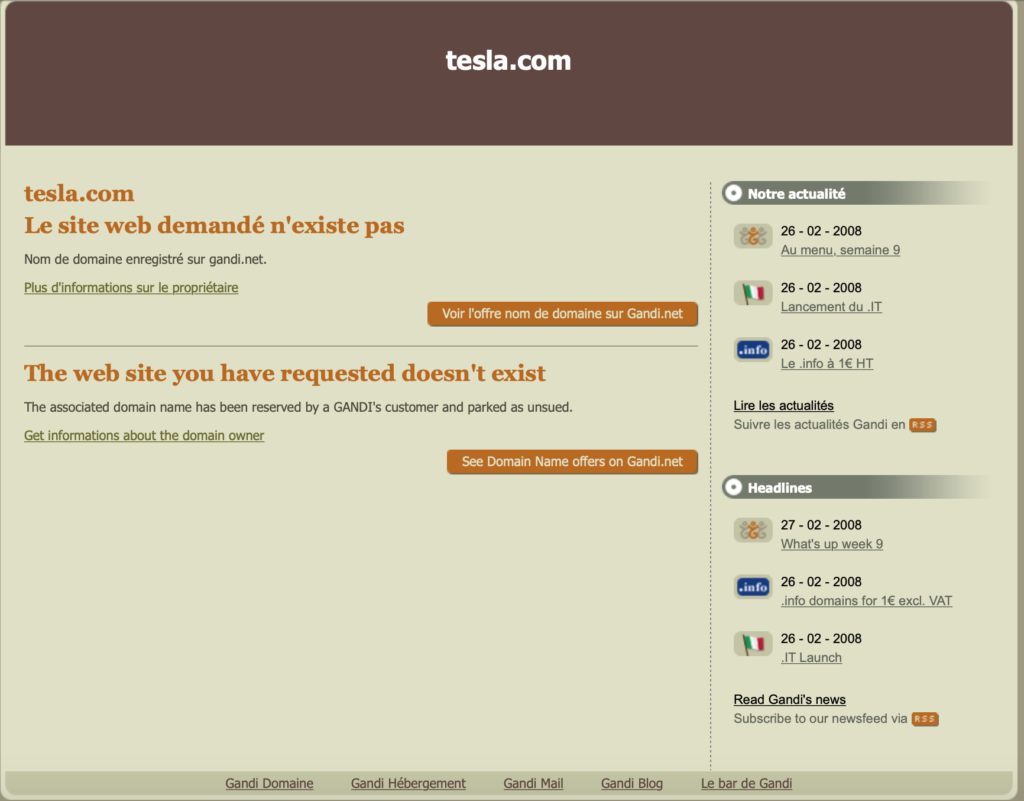
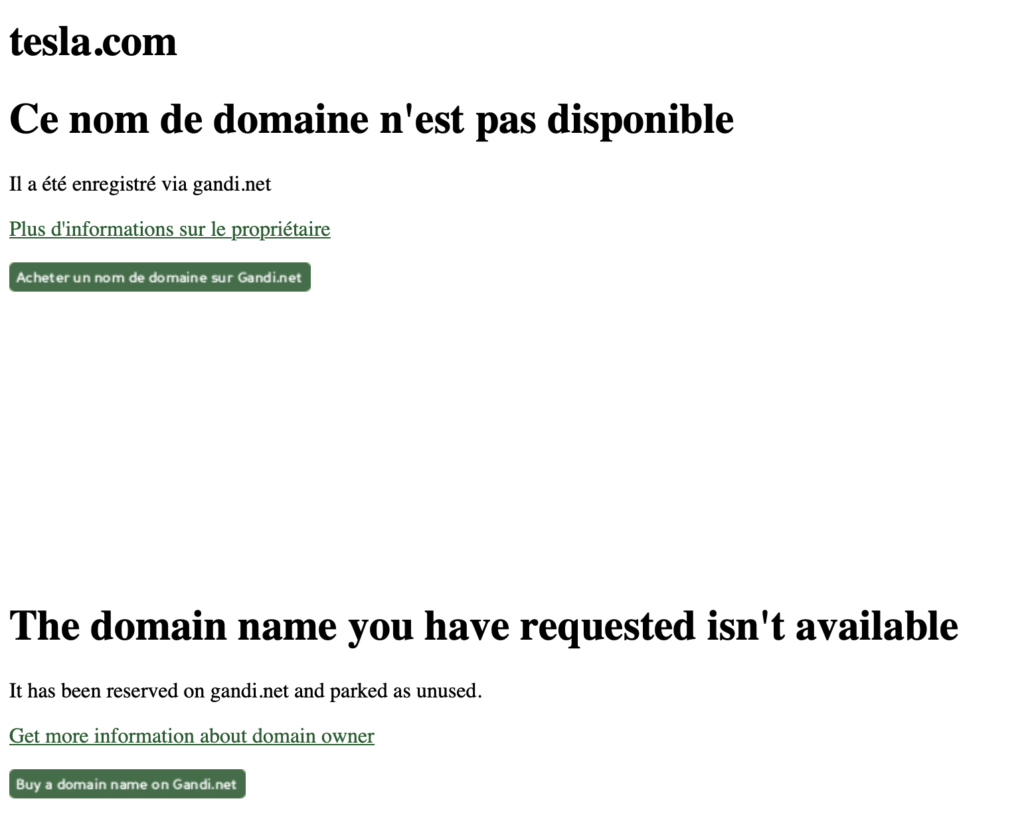
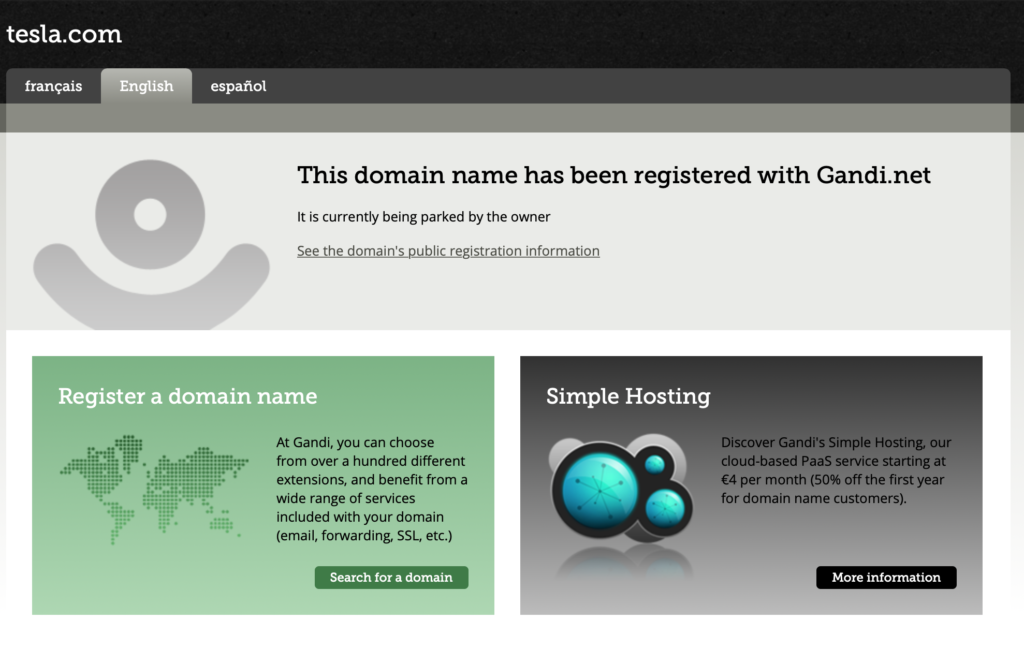
Have you ever wondered what the old websites look like for various companies? The Tesla.com website has had a few dramatic changes over the years, because for a long time, the domain name wasn’t even owned by Elon Musk’s Tesla (TSLA) company.

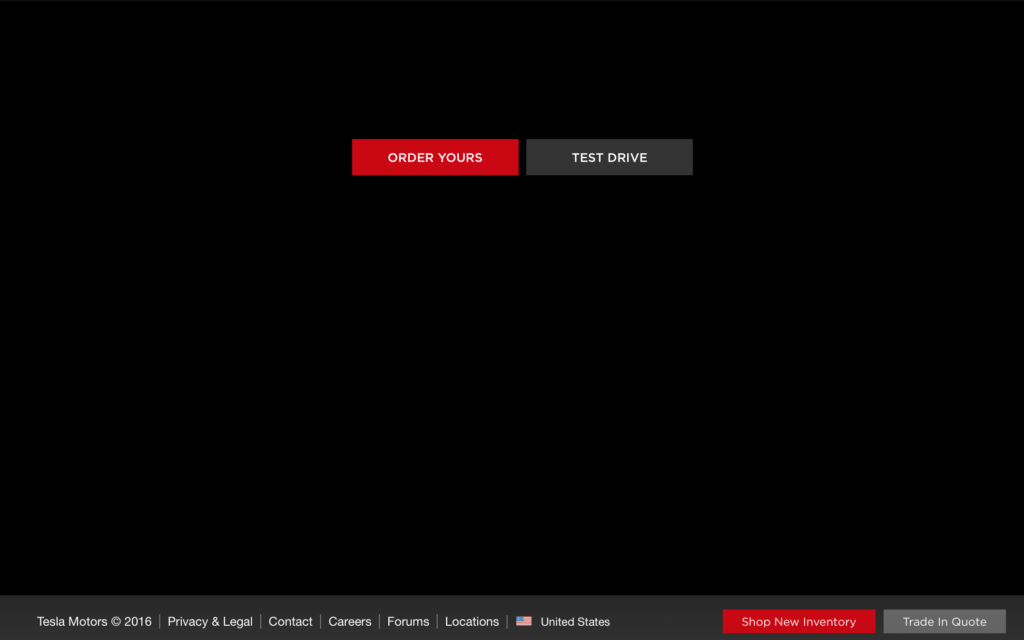
The following shows what the old home pages looked like for Tesla.com:

Tesla Year: 2002

TESLA.COM 2002

Tesla Year: 2008

Tesla.com 2008

Tesla Year: 2010

Tesla.com 2010

Tesla Year: 2013

Tesla.com 2013

Tesla Year: 2016

Tesla.com 2016

Tesla Year: 2017

Tesla.com 2017

Tesla Year: 2021

Tesla.com 2021

Screenshots are courtesy of the WaybackMachine.

Disclosure: Author owns TSLA

How to Short a Stock by BUYING a Stock

 AXS Investments Launches First-Ever U.S. Suite of Single-Stock Leveraged Bull and Bear ETFs 

by Fred Fuld III 

Recently I wrote an article called 10 Ways to Make Money in a Bear Market. Well, now there is an additional way. You can now buy a single stock bearish ETF for certain stocks.

AXS Investments, a leading asset manager providing access to alternative investments for growth, income and diversification, today, July 14, 2022, launched a suite of eight ETFs that seek to provide leveraged long or inverse exposure to the daily performance of some of the most actively traded stocks across a variety of sectors. 

“We are thrilled to be the first firm to bring single-stock leveraged and inverse ETFs to U.S. investors,” said Greg Bassuk, CEO of AXS Investments. “With the launch of this highly innovative family of ETFs, AXS has once again opened new access for traders and sophisticated investors, namely to express their high-conviction views on some of the most actively traded single stocks, regardless of whether their sentiment is bullish or bearish. AXS is excited to continue our aggressive build-out of highly differentiated ETFs designed to provide investors with unique, first-of-their-kind investments to achieve their varying objectives.” 

The initial suite of AXS single-stock ETFs provides investors with leveraged long (“Bull”) and short (“Bear”) daily exposure to the following stocks: 

• Tesla: AXS TSLA Bear Daily ETF (TSLQ) 

• NVIDIA: AXS 1.25X NVDA Bear Daily ETF (NVDS) 

• PayPal: AXS 1.5X PYPL Bull Daily ETF (PYPT) and AXS 1.5X PYPL Bear Daily ETF (PYPS) 

• Nike: AXS 2X NKE Bull Daily ETF (NKEL) and AXS 2X NKE Bear Daily ETF (NKEQ) 

• Pfizer: AXS 2X PFE Bull Daily ETF (PFEL) and AXS 2X PFE Bear Daily ETF (PFES) 

As you can see, some of these ETFs have a leveraged bearish goal, such as Pfizer, which has a goal of providing two times the inverse of the daily performance of the price of the stock.

AXS Continues to Expand Fund Lineup with Fast-Growing Suite of First-of-Their-Kind Strategies. 

Today’s rollout of these new ETFs is just one of many major strategic growth initiatives successfully achieved by AXS.

“Whether it is powerful inflation fighting tools, ways to express views on innovation, or a host of other novel investments that previously were unavailable to investors, our goal remains to be the leader in providing investors with access to the tools needed to build portfolios and to trade effectively in today’s volatile markets,” continued Bassuk. “We’re very excited about today’s news, and all that we still have in our product pipeline for 2022 and beyond.” 

Elon Musk Owns Shares In A Beverly Hills Entertainment Co.

by Fred Fuld III

Elon Musk is involved in a lot of businesses, including Tesla (TSLA), the Boring Company, SpaceX, and Neuralink, and almost became the head of Twitter (TWTR).

Elon Musk

However, many investors don’t realize that Musk has been on the Board of Directors of a company called Endeavor Group Holdings, Inc. (EDR).

In addition, Elon Musk owns 7,583 shares of Endeavor Group Holdings, according to a recent SEC Form 4 filing.

Musk has been a director of the company since its IPO, but has resigned as of June 30.

So what is this Endeavor Group Holdings?

Endeavor, formerly named William Morris Endeavor Entertainment, is located on Wilshire Boulevard in Beverly Hills.

It is an entertainment conglomerate. It owns such businesses as UFC, the talent management company IMG, Professional Bull Riders, Miss Universe, and nine Minor League Baseball Teams.

The company has a market cap of $6.2 billion, and a sky high price to earnings ratio of 730. However, it does have a reasonable price sales ratio of 1.10.

Revenues year-over-year have gone from $3.48 billion in 2020 to $5.08 billion in 2021.

The Endeavor Talent Agency launched in 1995. In 2009, WMA and the Endeavor Talent Agency merged to form William Morris Endeavor, or WME.

Endeavor executives Ari Emanuel and Patrick Whitesell became co-CEOs.

On April 28, 2021, Endeavor Group went public on the New York Stock Exchange.

Disclosure: Author has a short option position in TSLA.

Elon Musk’s Letter to Twitter Canceling His Acquisition of Twitter

by Fred Fuld III

By now, you should have heard the news. Elon Musk, the head of Tesla (TSLA), has decided to cancel his acquisition of Twitter (TWTR).

Musk is claiming that Twitter is in material breach of multiple provisions of the agreement, and has also claimed that the company has more bot accounts than what Twitter claims it has.

Musk originally agreed to buy the company at $54.20 a share. Twitter stock is now down to 35.04 in after-market trading as of last Friday, July 8, 2022.

Do you want to see the actual letter dated July 8 that Elon Musk sent to Twitter’s chief legal officer through Musk’s attorney? Here is the link:

Elon Musk Letter from his Attorneys Canceling the Twitter Acquisition


The Largest Company Right Now: Not Tesla or Apple or Amazon

by Fred Fuld III

At the time this is being written, 1:09 am PT on October 29, 2021, the largest US publicly traded company by market cap is Microsoft (MSFT) at $2.478 trillion.

In second position is Apple at $2.462 trillion.

Surprisingly, Google, I mean Alphabet (GOOGL) is ahead of Amazon (AMZN), Tesla (TSLA), and Facebook (FB), I mean Meta. Alphabet has a market cap of $1.956 trillion.

Check out the list below. Market cap values are in trillion dollars.

MSFT 2.478
AAPL 2.462
GOOGL 1.956
AMZN 1.698
TSLA 1.104
FB 0.902

Do you think we will ever see quadrillion dollar companies?

Want to Invest in Tesla Convertible Bonds? Good Luck!

by Fred Fuld III

A convertible bond is a bond that can be converted into a fixed number of shares of stock in the company that issued the bond.

The advantages of convertible bonds

  1. It pays a fixed income, unlike a stock which can lower or eliminate a dividend.
  2. If the company goes out of business, the bondholders get paid off before the stockholders.
  3. The bond has growth potential because of the conversion factor into shares of stock.

The disadvantages of convertible bonds

  1. They are illiquid, with most not traded on any exchange.
  2. They are hard to find and not all brokers carry them.

Companies that issue convertible bonds

  • Tesla (TSLA)
  • Nio (NIO)
  • Zillow Group (Z)
  • Square (SQ)
  • Snap (SNAP)
  • Microchip Technology (MCHP)

Now try going to your broker’s website or try calling them and ask what the quote is on the Tesla 2% convertible bond. Good luck.

Convertible Bond ETFs

The easier way to invest in convertibles is through an an exchange traded fund that specializes in convertible bonds, such as the SPDR Bloomberg Barclays Convertible Securities ETF (CWB), which actually owns bonds from such companies as Tesla and Nio. It is up over 50% for the last twelve months. This ETF pays a yield of 2.34%.

Another convertible bond ETF is iShares Convertible Bond ETF (ICVT), which in addition to owning Tesla bonds, owns convertible bonds in Southwest Airlines (LUV), DISH Network (DISH), and Snap. For the last twelve months, it has increased by 58%.

First Trust SSI Strategic Convertible Securities ETF (FCVT) is a third option. The ETF owns Tesla, Zillow and Square convertible bonds, among others. This ETF is up over 52% over the last twelve months.

If you decide to get into convertibles, let’s hope they can convert your portfolio into profits.

Disclosure: Author owns Tesla.

Top Lithium Stocks

by Fred Fuld III

Yesterday, Piedmont Lithium (PLL) spiked 236% on the news that the company made an agreement with Tesla (TSLA) to supply lithium for batteries.

News of the deal caused other lithium mining stocks to escalate yesterday, such as Lithium Americas (LAC) up 27.5%, Sociedad Quimica y Minera (SQM) up 4% and Livent (LTHM) up 5.8%.

Lithium is one of the critical components of batteries used in electric vehicles, which has created a huge demand for this element. It is the lightest metal and the lightest solid element. Interestingly, it is also used for psychiatric medication.

The following stocks are involved in the production of lithium.

COMPANY SYMBOL MKT CAP in millions
Albemarle ALB 9,198
Sociedad Quimica y Minera SQM 8,199
Livent LTHM 1,295
Lithium Americas LAC 945
Orocobre OROCF 571
Pilbara PILBF 498
Galaxy Resources GALXF 322
Piedmont Lithium PLL 314
American Lithium LIACF 70
American Battery Metals ABML 52
Power Metals PWRMF 28

One of these stocks might give your portfolio a charge.

Disclosure: Author didn’t own any of the above at the time the article was written.